Zero tariffs will lift Sino-Africa trade

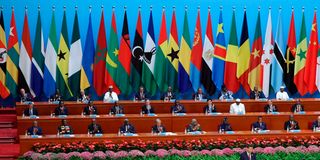
 China's President Xi Jinping delivers a keynote speech at the opening ceremony of the ninth Forum on China-Africa Cooperation (Focac) Summit, at the Great Hall of the People in Beijing, China on September 5, 2024.

Photo credit: Reuters

China’s decision to grant full zero-tariff access to imports from 53 African countries marks a significant shift in the architecture of China–Africa trade, with clear implications for exporters, investors and supply-chain planners.

Announced by Xi Jinping in a formal message to the African Union during its 39th summit, the measure will take effect on May 1 and applies to all African states that maintain diplomatic relations with Beijing.

From a business perspective, the importance of the announcement lies in its execution.

China has previously extended preferential tariff treatment to least-developed African countries, but this policy goes further by institutionalising zero-tariff access across a much broader group of economies.

It also operationalises a commitment first articulated in Changsha in June 2025, transforming what had been a strategic intent into a concrete trade framework with a fixed implementation timeline.

China has been Africa’s largest trading partner for 15 consecutive years, with bilateral trade exceeding $280 billion in 2023, according to Chinese customs statistics.

However, Africa’s exports to China remain dominated by crude oil, minerals and other primary commodities.

Tariff elimination does not automatically alter export composition, but it meaningfully improves the price competitiveness of African goods at the Chinese border, particularly in sectors where margins are thin, and supplier choice is highly sensitive to cost.

For African exporters, zero-tariff treatment reduces landed prices and creates room for value-added production to compete more effectively in China’s vast consumer and industrial markets.

Agricultural products such as tea, coffee, nuts, oilseeds and horticultural goods are among the most immediate beneficiaries, especially where African producers already meet Chinese sanitary and phytosanitary standards.

Light manufacturing and textiles also stand to gain, as tariff removal strengthens the business case for sourcing labour-intensive products from Africa rather than higher-cost Asian producers.

Beyond tariffs, the policy announcement included a commitment to upgrade China’s “green channel” for African exports, aimed at faster customs clearance and simplified procedures. For businesses, this element is critical. Delays at ports and administrative bottlenecks often impose hidden costs that exceed formal tariffs.

In commercial terms, China’s decision reshapes the cost base of Sino-Africa trade and opens a window for export-led growth across multiple African economies.

The opportunity is also time-bound, though. As tariffs fall to zero in 2026, the competitive advantage will flow to those exporters and investors ready to act, scale and execute.

Streamlined clearance improves supply reliability, reduces inventory holding costs and strengthens Africa’s attractiveness as a sourcing base for Chinese importers and manufacturers.

The timing of the move is also commercially relevant. Global trade is increasingly shaped by protectionist measures, industrial subsidies and regulatory barriers in developed markets. Against this backdrop, China’s zero-tariff policy sends a signal of market openness toward the Global South and reinforces China’s role as a stable demand centre for emerging-market exports.

For firms facing uncertainty in other regions, deeper integration into Africa–China trade corridors offers a degree of diversification and policy predictability.

That said, the benefits will not be evenly distributed. Countries and firms with limited export capacity, weak logistics infrastructure, or low compliance with Chinese standards may struggle to take advantage of the opportunity.

Zero tariffs lower the entry barrier, but they do not substitute for investment in quality control, certification, branding and supply-chain coordination.

The real gains will accrue to exporters that can scale production, meet delivery schedules, and move beyond bulk commodity shipments toward processed or semi-processed goods.

For Chinese businesses, the policy creates incentives to reconfigure sourcing strategies. Lower-cost African inputs can improve margins, while long-term procurement relationships reduce exposure to volatility in other emerging markets.

In sectors such as agri-processing, textiles and minerals linked to renewable energy and electric vehicles, closer trade ties also support broader industrial cooperation and investment flows.

The announcement reflects central policy direction and a long-term approach to China–Africa economic relations, which have now spanned seven decades. While implementation details will determine the ultimate impact, the zero-tariff framework represents a clear shift from preferential treatment to structural market access.

The writer is an international affairs analyst

PAYE Tax Calculator

Note: The results are not exact but very close to the actual.