The Kenyan government’s intention to comply with its international climate commitments, including the Global Methane Pledge, has inevitably put the pastoralists in the spotlight.
Greenhouse gas emissions from the Global South are a very small contribution to human-made climate change. Yet emissions of methane, a powerful greenhouse gas that represents 25 percent of total global warming, are attributed a much higher weight in low-income countries, precisely because of the relative economic importance of grazing livestock. Pastoralism is hence targeted as a primary objective for emission reductions—but is such attribution fair?
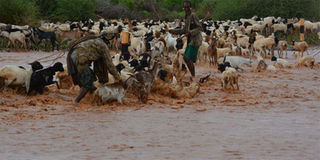
Pastoralism in Kenya exists primarily within arid and semi-arid lands, which make up nearly 80 percent of Kenya. Within these landscapes, communities such as the Maasai, Samburu, Turkana, Borana, Rendille, and others have practised mobile livestock production for generations.
These systems are built on seasonal movement, communal rangeland governance, indigenous ecological knowledge, and livestock breeds adapted to harsh and variable environments. In radical contrast with industrialised livestock systems, they operate with minimal external inputs and depend largely on natural grazing systems.
The naturalness of such practices is the key to their success: livestock integrates into savanna ecosystems the same way as wild migratory herbivores do, following green pastures across seasons.
Such integration into natural ecosystems is, unfortunately, one of the reasons for pastoralism being attributed a high climate burden. In the Global North, where industrial agriculture facilitates the provision of grain and concentrates, methane emissions per animal are much lower.
But attributing a Samburu cow with high emissions is not fair. That cow spent its life on natural pastures where all kinds of antelopes had grazed for thousands and millions of years, migrating in search of greener pasture as the wild herbivores used to do.
The methane that cows emit is no different from that emitted by wild migrating herbivores, as recent research shows. The problem humanity has with changing the climate is due to the amount of gases that we are artificially adding.
But there is a natural amount of greenhouse gases in the atmosphere that protects life, warming the planet by 33°C. Our Samburu cow feeding on natural rangelands is not putting any single additional methane molecule into the system.
In many other African countries, livestock also has a very important social role as a reserve of capital, but unfortunately this is the other reason for the large climatic blame to Kenyan pastoralism. The global scientific community measures emission intensity on a per product base.
Imagine the case of a Samburu father who, to pay for his daughter’s school fees, sells his 8-year-old cow. Every kilogram of meat is attributed with all the gas that the cow produced while grazing natural rangelands during all that time. Yet a calf from the industrial facility mentioned above in the Global North will be slaughtered in few months, every kilogram of meat being attributed with methane emissions during a much more reduced timespan.
But attributing the Samburu cow with such high emissions is not fair. That cow spent its life on natural pastures where all kinds of antelopes had grazed for thousands and millions of years, migrating on the search for greener pasture as the wild herbivores used to do.
The methane that cow emitted is not different from the one wild migrating herbivores emit, as recent research shows. The problem humanity has with changing the climate is due to the amount of gases that we are artificially adding. But there is a natural amount of greenhouse gases in the atmosphere that protects life, by warming the planet by 33°C.
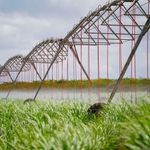
Our Samburu cow feeding on natural rangelands is not putting any single additional methane molecule to the system. Ironically, the industrial livestock systems of the Global North that are being showcased as a paradigm of climate efficiency rely on the production of grain, concentrates and fertilized fodder which needs fossil fuel energy.
The use of oil and natural gas to move tractors and produce mineral fertilizer means that industrial food production systems are adding net greenhouse gases to the atmosphere.
Thereby they dope local rangelands with way more animals than what is natural, just like a runner on steroids, increasing methane emissions well above natural levels. Just as any other fossil-fuel-based activity, they contribute to the very dangerous 2°C artificial warming above natural greenhouse effect levels that humanity is fearing.
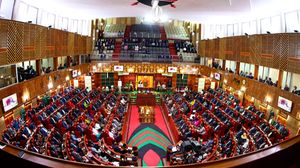
The Kenyan Government and society can make an opportunity out of this challenge. Instead of assuming a narrative that ignores local realities, it can organize African countries with large pastoralist herds to make the case in the international climate negotiations.
Abandoning pastoralism will not only be ineffective, due to wild animals or wildfires taking over the same emissions. It will be counterproductive, because of the need to compensate with increased industrial production for the food and services no longer delivered by pastoralism.
In term of climate adaptation, mobile pastoralism has repeatedly proven to be a very effective livelihood, with a cultural and social structure designed to make the best of climate variability.
The cultural significance for Kenyans is patent in the country’s flag and coat of arms, in spite of the deterioration that fragmentation, scarcity of services and other problems have brought. We have to revert it. We cannot miss this chance, for the best time to act was yesterday, but the second best is now.