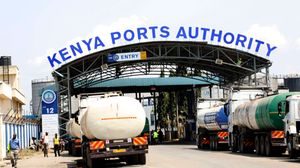
The Kenyan government's plan to sell a controlling stake in Kenya Pipeline Company (KPC) through an Initial Public Offering this September is poised to be the most consequential capital markets event since Safaricom's historic debut 17 years ago.
The transaction will see 65 percent of the state-owned energy logistics monopoly offered to the public, raising an expected Sh100 billion – about $1.15 billion – and valuing the company at approximately Sh154 billion.
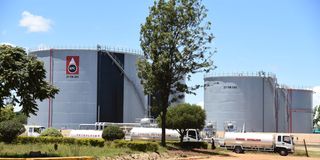
The Treasury will retain a 35 percent holding to safeguard national energy security and strategic direction while opening the door for private capital and expertise.
Officials say this blend of public oversight and private-sector discipline is designed to modernise critical infrastructure, deepen the Nairobi Securities Exchange (NSE), and broaden wealth ownership among Kenyans.
KPC's financial standing makes it a compelling listing candidate. For the year ending June 2024, it posted revenues of Sh35.4 billion and profit after tax of Sh6.9 billion.
Based on the indicative Initial Public Offering (IPO) pricing, the company will debut at around 4.35 times annual revenue and 22.3 times earnings — a premium valuation reflecting investors' confidence in its growth potential, operational stability, and monopoly-like market position.
Treasury Cabinet Secretary John Mbadi has indicated the Sh100 billion proceeds will be channelled into priority national projects in health, education, and transport, while easing Kenya's public debt burden without
"It's a model where we use our national assets to finance our development, not more debt," he said.
The listing is expected to invigorate the NSE. Kenya's last high-stakes IPO, Safaricom in 2008, raised Sh50 billion, brought more than a million new investors into the equity market, and pushed the NSE's market cap above Sh1 trillion for the first time. Safaricom went on to become one of Africa's most profitable companies, delivering huge dividends to shareholders and the government alike.
Two years earlier, KenGen's IPO brought in more than 250,000 shareholders and injected public ownership into the country's energy generation sector. Proceeds were used to diversify into geothermal and renewable projects, upgrade infrastructure, and create thousands of jobs.
Both Safaricom and KenGen showed how transparency, governance reforms, and access to capital markets can transform state corporations into high-performing, world-class enterprises.
The government hopes to repeat and surpass those successes with KPC. Apart from injecting funds into the national budget, the IPO will bring governance reforms through NSE requirements, unlock capital for pipeline and storage expansion, and accelerate diversification into cleaner fuels such as Liquefied Petroleum Gas (LPG) — all crucial in meeting rising domestic and regional demand.
Critics point to past failures — Kenya Airways, Mumias Sugar Company, Uchumi Supermarkets, and Kenya Portland Cement — as evidence that privatisation can go wrong. But each of those enterprises struggled with deep structural and governance problems before partial or full privatisation.
Kenya Airways was saddled with debt and strategic missteps; Mumias and Uchumi suffered from serious mismanagement and underinvestment; and Portland Cement was dogged by operational inefficiencies and poor leadership.
KPC stands in sharp contrast — profitable, strategically essential, and operationally sound. The IPO is structured to avoid the pitfalls of past cases: the government is keeping a strategic stake; employees will have a shareholding scheme to align interests with performance; and IPO proceeds are earmarked for investment and fiscal strengthening, not rescuing a failing operation.
Timing is also on KPC's side. The NSE has been seeking a marquee listing to boost liquidity and investor activity. Global and regional investors are showing an appetite for infrastructure-linked assets with predictable cash flows.
Political and macroeconomic conditions are stable, and proceeds can flow into the 2025/26 budget cycle to fund infrastructure and reduce debt. Delaying could risk missing favourable market and sector conditions, especially with growing regional fuel consumption and infrastructure needs.
Post-IPO, KPC will be free to move more nimbly than as a fully state-run entity, able to scale up capacity, cut wastage, and capture opportunities in East Africa's expanding energy market.
The company's commanding domestic role offers a platform for regional expansion into landlocked countries, positioning Kenya as the energy logistics hub for the region.
Government projections suggest that even with a smaller shareholding, higher profitability could quadruple or quintuple annual dividend flows to the Treasury. This combination of a major upfront capital injection and stronger recurring income makes the IPO both a fiscal and strategic win for the state.
For Kenyan citizens, the offering will be an opportunity to own a share of one of the country's most dependable enterprises and participate directly in its growth.
For policymakers, it offers a demonstration of how privatisation can work when the fundamentals are strong, the structure is sound, and lessons from past failures are applied.
If the KPC IPO achieves its objectives, it could join Safaricom and KenGen as case studies of successful, transformative privatisations — and possibly set a new benchmark for how strategic infrastructure can thrive under hybrid ownership while serving the public interest.
The writer is a Corporate Finance Executive, New York and holds a Wharton MBA.
Unlock a world of exclusive content today!Unlock a world of exclusive content today!