Why the rush to privatise KPC?

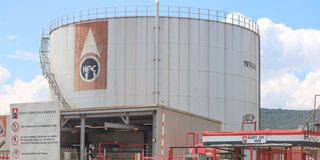
The Nakuru Kenya Pipeline Company (KPA) deport on November 22, 2024.

Photo credit: File | Nation Media Group

A source of mine involved in the process of planning the privatisation of the Kenya Pipeline Company (KPC), has intimated to me that the target date for completing the transaction, has been brought forward to October this year.

What is the urgency all about? What challenge are we trying to address? How long did it take to close some of the major privatisation transactions of the Mwai Kibaki era? Clearly, there are more questions than answers.
As young journalists fresh out of university — having imbibed the neoliberal ideas taught there — we were all strong supporters of privatisation. I did not believe in subsidies or in bailing out sick State corporations.

We all believed in the theory of comparative advantage as a universal law of economics and upheld the view that the State had no business being in business. But with age, experience, and having seen and lived through the reality and impact of privatisation projects, we all became cynics.

I have learnt that modern capitalism still relies heavily on state spending and intervention. Indeed, experience and global trends have shown that even in sectors where states have implemented privatisation — whether through outright sale of public assets, public-private partnerships, or outsourcing — public spending in these sectors has actually increased. 

The State continues to intervene, either by dishing out cash to troubled parastatals in the form of bailouts or by accumulating contingent liabilities through guarantees on foreign loans extended to state corporations.

The argument is made that privatising KPC will improve governance by insulating this strategic utility from perennial meddling by Cabinet Secretaries (CSs) and Principal Secretaries (PSs).

Yet our experience is that even in situations where the government’s shareholding is small — such as in Kenya Commercial Bank, Kenya Power, or Kenya Airways — the State still wields immense power in the appointment of directors, including CEOs, and in stuffing boards with so-called ex officio members.

Instead of isolating and targeting KPC for privatisation and approaching the reform of commercial State corporations in such a piecemeal manner, the government should be thinking about reviving the old proposal of creating a Government Investment Corporation (GIC).

We all remember that the centrepiece of former President Uhuru Kenyatta’s 2013 taskforce on parastatal reforms was the proposal to create a GIC.

This was to be the entity that would exercise shareholder rights on behalf of the government in commercial state corporations — acting more or less like an investment banker, structuring deals and moving in and out of positions as investments matured, with the sole objective of maximising returns.

What we need is an overarching framework to improve the governance and management of all large commercial state corporations. An initial public offer (IPO) of KPC shares alone will not help improve its governance.

If anything, to truly improve governance in commercial state corporations such as KPC — and to insulate these critical institutions from interference by government officials and the political elite — what we should be discussing is whether it’s time to repeal the State Corporations Act and to scrap the Harambee House-based entity called the State Corporations Advisory Committee (SCAC).

Today, even if we take KPC to an IPO, under the State Corporations Act, the CEO will still have to report to multiple power centres.

They will still report to the CS and PS of the parent ministry, and to the de jure shareholder — the National Treasury — which must approve the budget. They will also be answerable to the Harambee House-based centres of power, including SCAC and the Inspectorate of State Corporations.

As CEO of a privatised KPC, you could still wake up one morning to find that the Efficiency Monitoring Unit has unleashed auditors on your books.

Before travelling abroad, you would still have to seek clearance from SCAC, and fill out forms requiring you to provide mundane details such as the purpose of the trip, the amount of imprest to be carried and the number of days you will spend outside the country.

KPC is an efficient, profit-making company — a licence to print cash. What exactly are we trying to achieve by selling it, and why are we so eager to give it up?

The writer is a former Managing Editor for The EastAfrican

PAYE Tax Calculator

Note: The results are not exact but very close to the actual.