Why Kenya needs a strategic investor for JKIA upgrade

Jomo Kenyatta International Airport

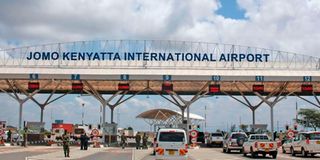
Motorists being subjected to security checks at the entrance of the Jomo Kenyatta International Airport in Nairobi.

Photo credit: File | Nation Media Group

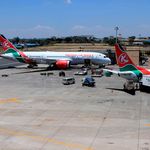
Jomo Kenyatta International Airport (JKIA) in Nairobi stands at a critical crossroads. Originally designed to accommodate just 2.5 million passengers annually, it now handles around eight million, stretching its infrastructure and operations far beyond capacity.

Congested terminals, overloaded runways, and slow passenger processing threaten Kenya’s ambitions to maintain its position as the premier aviation hub in East and Central Africa.
As regional competitors rapidly expand, Kenya finds itself under increasing pressure to modernise JKIA and safeguard its competitive edge.

One compelling solution lies in engaging a leading infrastructure investor such as Global Infrastructure Partners (GIP), which manages nearly $170 billion in assets. GIP’s portfolio includes major airports such as Edinburgh Airport and a substantial stake in London Gatwick Airport, co-managed with VINCI Airports.

The scale of the challenge is considerable. Kenya must invest approximately $2- $2.5 billion to expand terminals, build new runways, introduce cutting-edge technologies, and enhance passenger experiences.

GIP’s record in transforming major airports demonstrates that only partners with deep financial resources and specialised operational knowledge can successfully deliver such demanding projects. For instance, Edinburgh Airport, under GIP’s stewardship, saw a 10 percent increase in passenger traffic in 2024, while Gatwick recovered to near pre-pandemic passenger volumes thanks to sustained operational improvements and superior customer services.

Typically, projects of this magnitude undergo competitive tendering to ensure transparency and value. However, JKIA’s urgent need for expansion and modernisation, combined with the complexity of the project, justify Kenya pursuing a direct engagement with a private investor. Kenya’s public private partnership laws permit exceptions to the usual competitive bidding when specialised expertise, urgency, and prior procurement failures justify it.

Concerns about pricing under a single-source procurement can be addressed through Kenya’s commitment to transparent, rigorous due diligence and expert oversight.

However, one of the most sensitive aspects of any partnership involving JKIA is the public’s apprehension that Kenya might be selling off its “Crown Jewels.”

Deep distrust

Past attempts at privatisation stirred deep distrust, lawsuits, and political controversy. To address this, a lease and leaseback agreement offers a transparent, balanced solution that clearly safeguards public ownership while enabling needed private investment.

Under a lease and leaseback structure, the Kenya Airports Authority (KAA) would retain ownership of JKIA’s assets but lease them to the investor for a defined period. During this lease, the investor would manage operations, invest in upgrades, and bring global expertise to bear.

Crucially, once the lease expires, full control and ownership revert to Kenya, countering fears of permanent loss of national assets.

This mechanism allows Kenya to benefit from private sector efficiency and capital infusion without ceding sovereignty. GIP’s experience with complex partnerships around the world, such as at Gatwick—with shared ownership and co-management—demonstrates that public and private interests can be effectively balanced.

Such arrangements include detailed contractual provisions protecting jobs, ensuring community engagement, and embedding strict performance standards and transparency requirements.

Clear clauses on risk sharing, audit rights, and lease duration provide further reassurance against exploitation or mismanagement.
For Kenya Airways, a modern JKIA will eliminate costly delays and capacity constraints, allowing faster turnarounds, more flight options, and stronger global connectivity. This alignment is key to sustaining the airline’s recent return to profitability and positioning it for growth.

Ensuring success requires Kenya to foster transparency, implement strong governance, and engage stakeholders throughout the process.
Demonstrating commitment to openness and accountability would help rebuild public trust. Strong contract management, ongoing stakeholder consultation, and independent monitoring are vital pillars of this trust-building exercise.

Pragmatic approach

Additionally, political backing and inter-governmental coordination will provide the certainty needed to attract further investments and maintain project momentum, while managing opposition risks linked to fears of asset loss.

Engaging an investor via a lease and leaseback agreement is a measured, pragmatic approach that addresses Kenya’s urgent airport modernisation needs while protecting long-term public interests. It marries Kenya’s rightful claim of ownership with the global expertise and capital that JKIA requires, delivering a balanced path forward.

In conclusion, JKIA’s upgrade is about securing Kenya’s future as a vital aviation and economic hub. With bold leadership, transparent governance, and the right strategic partner, structured through a lease and leaseback model, Kenya can unlock JKIA’s full potential—transforming the airport into a world-class facility that drives growth, connectivity, and prosperity for generations.

This solution respects national sovereignty while embracing innovation and investment, readying Kenya for a new era in aviation excellence leaseback agreement would demonstrate openness and accountability, helping rebuild public trust. 

The writer is a corporate finance professional in New York and holds a Wharton MBA.

PAYE Tax Calculator

Note: The results are not exact but very close to the actual.