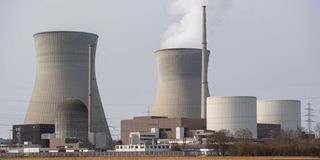
Kenya stands at the precipice of a monumental industrial transformation. As we advance plans to integrate a 2,000MW nuclear power plant into our national grid in Siaya County, the inevitable questions of readiness, safety, and capacity have emerged.
Scepticism is a natural part of national discourse, but history and data show that Kenya is not just ready; we are uniquely positioned to succeed.
A nation’s capacity to manage complex technologies is fundamentally reflected in its human capital. Critics often suggest that nuclear energy is a luxury reserved for a different class of nations.
However, a historical look at global nuclear pioneers reveals a startling truth: Kenya’s current literacy and educational foundations are significantly stronger than those of major nuclear powers when they commissioned their first reactors.
When South Korea connected its first nuclear reactor, Kori 1, to the grid in 1978, the nation was still transitioning from the devastation of the Korean War, with a literacy rate hovering around 75–80 percent and a GDP far below its current level.
Similarly, when China launched its domestic nuclear program in the late 1980s, culminating in the commissioning of the Qinshan plant in 1991, its rural literacy levels and access to higher education lagged far behind modern standards.
Today, Kenya boasts an adult literacy rate exceeding 82 percent, backed by a robust network of technical universities and a young, digitally savvy workforce already driving global tech innovations. If Korea and China could build global economic empires from lower educational baselines, Kenya’s intellectual infrastructure is more than capable.
The legendary Singaporean statesman Lee Kuan Yew once noted, “The progress of a country depends on the method of organization and the quality of its citizens.”
He argued that it is the discipline, resourcefulness, and training of a people, rather than sheer numbers or raw materials, that propel a nation forward. Kenyan citizens possess these exact qualities. Over the past decade, the Nuclear Power and Energy Agency (NuPEA) has systematically trained a specialized cohort of local engineers, scientists, and regulatory experts through partnerships with global nuclear hubs. We are not outsourcing our future. We have built the local capacity to deliver it.
The proposed 2,000MW project in Siaya is not just an energy project; it is the bedrock of Kenya’s next industrial revolution. Reliable baseload nuclear power will lower manufacturing costs, power heavy industries, create thousands of high-tech jobs, and guarantee clean energy for generations.
I call upon the people of Siaya and all Kenyans to embrace this project with pride and ambition. We have the brains, the structural frameworks, and the national discipline. The nuclear age is not a distant dream. Kenya is ready to lead in it.
The writer is the Chief Executive Officer of the Nuclear Power and Energy Agency