Why KenGen’s owner-operator role matters for Kenya nuclear power plan

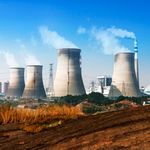
A nuclear power plant. 

Photo credit: File | AFP

Kenya’s announcement that KenGen will serve as the owner and operator of the country’s first nuclear power plant marks a significant step in the long journey toward introducing nuclear power into the national energy mix.

While the decision has been widely reported as a boost to Kenya’s ambition to add up to 10 gigawatts of clean and reliable power, it also highlights a less visible but equally important issue: how responsibilities are shared among the institutions that will shape the nuclear power programme.
Introducing nuclear power is not simply a matter of constructing a power plant. It requires the careful development of institutions with clearly defined, well-separated roles to ensure safety, accountability, and long-term sustainability.

International guidance from the International Atomic Energy Agency (IAEA) consistently emphasises the importance of three core institutional pillars in any nuclear power programme: a coordinating body known as the nuclear energy programme implementing organisation (NEPIO), a competent owner-operator, and an independent nuclear regulator.

In Kenya, the NEPIO role is carried out by the Nuclear Power and Energy Agency (NuPEA). As the coordinating authority, NuPEA is responsible for guiding the country through the complex, multi-decade process of establishing nuclear power. Its mandate goes beyond technical studies.

It brings together government ministries, utilities, regulators, academic institutions and international partners to ensure that the legal, human resource, financial and infrastructural foundations of the programme develop in a coherent and timely manner.

The IAEA’s milestones approach, which Kenya follows, places this coordinating role at the centre of national readiness, particularly in the early phases when key policy and institutional decisions are made.

NuPEA’s work includes preparing national roadmaps, coordinating feasibility and site studies, supporting capacity building, and leading public information and stakeholder engagement efforts.

Importantly, as responsibilities shift from planning to implementation, the NEPIO ensures continuity by transferring knowledge and coordination functions to institutions that take on more specialised roles, including the owner-operator and the regulator.

In this sense, NuPEA acts as the steward of the programme’s overall integrity, ensuring that progress in one area does not outpace readiness in others.

The government’s decision to designate KenGen as the owner-operator places the utility at the heart of the project’s execution. According to IAEA guidance, the owner-operator bears ultimate responsibility for the safety and performance of a nuclear power plant throughout its entire lifecycle, from design and construction to operation and eventual decommissioning.

This includes selecting technology, managing contracts, developing operational expertise, and ensuring that safety culture is embedded within the organisation.

KenGen’s appointment reflects an effort to build on existing national capacity. As Kenya’s leading power producer, the company already operates complex generation assets and interfaces closely with the national grid, government institutions and the public.

However, nuclear power introduces a level of regulatory scrutiny and technical responsibility that goes well beyond conventional electricity generation. Over time, KenGen will be expected to develop specialised nuclear competencies, robust quality assurance systems and long-term human resource strategies that align with international nuclear safety expectations.

Crucially, while KenGen will own and operate the plant, it will not regulate itself. That responsibility lies with the Kenya Nuclear Regulatory Authority (KNRA), whose independence is a cornerstone of nuclear safety.

International best practice requires the regulator to be functionally separate from organisations responsible for promoting or operating nuclear facilities. This separation ensures that licensing, inspection and enforcement decisions are made solely on the basis of safety and public protection, free from political or commercial pressure.

The regulator’s role spans the entire lifecycle of the nuclear power plant. Before construction begins, it must review and approve site selection, design and safety assessments. During construction and operation, it conducts inspections, verifies compliance with safety standards and ensures that emergency preparedness and radiation protection measures are in place.

The regulator also oversees radioactive waste management and environmental protection, providing assurance that nuclear power is developed in a manner that protects people and ecosystems.

The interaction between these three institutions, NuPEA as NEPIO, KenGen as owner-operator and KNRA as regulator, is what ultimately determines the credibility of Kenya’s nuclear power programme.

Clear boundaries between their roles reduce conflicts of interest, strengthen accountability and build public trust. When these roles are blurred or weakly defined, international experience shows that programmes face delays, cost overruns and, in some cases, a loss of public confidence.

Kenya’s designation of KenGen as owner-operator, therefore, represents more than an administrative decision. It signals a transition into a new phase of preparedness, one in which institutional maturity becomes just as important as technical ambition.

As the country moves forward, sustained investment in regulatory independence, institutional coordination and public engagement will be essential if nuclear power is to contribute meaningfully to Kenya’s energy security and climate goals.

The writer is CEO, Nuclear Power and Energy Agency

PAYE Tax Calculator

Note: The results are not exact but very close to the actual.