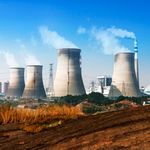
As Kenya sets its sights on becoming a First World country in the near future, the pursuit of reliable, sustainable, and scalable energy is no longer an option —it’s a necessity.
A blend of solar, wind, and geothermal power has positioned Kenya as a leader in renewables, generating more than 90 percent of its energy from green sources.
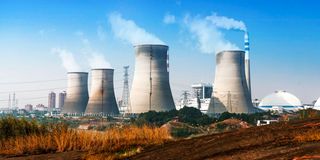
However, the missing piece in this mix is nuclear energy. Thankfully, steady strides are being made towards addressing this gap with plans at advanced stage to set up the first nuclear plant in the country.
On December 1, the Nuclear Power and Energy Agency (NuPEA) entered into a collaborative memorandum of understanding with Kenya Electricity Generating Company to fast-track the construction of the country’s first nuclear power plant.
This plant will be built along the shores of Lake Victoria in Siaya. This will make KenGen the first owner operator. This agreement in the push to make nuclear energy a reality.
Embracing nuclear power is a strategic leap toward securing a clean, prosperous future and leapfrogging the limitations of a developing economy.
Kenya’s installed generation capacity stands at 3,840 megawatts as of June 2025. This kind of generation cannot allow us to develop at a speed which will guarantee First World status by 2050 as envisioned by President William Ruto.
Accordimg to the presidential directive, Kenya will need to generate an additional 10,000 megawatts within the decade to make the First World status a reality.
Even as it seeks to industrialise, Kenya is keen not to drop the ball on its commitment to reduce carbon emissions and transition fully to green energy.
Admirable milestones have been attained on this score. However, solar, hydro and wind power, though vital, are susceptible to weather patterns, undermining their reliability for baseload supply. This is where nuclear energy becomes crucial, offering a steady, high-capacity power source that perfectly complements the already available renewables.
Nuclear is not a replacement for the existing green sources, but a critical complement. Kenya’s geothermal and solar potential remain unmatched. Integrating nuclear into this mix ensures resilience and dependable diversity.
As Kenya embarks on the journey to the First World economy, sufficient and reliable energy is an imperative. A single nuclear reactor can generate up to 1,000 megawatts, enough to power millions of homes and industries without emitting carbon dioxide.
Therefore, for a nation aiming to achieve the twin goals of curbing emissions while fueling growth, nuclear is the real deal.
With demand projected to surge as industries expand, nuclear energy provides the perfect solution of the day. Unlike fossil fuels, which are finite and volatile in price, uranium offers a cost-effective, long-term fuel source.
Countries such as France and South Korea have proven that nuclear power drives industrial growth while significantly curtailing carbon footprints.
Kenya’s push for nuclear energy also comes at a time where there is a global push to double and even triple nuclear energy.
There is a correlation between the rising adoption of nuclear technology across the globe and the need for more energy.
With the Fourth Industrial Revolution gaining momentum, innovations such as AI, robotics and electric cars will define every country’s pace of economic growth on account of the scope of adoption of such advances in technology.
Countries that become early adopters of cutting-edge innovations will hold the edge in a stiffly competitive global trade. At the heart of these innovation trends are data centres, which are heavy consumers of power.
Kenya is already a powerhouse, regionally and globally, in the technology realm. To maintain such a profile, it behooves us to stay ahead of the game by establishing an enabling environment and infrastructure critical for heightened investment in latest technologies.
We have to be in a position to generate enough electricity to power our data centres, which are the bloodline for innovation and the digital economy.
The demand for power will shoot up exponentially as more data hubs sprout across Kenya. Such a tech-driven development and economy puts into a proper perspective the urgent need to translate our nuclear energy aspirations into reality.
We cannot afford to play catch-up.
Kenya’s journey to a First World status hinges on bold energy choices. Nuclear power, with its zero emissions and high capacity, is not a distant dream but a necessary step. By embracing it, Kenya secures its energy future, empowers its people, and sets a precedent for Africa.
As already mention, nations across the globe are accelerating their nuclear ambitions. China is building over 20 new reactors, targeting net-zero emissions by 2060, while Poland is breaking ground on its first plant to phase out coal.
In Africa, Egypt and Ghana are pioneering nuclear programmes, with the latter exploring cutting-edge Small Modular Reactors (SMRs) to become a West African energy hub.
These examples show that nuclear is not just a choice—it’s a pathway to energy leadership. Additionally, by investing in nuclear Kenya will consolidate its energy sovereignty cutting reliance on imports which are potentially disruptive.
A nuclear programme goes beyond provision of reliable and sufficient electricity—it’s about jobs, skills, and prestige. Building reactors will create thousands of high-tech jobs, from engineers to researchers, nurturing a new generation of Kenyan innovators.
A 1000 MW plant can create over 100,000 jobs during the construction period bringing on board all cadres of skills including artisans, plumbers, welders, masons, carpenters, plant operators and more.
Development of the nuclear project at this point will position Kenya as a forward-thinking leader in Africa, attracting foreign investment and partnerships. Kenyan scientists are poised to contribute to cutting-edge nuclear technologies, placing the nation on the global clean-energy map.
Critics raise valid concerns about safety, security and costs. Yes, nuclear energy requires stringent regulation and waste management. But advancements in reactor technology—SMRs for instance— offer safer, cheaper, and scalable solutions. The path to a nuclear energy is already well-beaten. We do not need to reinvent the wheel.
Kenya is riding on the experiences, lessons and insights from countries that are ahead in adoption of this form of energy. We are tapping global best practices, partnering with experts to build robust infrastructure.
Currently the country has inked close partnerships with leading technology countries such as the US, China and Korea. For project implementation, the country will reach out for the best technology in an open and transparent manner that will put Kenya’s interests at the forefront.
As we move towards nuclear energy, the government is prioritizing transparent policies, investing in research, and engaging communities. Public awareness campaigns are increasingly demystifying nuclear energy, emphasizing its safety and benefits.
Through proper mandate and institutions, the Government is committed to ensuring the safe and secure deployment of this technology which promises to be the future supply of clean energy across the world.
KenGen as an owner operator will receive close support from NuPEA as the nuclear energy programme promoter as well as from Kenya Nuclear Regulatory Authority – the national watchdog for nuclear activities.
Support will also be sought from international partners particularly the International Atomic Energy Agency (IAEA) as well as other global institutions particularly in the area of capacity building.
Our universities and other institutions of learning will be roped in as necessary to train necessary personnel from our youth to participate in this great project that promises to be the silver bullet for Kenya’s future industrialisation.
Justus Wabuyabo is the CEO, Nuclear Power and Energy Agency
Unlock a world of exclusive content today!Unlock a world of exclusive content today!