The National Infrastructure Fund (NIF) can perhaps best be understood through its own origin. The Fund has been seeded from the partial monetisation of two of Kenya’s most successful enterprises - Safaricom PLC and Kenya Pipeline Company.
Its establishment marks one of the most significant developments in Kenya’s economic architecture in recent decades. For the first time, the country has a dedicated institution capable of mobilising long-term equity capital, attracting private investment and developing nationally significant infrastructure through commercially viable enterprises.
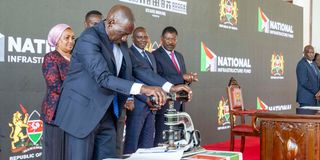
The Fund has already been capitalised with approximately Sh347 billion ($2.7 billion) from the partial privatisation of Safaricom and Kenya Pipeline Company, giving Kenya one of Africa’s largest pools of development capital.
By comparison, the Africa Finance Corporation (AFC), now among the continent’s leading infrastructure investors, began with paid-up capital of about US$1 billion before leveraging that base to finance projects across Africa.
The National Infrastructure Fund deserves attention not simply because of the capital it controls, but because it has the potential to transform how Kenya develops commercially successful enterprises.
If, over time, it consistently develops two nationally significant enterprises each year, brings them to financial close, grows them into commercially successful businesses and ultimately recycles them through Kenya’s capital markets, Kenya will have converted the proceeds from today’s national champions into a perpetual engine for creating tomorrow’s.
The Fund is more than an infrastructure financier. It is an institution that aligns government, investors, operators and customers around the growth of commercially viable enterprises.
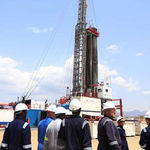
These enterprises become economic anchors around which thousands of businesses invest and expand. As they grow, they stimulate activity across value chains involving manufacturers, exporters, logistics companies, hotels, technology firms, suppliers and farmers that depend on efficient infrastructure and competitive markets.
In this way, the Fund crowds capital not only into infrastructure but also into the wider economy. By removing strategic bottlenecks, improving the ease and cost of doing business, and coordinating reforms, it creates confidence for private investors to commit capital at a scale that would otherwise be difficult to achieve.
The Board has already held its inaugural meeting and begun preparing the Investment Policy Statement (IPS), which will guide how the Fund’s resources are invested. Once completed, the IPS will undergo the governance and statutory approval processes required under the National Infrastructure Fund Act.
Under prudent assumptions, the Fund’s potential is substantial. If it earned an annual cash return of about 12 per cent, it would generate roughly Sh42 billion each year. Even if only Sh34 billion of that income were reinvested annually while preserving and growing the underlying capital, the amount of infrastructure investment unlocked would be unprecedented.
The Fund’s greatest strength, however, lies not in what it invests itself, but in what it enables others to invest.
Institutional investors, including pension funds, sovereign wealth funds, insurers and global infrastructure investors, seek professionally managed vehicles with strong governance, diversification and a reliable pipeline of projects. The National Infrastructure Fund has the opportunity to provide exactly that platform.
If every shilling invested by the Fund attracted just one additional shilling of private capital - a deliberately conservative assumption - Kenya could mobilise between Sh70 billion and Sh90 billion in equity annually.
Given that infrastructure projects are typically financed through 30 per cent equity and 70 per cent long-term debt, that equity could support between Sh240 billion and Sh300 billion in infrastructure investment every year, or about $2 billion.
Put differently, Kenya could bring projects equivalent to two expansions of Jomo Kenyatta International Airport to financial close every year using only part of the Fund’s annual investment income, without drawing down its core capital.
Yet the Fund’s greatest contribution is not the capital it provides but the development model it enables.
The National Infrastructure Fund has been created to invest in commercially viable infrastructure. That distinction changes how projects are conceived and managed.
Commercial projects repay investors through the revenues they generate. As a result, development begins with customers, markets and demand rather than the physical asset.
The first questions become: Who are the customers? How large is the market? What reforms will expand demand? Which industries will use the infrastructure? Which strategic partners should participate? How can revenues be maximised over the life of the enterprise?
Engineering, procurement and construction then become responses to clearly defined commercial opportunities rather than starting points.
This represents an important evolution in Kenya’s infrastructure model.
Government has successfully delivered strategic infrastructure through public investment, while the private sector has developed commercially driven projects across multiple sectors. Both approaches have made valuable contributions.
The National Infrastructure Fund combines the strengths of both. Like the private sector, it starts with commercially viable enterprises that must succeed on their own merits. As a national institution, however, it can also coordinate policy, regulatory reform, project preparation and strategic risk mitigation in ways individual investors cannot.
This role extends throughout the investment lifecycle. Before financial close, the Fund can strengthen project preparation and improve bankability. During construction, it can align complementary public investments and supporting reforms.
Once operations begin, it can continue supporting enterprise and sector development so that demand, revenues and enterprise value continue growing.
This continuity reduces investment risk, lowers the cost of capital and improves long-term enterprise value.
More importantly, the benefits extend beyond individual infrastructure projects.
As bottlenecks are removed and enterprise risk declines, confidence grows across the wider economy. Hotels expand around airports, manufacturers invest in industrial parks, exporters increase production, logistics companies strengthen distribution networks, farmers move into higher-value agriculture and technology firms establish new operations.
For the first time, government, investors, operators and customers become aligned around a common objective: building commercially successful enterprises. That alignment encourages reforms that improve the ease and cost of doing business while strengthening Kenya’s international competitiveness.
Infrastructure delivers its greatest value not because more concrete is poured, but because more enterprises succeed. As these businesses expand, they attract new investment, create jobs, boost exports, improve productivity and broaden the tax base through stronger economic activity.
The Fund also has the opportunity to recycle capital instead of permanently deploying it. As enterprises mature, investments can be realised through the Nairobi Securities Exchange, Infrastructure REITs, asset-backed securities and other capital market instruments.
Successful exits recycle capital into new projects while giving investors confidence that investments can be originated, developed and successfully realised.
The result is a virtuous cycle. Stronger enterprises attract more investment, which creates jobs, raises productivity, expands exports and strengthens public finances through economic growth rather than higher taxation.
If managed with commercial discipline, sound governance and a relentless focus on enterprise value, the National Infrastructure Fund has the potential to become one of Kenya’s most important economic institutions.
Its greatest legacy will not simply be the infrastructure it finances, but the nationally and regionally competitive enterprises it creates, the industries they anchor, the private investment they catalyse and the productive capacity they leave behind. Those enterprises, rather than the infrastructure itself, will become the enduring foundation of Kenya’s long-term prosperity.
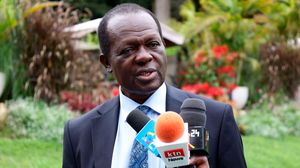
Dr James Mworia is Director, National Infrastructure Fund and CEO, Centum Investment PLC. [email protected]
Unlock a world of exclusive content today!Unlock a world of exclusive content today!