Why capital markets are set for a swift recovery

DNNSE2504S

Since 2019, foreigners have largely remained bearish on smaller markets, largely due to a flight to the safety of developed markets amid global shocks such as the Covid-19 pandemic and the Russia-Ukraine war.

Photo credit: File | Nation Media Group

Following a period of economic headwinds, subdued investor sentiment, and regional uncertainties, Kenya’s capital markets are poised for a swift recovery and sustainable growth.

The Nairobi Securities Exchange (NSE) recorded strong performances in all major indices during the 12 months to June 2025. The NSE 20-Share Index increased by 44.7 percent, the NSE-25 by 36.7 percent, and the All-Share Index (NASI) by 39.2 percent.

The total value of shares traded in the market rose by almost Sh685 billion to Sh2.4 trillion—a 39.8 percent jump. The assets under management by Collective Investment Schemes (CIS) soared to Sh500 billion.

Similarly, the activity of foreign investors rose to 46.7 percent, despite outflows being registered earlier in the year. In the fixed income market, the bond turnover improved substantially by 93.18 percent in the period July 2024–June 2025 to Sh2.154 trillion from Sh1.115 trillion registered in the period July 2023—June 2024.

This is the highest ever bond turnover registered in the Kenyan capital markets during a single 12-month period.

The comeback has also manifested itself in a steady flow of new investments.

The latest company to list on the NSE was Shri Krishana Overseas (SKL), a local manufacturer of packaging materials and industrial footwear. Its listing is an indication of increased private sector confidence in the capital market.

On the fixed-income side, the Linzi FinCo 003 issuance, an infrastructure asset-backed security, exposed investors to a product that directs capital into real assets and provides stable, government-guaranteed returns.

Designed to fund the development of Talanta Stadium, and having raised Sh44.7 billion, it is an example of how capital markets can be used to provide financing for long-term infrastructure projects.

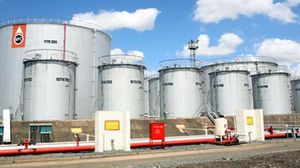
Meanwhile, anticipation is growing around the planned initial public offer (IPO) by the Kenya Pipeline Company (KPC), likely to come to market this year. The KPC is set to become one of the largest privatisations, targeting to raise Sh100 billion.

The IPO is expected to reaffirm the unexploited potential of the capital market and provide a benchmark for the expected pipeline of state divestitures.

At the same time, and as a gesture to global integration, the NSE has opened its doors to the Satrix MSCI World Feeder ETF, which provides local investors with access to more than 1,500 shares of the world’s leading companies.

This diversified play gives options to pension funds and retail investors alike, as they seek to balance domestic exposure and international growth opportunities.

The renewal of Kenya is reflected throughout the region. The East African Securities Exchanges Association has launched the East Africa Exchanges 20 Share Index, which offers a common benchmark to monitor the performance of leading firms in Kenya, Uganda, Tanzania, and Rwanda.

The index will track the 20 largest listed companies in Kenya, Uganda, Tanzania, and Rwanda. The index will enhance cross-border investment and facilitate the East African Community integration agenda by covering more than 85 percent of the regional market value. It is worth noting that half of the companies that constitute the index are inevitably Kenyan.

Global themes like sustainability, digital finance, and Islamic finance are also reflected in the capital markets. The oversubscribed Linzi Sukuk issuance demonstrated that there is a demand for Shariah-compliant investment products.

Kenya is currently putting together a Shariah-compliant regulatory framework to unlock the potential of the Islamic finance space. In the meantime, the growing issuances of green bonds, ESG-centred investment instruments, and the evolving digital asset regulations offer Kenya a chance to become a leader in the African sustainable finance industry.

Kenya’s access to the International Organisation of Securities Commissions enhanced multilateral memorandum of understanding as the 28th signatory worldwide, and only the second in Africa, enhances its ability to cooperate in cross-border enforcement, exchange important information, and safeguard investors in a globalised market.

There are still risks, including geopolitical and global trade tensions, as well as domestic socio-economic unrest, but the outlook is that of cautious optimism.

The relaxation of interest rates in major markets, a slight recovery in export demand, and progress in green finance and digital-asset regulation all indicate a favourable environment to support further growth.

The key is to continue this positive trend by further engaging the market, expanding product lines, and ensuring transparent, stable policy frameworks.

By facilitating market growth, the Capital Markets Authority (CMA) continues to ensure the regulatory framework is fit for purpose. Reviewed frameworks involved in public offers, CIS, listings, credit rating, and Alternative Investment Funds are not only enhancing diversification of products but also democratising access to the capital markets.

The market continues to align regulatory reforms with a focus on emerging areas, such as environmental, social governance, carbon markets and virtual assets. There is also support to innovation through testing of ideas in the regulatory sandbox environment. This is expected to position Kenya in response to emerging market needs and global trends.

The regulator’s role is to consolidate the gains by promoting innovation, encouraging transparency, and ensuring alignment with international best practices.

By so doing, CMA is not only protecting the interests of the investor but also positioning the capital markets as a catalyst for accelerated wealth creation and economic growth.

The writer is the Acting Director Policy and Market Development, Capital Markets Authority

PAYE Tax Calculator

Note: The results are not exact but very close to the actual.