When the mind breaks before the body

Behind every founder’s success story lies a hidden struggle with mental health, burnout, and the quiet costs of relentless ambition.

Photo credit: Pool

“Not every battle leaves scars on the body. Some take the mind first.”Unknown

Before we go any further, take a minute and remember the founders you know. Not the famous ones. The real ones. The people you shared meetings with. The ones who called late at night. The ones who were always “pushing through,” always optimistic, always saying they were fine.
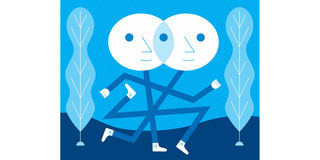
Now remember those who are no longer here.

In 2025 alone, many of us lost founders to mental health struggles. Some left quietly. Some left suddenly. Some left under circumstances we still struggle to talk about. These were not weak people. They were builders who carried too much for too long, often alone.

This article is written in their memory, but also for those still standing.

Behind pitch decks, press features, and polished LinkedIn updates lies a quieter reality many founders live with daily. Anxiety that tightens the chest at night.

Depression masked as discipline. Imposter syndrome disguised as relentless work. A constant mental negotiation between ambition and exhaustion. We celebrate resilience loudly, but we rarely interrogate its cost.

Founders often frame pressure purely through business language. Cash-flow gaps. Pending bills. Delayed payments. Broken systems. Politics. Legal Battles. Black tax. Cartels. Failed deals. These are real pressures, especially in our environment, and many of them will not disappear in 2026.

But pressure does not only come from business. Family strain, relationship breakdowns, marital conflict, parenting responsibilities, and unspoken expectations can weigh just as heavily. The founder is still a son or daughter. A partner. A parent. A sibling. When stress at work collides with strain at home, the load compounds quietly. Ignoring one lens while managing the other is how many founders slowly unravel.

One of the most dangerous misunderstandings in entrepreneurship is confusing everything painful with a profit-and-loss problem. Missed revenue hurts. Failed deals sting. Reputational hits bruise the ego. But these are often recoverable. Businesses can be restructured. Loans renegotiated. Deals rebuilt. Even relationships, when engaged early and honestly, can heal.

What is far more fragile are the true balance-sheet items: mental health, close friendships, family bonds, spiritual grounding, and the small circle of people who see you beyond your title.

These are rarely tracked, rarely reviewed, and often taken for granted until they are depleted. When founders feel trapped between public expectation and private pain, without a safe place to breathe, the consequences can be severe.

Research continues to confirm what many founders experience intuitively. Entrepreneurs are significantly more likely than the general population to experience anxiety, depression, burnout, and substance dependence.

The same traits that fuel ambition—high responsibility, optimism, risk tolerance—also increase vulnerability when setbacks accumulate without release. Unlike employees, founders often lack structure, permission, or an off-ramp.

Culture worsens this. We reward bravado and punish vulnerability. We praise endurance and ignore warning signs. We photograph launches but disappear during recovery. We build systems that extract relentlessly, then act surprised when people collapse under them.

Some fundamentals will not change in 2026. Markets will remain unforgiving. Governments will be slow and corrupt. Competition will remain ruthless. Family life will remain complex. Pretending otherwise is naive. What matters is the mindset with which founders confront these realities.

This is where the African Founders Operating System becomes more than philosophy. It becomes a survival framework.

Emotionally, founders must learn to manage their inner world before managing empires. Emotional debt does not disappear when ignored; it compounds. Anxiety unspoken migrates into the body, into relationships, into poor decisions.

Socially, founders must build networks that outlive personalities. Not contacts, but people who notice when you are not okay. People who can sit with discomfort without trying to fix you or judge you.

Strategically, founders must make decisions that remain true beyond their lifetime. Integrity is not a moral add-on. It is sustainability. Short-term wins that destroy trust, health, or values create long-term fragility.

Spiritually, founders must remember why they began. Purpose is not a luxury. It is fuel.

When purpose erodes, work becomes servitude, and servitude without meaning is one of the fastest paths to burnout.

And in mindset, founders must evolve. From builder to steward. From hustling alone to healing together. Leadership is not only about carrying weight. It is about knowing when to put it down.

One uncomfortable truth remains. We set aggressive goals for revenue, growth, and scale, yet rarely set equally deliberate goals for mental and spiritual wellness. We plan quarters but not rest. Forecast cash but not recovery. Track KPIs but ignore warning signs in our own bodies and homes. As 2026 begins, this must change.

Here is a simple starting point.

Write down the names of two or three people you could call if things became overwhelming. People you would not need to perform for. Then call at least one of them this week. Not to offload. Just to reconnect. Safe passages are easier to walk when they already exist.

Set one non-negotiable wellness commitment for the year. Therapy. Spiritual practice. Time with family. Rest without guilt. Protect it like revenue.

Finally, check on someone who crossed your mind as you read this. A simple message can matter more than we realise.

Let us honour those we lost in 2025 not with silence, but with change. Let us build companies without destroying the people building them. And let us enter 2026 with courage not just to grow, but to remain whole.

Because no business outcome, and no expectation—public or private—is worth losing a life.

The author is a serial entrepreneur, founder of Seven Seas and Ponea Health and the creator of Founders’ Battlefield.

PAYE Tax Calculator

Note: The results are not exact but very close to the actual.