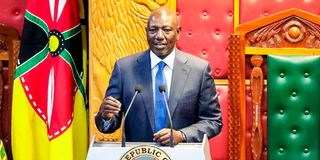
On November 20, President William Ruto delivered the annual State of the Nation Address, a moment when the country pauses to measure progress and weigh the government’s priorities.
This is more than a constitutional requirement; it is a national mirror that shows Kenyans where we stand and how prepared we are to confront the pressures shaping our economic and social well-being. This year, the issues of climate change, food security and sustainability stood out sharply.
At a time when many parts of the country that depend on the end-of-year short rains are experiencing unusual dry spells, we face the stark reality that climate unpredictability has become the new normal.
Farmers across the country are anxious, and the question arises: can the Kenya Meteorological Department step up its accuracy and communication to give farmers timely, reliable climate information? Without this, we risk continuing a game of chance that leaves farmers exposed.
Among the standout moments of the State of the Nation Address was the acknowledgement of youth-centred climate initiatives.
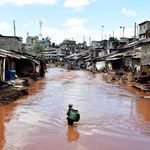
The President highlighted the Climate WorX programme and the Nairobi River Regeneration Programme, where 44,000 youth are restoring the river corridor and preparing sites for 10,000 new homes.
This is the kind of climate action that speaks to people’s daily realities. It links restoration with urban renewal, public health, dignity and livelihoods.
Yet this is where Kenya often finds itself at a crossroads. We have strong ideas, but scaling them beyond pilot stages is the real test. If Climate WorX is to be truly transformative, it must offer structured training, long-term green jobs and clear career pathways.
Otherwise, the country risks applauding short bursts of activity while missing the deeper opportunity to build a climate-resilient workforce under the stewardship of the Ministry of Environment, Climate Change and Forestry.
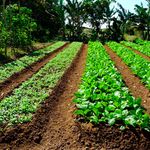
The President also tackled the persistent challenge of food security. He noted that Kenya can no longer allow clouds to determine whether people eat or not.
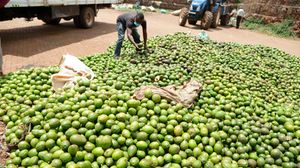
Only 15 percent of the country can support rain-fed agriculture, yet it feeds over fifty million people. The remaining arid and semi-arid regions can be productive if supported through irrigation, rainwater harvesting and modern water storage. The reminder that the lack of rain is not the same as the lack of water is timely.
This vision is necessary, but it must be grounded in transparency, equitable land allocation and strong community involvement. Kenya has seen major projects that consumed significant investment without transforming lives. To avoid this, we need accountability across relevant ministries and genuine participation from communities.
This year’s address shows that the architecture of climate action is taking shape. What matters now is proving that the promises translate into cleaner rivers, predictable harvests, reliable water and dignified green jobs. Kenya has the ambition.
Delivery must now take centre stage.
The writer is a climate action enthusiast and a communications specialist at Windward Communications Consultancy.
Unlock a world of exclusive content today!Unlock a world of exclusive content today!