Seaweed business in Kwale: How to bring more women into economy

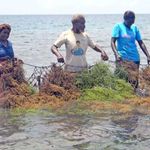
Women harvesting seaweed used to make cosmetic products at an open beach in the Indian Ocean within the Kibuyuni village in Kwale County, Kenya on October 21, 2024.

Photo credit: Reuters

Kenya’s Blue Economy is emerging as a key pillar of national development, guided by policies such as Vision 2030 and the Bottom-Up Economic Transformation Agenda (Beta).

In coastal counties like Kwale, the growth of seaweed aquaculture demonstrates the potential of sustainable ocean-based industries.
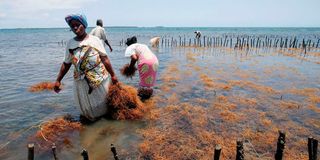
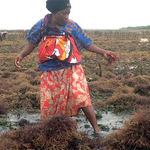
Women are at the forefront of this transformation, using seaweed farming to improve livelihoods and contribute to socio-economic development. 

However, the sector’s growth is hindered by persistent legal, policy, regulatory, and institutional bottlenecks.

Despite national ambitions, the ground reality is complex. Overlapping mandates among agencies like the Kenya Fisheries Service, Maritime Authority, Coast Guard, and the National Environment Management Authority (Nema) create regulatory redundancies and inefficiencies, discouraging investment and frustrating community initiatives.

The lack of county-level policies further compounds the issue, leaving seaweed entrepreneurs without clear guidance on product development, innovation, and market access. 

The Beach Management Units (BMUs), which govern marine resources, remain largely focused on traditional fishing, excluding women-led seaweed ventures.

Local stakeholder consultations often fail to translate into long-term support, with bureaucratic hurdles stalling progress. Without reform, women seaweed farmers risk being sidelined despite their growing role in Kenya’s coastal economy.

To foster an enabling environment for seaweed business, Kenya needs to embed gender-responsive measures in governance and planning, clarify agency mandates, introduce a ‘single window’ licensing system, and equip county agencies and women entrepreneurs with technical and financial skills.

Stronger coordination is needed between fisheries, trade, and gender departments, alongside the expansion of BMU mandates to support seaweed farming and value addition. 

Furthermore, Kenya must improve intellectual property rights and patenting systems for marine products and align development partner investments with government objectives to reduce duplication.

By adopting these reforms, Kenya can build a gender-responsive, pro-growth Blue Economy where seaweed aquaculture thrives, unlocking jobs, improving food security, and driving sustainable development, especially for women in coastal communities.

The writer is the Gender Lead, Blue Empowerment Project

PAYE Tax Calculator

Note: The results are not exact but very close to the actual.