Kenya’s restoration agenda is entering a decisive phase, and the Mau Forest Complex is fast becoming its proving ground.
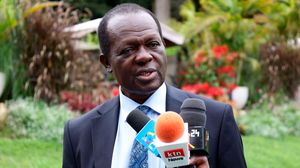
At a recent stock-take meeting convened by the Environment ministry, government officials, private sector players, and community representatives reviewed progress under the Mau Forest Complex Integrated Conservation and Livelihood Improvement Programme. Beyond the formalities, the message was clear: restoration must now demonstrate economic value at scale.
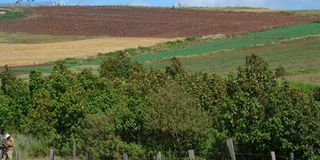
The Mau Forest Complex, Kenya’s largest water tower, underpins agriculture, energy production, and domestic water supply. Its degradation has carried heavy economic consequences.
Reversing that trend is not just an environmental aspiration but a fiscal and development priority.
Launched last October by President William Ruto, the initiative is a 10-year programme. It aligns with Kenya’s commitment to grow 15 billion trees by 2032 and strengthen climate resilience under national development plans.
Early implementation figures reported by the ministry are notable.
More than 1.2 million seedlings have been raised across 1,200 hectares. Youth and women-led nurseries are supplying planting materials, turning restoration into a micro-enterprise. Public institutions and corporates have adopted specific forest blocks, embedding accountability into conservation.
A central innovation is the Trees Establishment and Livelihood Improvement Scheme. Under this model, communities grow trees alongside food crops in designated forest areas. The approach lowers establishment costs, improves survival rates, and cushions households with income and food as trees mature.
Backed by the Kenya Forest Service and supported with certified seedlings from the Kenya Forest Research Institute, the scheme is reframing conservation as productive land use rather than exclusion.
To support improved livelihoods, the programme is supporting the growth of climate-smart enterprises in the dairy, potato, pyrethrum, avocado, and beekeeping value chains through diverse interventions. This linkage is critical as restoration that ignores household economics struggles to gain traction.
Seventy-six institutions have supported the first phase, signalling growing domestic alignment around nature-based solutions. With the constrained public finances and competitive global climate funds, such blended partnerships define Kenya’s restoration pathway.
The second phase, expected to kick off in July, will require stronger extension services, efficient value chain coordination, and predictable financing because ambition must now meet scale. Infrastructure and market bottlenecks around forest-adjacent communities must be addressed if restoration is to translate into durable economic opportunity.
If scaled with discipline and accountability, Mau’s revival could move from policy promise to investment case. In doing so, it will offer Kenya a workable blueprint for climate-smart growth.
The programme is in its formative years. Still, it is testing a model that speaks to Kenya’s broader climate strategy: conservation integrated with livelihoods, driven by partnerships and measured by economic as well as ecological returns.
The writer is a climate action enthusiast and a communications specialist at Windward Communications Consultancy.
Unlock a world of exclusive content today!Unlock a world of exclusive content today!