As Kenya inches closer to another election cycle, political manifestos will soon flood the public space, heavy with promises on jobs, food security, water, roads, housing, and economic growth.
The language will be polished, the slogans catchy, and the ambitions grand. However, any manifesto that fails to confront climate change head-on is not just incomplete, it is empty rhetoric.
Climate change is no longer a distant environmental concern reserved for scientists and activists. It is the underlying force shaping nearly every crisis politicians claim they will fix.
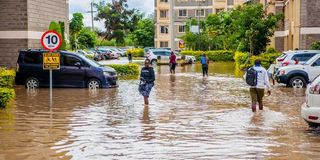
Droughts are no longer episodic shocks but recurring economic disruptions. Floods are no longer rare disasters but annual budget-breaking events.
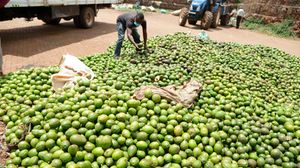
Crop failures, rising food prices, water scarcity, collapsing fisheries, and damaged infrastructure all have one common denominator: a changing climate.
When politicians speak about food security without addressing climate-resilient agriculture, they are avoiding the root cause. When they promise roads and housing without talking about flood risk, drainage, land use planning, and resilient design, they are planning failures.
When they talk about jobs and industrial growth without acknowledging climate risks and green opportunities, they are anchoring the economy to a past that is fast disappearing.
Climate change is not a sector but a systems issue that cuts across agriculture, energy, transport, health, housing, security, and public finance. A manifesto that treats climate as a footnote, or worse, ignores it altogether, is essentially a list of intentions detached from reality.
Climate inaction is already costing Kenya dearly. Public funds meant for development are routinely diverted to disaster response and repairs.
Households absorb the shock through lost livelihoods, higher food prices, and rising energy costs. Businesses face supply disruptions and increased risk. Ignoring climate change is not a neutral political choice but an expensive one.
A serious manifesto in 2026 must treat climate action not as a standalone sector, but as the organising principle of development.
Water policy must be a climate-resilient water policy, focused on catchment protection, groundwater governance, and nature-based solutions.
Food security must mean climate-smart agriculture, investing in drought-tolerant crops, soil restoration, and farmer-led adaptation. Infrastructure must be designed for a warmer, wetter, and more volatile future, or it will fail expensively and repeatedly.
Voters should, therefore, be more demanding. It is no longer enough for aspirants to say they will deliver development. They must explain how they will deliver it in a climate-stressed world, showing how their policies reduce climate risks, protect livelihoods, and position the economy for the future.
In the end, a manifesto that ignores climate change is not visionary. It is evasive. It speaks loudly about symptoms while remaining silent on causes.
The public should read manifestos with one critical question in mind: Does this political vision recognise climate change as the defining challenge and opportunity of our time?
The writer is a climate action enthusiast and a communications specialist at Windward Communications Consultancy.
Follow ourWhatsApp channel for the latest business and markets updates.
Unlock a world of exclusive content today!Unlock a world of exclusive content today!