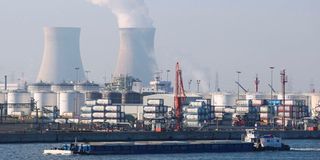
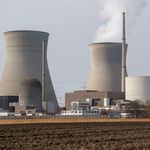
Kenya has been pursuing the ambitious dream of joining the Nuclear Club, specifically in the peaceful realm, for many years.
However, this has not come without a plethora of challenges – from laying down a clear roadmap, funding framework, opposition by communities at the proposed construction sites, to a near cancellation of the entire project.
A later decision to move the project to Siaya County as an alternative location after strong opposition from the people of Kilifi County seemed to have injected new impetus to this huge energy ambition for our country.
This was delightful news for me – being a proponent of industrialisation as the best bet for a long term sustainable and a prosperous economy.
Moreover, continued advancement in technology has once again put nuclear energy on the front foot as witnessed by the renewed frenzy to build more reactors around the world, largely due to reliability and it being a non-carbon emitter.
This, therefore, gives Kenya the justification to acquire this crucial technology for socio-economic development.
Since we lack the know-how, the country signed agreements with the United States, China and proposed one with South Korea.
Even so, I still pose the question: How and why did we overlook Russia’s Rosatom?
The giant Russian state-owned corporation tasked with researching and developing an array of technologies within the nuclear sphere – such as nuclear medicine, nuclear fuel cycle, nuclear power plants (NPP) and nuclear fuel– has unleashed unmatched advanced colossal capabilities, including the cutting-edge VVER (pressurised water ) reactor technology, the BREST (fourth generation reactor), its established lead in small modular reactors (SMRs) and dominance in international nuclear fuel supply.
In addition to its portfolio of massive NPP projects to boot globally (accounting for more than 60 percent) such as El dabaa (Egypt), Xudapu (China), Roopur (Bangladesh), Akkuyu (Turkiye), Kursk II (Russia) and many more – enriched by a hugely efficient state-backed funding model – that elevates Rosatom on the pedestal as the world’s undisputed king and the leading purveyor of nuclear energy.
What’s more, how will the triumvirate of the United States, China and South Korea work?
They have always been in competition with one another and have not been very much active as Russia has been in pushing nuclear energy export, a fact that is widely acknowledged.
All said and done, I remain fully positive and will follow keenly as our country navigates the peaceful nuclear energy terrain in our quest to connect our first ever reactor to the national grid.
The writer is an independent researcher on issues related to science, technology and political economy. Email: [email protected].