Lawyer and International Energy Contracts Specialist
As the US/Israel-Iran conflict enters its fourth week, the Strait of Hormuz, the chokepoint for roughly a fifth of global seaborne oil, has effectively become a war zone.
Tanker traffic has slowed to a trickle, Platts price assessments for Gulf loadings have been suspended in parts and refined product benchmarks have exploded. Brent crude has surged past $110 a barrel with some Dubai assessments touching $167.
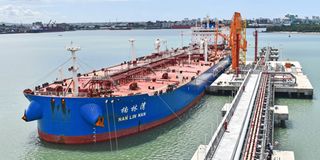
For Kenya, this is not abstract geopolitics: It is a direct assault on the very pricing formula that underpins the Government-to-Government (G2G) petroleum import arrangement with Saudi Aramco, ADNOC and ENOC, the deal that has kept the lights on and the shilling stable since April 2023.
The G2G structure was a brilliant short-term fix. By securing 180-day supplier credit, Kenya eliminated the monthly scramble for half a billion dollars in spot-market forex. Local sales in shillings fund the eventual USD settlement through escrow and bank Letters of Credit (KCB alone has issued over Sh1 trillion without a single default).
The April 2025 24-month extension, running shipments into 2027 with diesel to 2028, even delivered meaningful concessions, freight and premium costs dropped 11 percent to $78 per metric tonne for diesel, 7 percent to $84 for gasoline and 13 percent to $97 for jet fuel. Those numbers matter when you import 100,000 barrels a day.
However, the contract’s core pricing clause is now its Achilles' heel. The base price is not pre-fixed; it floats on S&P Global Platts benchmarks (or equivalent Gulf assessments) at or near the loading date. The “pre-negotiated” element is limited to the supplier margin and freight, useful in calm markets, useless when the entire benchmark curve is on fire.
An ADNOC refinery supplying Kenya has already invoked force majeure and shut down. One recent cargo arrived with only 60 million litres instead of the contracted 85 million due to safety rerouting.
National stocks, reliant on oil marketing companies’ mandatory 15-21-day buffers and zero strategic reserve, are projected to run critically low by March 28. Emergency cargoes from India, Oman and Al-Fujairah are not due until early April.
This is exactly the scenario international energy lawyers warn clients about when drafting long-term offtake agreements with concentrated Gulf counterparties benchmark linkage without war risk floors, diversification mandates or alternative routing obligations turns a hedge into a trap.
Critics of the original Open Tender System used to complain about volatility; today, we see the opposite problem: The G2G locks Kenya into paying war-inflated Platts prices six months later while the 180-day credit merely delays the forex pain, not the pump-price pain. Consumers will feel the next round of increases within weeks as the landed cost feeds through EPRA’s monthly review.
As somebody who is familiar with sovereign supply frameworks across Africa and the Middle East, I see three immediate contractual gaps that must be closed.
One is force majeure carve-outs and replacement tonnage clauses. The current deal appears to allow suppliers to walk away or deliver short without guaranteed make good from alternative ports or suppliers. Future amendments should include mandatory diversion to Fujairah or Yanbu at supplier expense if Hormuz is impassable beyond seven days.
Another is price-cap or hybrid-index mechanisms. Pure Platts linkage works in peacetime. In geopolitical hotspots, it should be tempered with a ceiling linked to a basket (Platts + ICE Brent futures + a fixed war-risk adder) or automatic renegotiation triggers when benchmarks move more than 15 percent in 30 days.
The last is strategic reserve and diversification covenants. Kenya cannot continue importing 100 percent of its refined fuels through one corridor.
The contract should require a minimum 10 percent volume allocation to non-Gulf sources (India, Malaysia, even US Gulf) and the accelerated build-out of the proposed Lamu or Mombasa strategic storage (currently non-existent).
If we fail to act, the next Hormuz flare-up or Red Sea escalation will not merely raise pump prices; it will expose the structural fragility of an import-dependent economy that bet everything on three Gulf desks and a Platts screen.
The Ministry of Energy and Epra have, rightly, assured the public that scheduled deliveries continue through April. But assurances are not contracts. The same bankers underwriting the LCs and the same officials who, rightly, trumpet the forex relief must now treat this crisis as the stress test it is.
The G2G deal was never meant to be a permanent monopoly on supply security; it was a bridge. And the Iran war has just set that bridge on fire. The prudent response is not to abandon the Gulf partners.
Their credit terms remain valuable but to renegotiate the missing protections that every sophisticated energy importer (Singapore, South Korea, even smaller African peers now copying the model) insists upon.
If we fail to act, the next Hormuz flare-up or Red Sea escalation will not merely raise pump prices; it will expose the structural fragility of an import-dependent economy that bet everything on three Gulf desks and a Platts screen.
The time for polite extensions is over. The time for bullet-proof energy contracts has arrived.
The writer is a lawyer and international energy contracts specialist.
Follow ourWhatsApp channel for the latest business and markets updates.
Unlock a world of exclusive content today!Unlock a world of exclusive content today!