When Maria Mbeneka was recently nominated for the Tri-Nations Woman of the Year award for her work enabling feedlots and contracted pastoralism through technology, it prompted me to ask her about what is top of mind for a livestock sector CEO on a daily basis.
Ensuring that every single time we are getting it right at livestock sourcing, she said without hesitation. It is about making good buys by sticking to the selection criteria. Ensuring that we are getting the standard operating procedures formalised and implemented is fundamental. It is one thing to have strategy and vision, but you have to get them done.
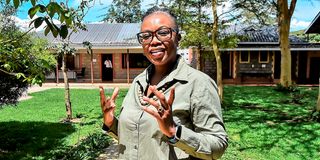
That’s a heavy pile, what is the prioritisation? I persist. They are all there, she says. But getting the underlying systems working – establishing and sticking to them - is crucial, because there is your way of doing things and there is the effective way. When you complete a project or a cycle and you look at the steps you took to get there and you learn from the mistakes or shortcomings, then you are making progress.
You have to keep measuring the outcomes, she continues, and tracking the results to guide you because you are doing the same thing over and over again. The results assist you to set up the system.
Of course, it helps to have qualified people to do it. How do you know they are qualified, I enquire? Use referrals and headhunting to find them, comes the answer. Get people who have worked in that area before, so they come recommended or referred.
The biggest pain-point is slow adoption. Many sector participants are still very stuck on the old, manual ways and processes. Data collection has improved, from a book to a computer, but moving from traditional Word or Excel documents into the digital space, would be better still. There is adoption, but it is work in progress.
Why is that, I ask? Many don’t not yet see the full or bigger picture. They are only seeing the chore of inputting data as an additional hustle. We need to show what the additional data produces - how to use that data to improve the way we feed the animals, make decisions, right down to an individual’s output, and how that affects the success of the business.
The biggest joy is when things work out in the way they are supposed to - such as sticking to an agreed plan, and measuring whether the plan is being executed, in a routine way. We keep checking that we are doing the right thing and confirming it with the data or results we collect.
Innovation at work brings great satisfaction. For instance, when we agree to a plan and my team members tweak it, and apply themselves to get better results. It means they have understood it, and are invested in it.
Recently, when I shared the results of an offtake delivered to Choice Meats, including pictures of the carcasses, the weights and grading metrics, the team was very proud of themselves. They were proud that their work had been recognised by an established and respected processor.
Another example is while mixing feeds. The supervisor gave tips on how they are mixing and fermenting. Putting the feed mix in silage bags for a couple of days, makes the feed more palatable for the animals, and we are seeing excellent weight gains. Joy comes from finding solutions that are not necessarily expensive and you get the same or better results than if you had invested in expensive structures.
Another joy is contrasting the traditional way of doing things versus the scientific, data tested and driven solutions. Compared to the traditional approach of just grazing randomly, not measuring, not weighing until when it is required by a buyer, has shown me and my team that the scientific, data driven solutions are working. The results of using this method are translating into success. We are achieving better results within a shorter time and in a more efficient manner.
A controlled environment means we are controlling the health of the animals and using grazing and resources more efficiently. So, striking the balance between managing the resources that go into achieving that result, I think is the true test of whether or not it is a profitable way of looking after livestock. And using tech is making it more efficient, which is great!
The writer is an economist and partner at Ecocapp Capital. He is also the chairman of KRA and former Governor of Laikipia County. Email: [email protected]
Follow ourWhatsApp channel for the latest business and markets updates.
Unlock a world of exclusive content today!Unlock a world of exclusive content today!