Time flies with great content! Renew in to keep enjoying all our premium content.
Prime
How premium beef can redefine agribusiness as demand grows
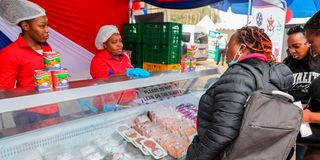
Kenya Meat Commission exhibitors interact with attendees during the Nation Media Group Kenya Meat Expo 2025 at the Kenyatta International Convention Centre in Nairobi on August 6, 2025.
Kenya’s red meat industry stands on the edge of change as consumer preferences evolve. Urban households and high-end hotels are no longer satisfied with ordinary supply.
They want beef that is lean, grass- and grain-fed, ethically raised, and traceable from farm to plate. Yet the sector that supplies this demand remains 96 percent informal, with little grading, weak cold chains, and almost no reliable traceability.
The result is unpredictable quality and high costs that leave both producers and consumers shortchanged.
Demand, however, is rising. Kenya faces an annual meat deficit of about 300,000 tonnes.
Modern slaughterhouses with cooling facilities and mechanised processes show that it is possible to capture this gap. According to recent studies, prime cuts of beef already fetch between Sh800 and Sh1,200 per kilogramme, reflecting a strong appetite when quality is guaranteed. The demand is likely to grow further as health and lifestyle trends shift.
More people are prioritising protein-rich diets with premium meat while cutting back on carbohydrates in response to rising concerns about weight gain and wellness.
This story is not just about demand and margins; it is about identity.
Global markets celebrate Wagyu in Japan and Angus in Scotland. East Africa has an opportunity to craft its own premium narrative around resilient breeds.
Ongole beef herds in Rumuruti, raised in feedlots under organic practices, already demonstrate that quality and consistency can be achieved. Beyond production, the Ongole herds model offers group training to the public and integrates agro tourism, helping consumers and farmers alike understand the value chain.
For this opportunity to take root, policy must match ambition. Strengthened veterinary services, effective disease surveillance, and reliable animal identification will create the credibility that local and export markets require. Incentives for feedlots close to pastoral corridors can ease pressure on smallholders while improving quality.
Certification for organic and welfare standards would give Kenyan beef a competitive edge across the East African Community and beyond.
Premium beef offers Kenya a pathway to higher returns, stronger rural economies, and a place in a modern, health-conscious market.
With the right investments and policies, the country can close its deficit and establish premium beef at the centre of agribusiness growth.
The writer is a researcher, Mashariki Research and Policy Centre.
Unlock a world of exclusive content today!Unlock a world of exclusive content today!