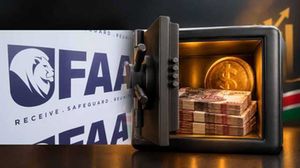
A well-placed source recently told me that the government is at an advanced stage of considering plans to launch gold monetisation. Under the proposal, the Central Bank of Kenya (CBK) would buy locally mined gold using Kenya shillings and convert it into part of the country’s official reserves.
Kenya has healthy foreign exchange reserves, estimated at $14 billion – approximately six months of import cover and well above the statutory limit. Projections indicate that after the Safaricom partial privatisation, Kenya’s reserve position will hit $15 billion.
That CBK has maintained a robust foreign exchange reserve position sitting alongside an incredibly tight, highly strained domestic fiscal space; characterised by compressed revenue mobilisation, rigid debt-servicing schedules and high expenditure demands. It remains the biggest paradox in Kenya’s macroeconomic landscape.
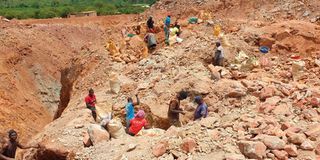
While our government scrambles to accumulate foreign exchange reserves – borrowing dollars, courting remittances and praying that commodity prices behave – gold is being mined in Migori, Kakamega, West Pokot and Siaya, refined abroad and added to someone else's national balance sheet.
Kenya’s foreign reserves are held almost entirely in dollars and other currencies. On the surface, this seems sensible. Dollars are universally accepted and reserves denominated in them offer liquidity. But this logic has a hidden cost that our policymakers have been too polite to name.
Every shilling the CBK spends to buy dollars eventually leaves the country through import payments and external debt service. We accumulate reserves by earning or borrowing foreign currency, a process that keeps us dependent on conditions we cannot control.
When the US Federal Reserve raises interest rates, our cost of borrowing rises. When the dollar strengthens, our shilling weakens and our import bill swells. When global risk appetite falls, capital leaves. We have built our monetary sovereignty on a foundation we do not own.
Kenya, unlike many countries, has a solution. The US holds over 8,000 tonnes of gold, more than any nation on earth. China has been accumulating gold reserves for a decade. Russia shifted to gold after Western sanctions threatened its dollar holdings.
Turkiye increased its reserves by more than 500 tonnes in five years. Germany, Italy and France each hold thousands of tonnes. Most recently, Ghana launched a domestic gold purchase programme to build reserves without drawing on scarce foreign exchange.
These governments have done the arithmetic on reserve diversification and concluded that gold – which cannot be sanctioned – cannot be inflated away by a foreign central bank, and is accepted everywhere on earth.
What makes Kenya’s situation compelling is that we do not need to buy gold from abroad. Gold-bearing geology runs through several counties. Kenya’s artisanal and small-scale mining sector is estimated to produce hundreds of kilos annually. Most of this is exported informally, often below market value, and none appears on the national balance sheet.
Miners extract wealth from Kenyan ground. That wealth is exported and refined in Dubai, Antwerp or London then traded on global markets. The value chain from Kenyan earth to international vaults passes almost entirely outside Kenya’s economy.
A CBK gold purchase would change this. Kenyan miners would have a guaranteed buyer: the CBK itself, purchasing at transparent, market-linked prices using shillings.
The shillings would remain in Kenya – paid to miners and circulating through the domestic economy – while the gold sits on our national balance sheet as a reserve asset.
Artisanal gold mining operates largely outside formal systems. Miners lack access to credit, face unsafe conditions, get unfair prices and contribute little to the tax base. A CBK purchase, with traceability and certification requirements, would create the infrastructure to formalise the sector. It would establish assaying centres, licensed buying agents, strengthen cooperatives and eventually a refinery that processes Kenyan gold on Kenyan soil.
The global monetary order is, gradually but unmistakably, diversifying from exclusive dollar dependence. Kenya can either position itself to gain from the shift or remain on the wrong side of it.
The writer is a former managing editor ofThe EastAfrican.
Unlock a world of exclusive content today!Unlock a world of exclusive content today!