Kenya sharply raises health emergency budget in wake of deadly outbreaks

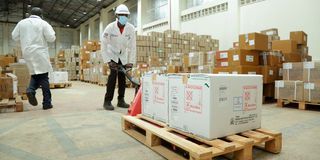
Kenya Medical Supply Authority (Kemsa) transfer cartons containing vaccine doses into a cold storage facility at their warehouse in Kisumu on March 4, 2021.

Photo credit: File | Nation Media Group

The Treasury has allocated Sh700 million to Kenya’s Health Emergency Preparedness, Response and Resilience Programme in the 2026/27 financial year, marking a 250 percent increase from the previous year and one of the steepest single-year funding increases, as the country registered a recent wave of disease outbreaks.

This funding will be used to expand disease surveillance and early warning systems, increase laboratory diagnostic capacity, deploy emergency response teams, establish strategic stockpiles of personal protective equipment and develop health screening infrastructure at airports, seaports and land border crossings.
Together, these investments are intended to reduce the critical timeframe between outbreak detection and containment, the period that repeatedly determines whether a public health threat remains manageable or escalates into a costly national emergency.

Outbreak history

Between 2007 and 2022, the country recorded over 460,000 cases and over 6,500 deaths from 23 diseases, with the frequency of outbreaks increasing by 26 percent during this period. Cholera, epidemic malaria, kala-azar and measles remained persistent public health threats.

Meanwhile, Covid-19 revealed the human and financial cost of being unprepared more clearly than any previous emergency.

Following the first confirmed case in March 2020, Kenya experienced seven waves of the virus, recording over 344,000 confirmed cases and 5,689 deaths.

In the 2019/20 financial year alone, the Kenya Medical Supplies Authority (Kemsa) spent Sh7.6 billion procuring items related to the Covid-19 pandemic.

Of this amount, the Auditor General found that Sh2.3 billion was lost through a procurement scandal that was one of the most damaging governance failures of the pandemic period.

Under pressure, the country improvised oxygen supply chains, isolation facilities, and public health communications, at a cost that would have been substantially reduced by early preparedness investment.

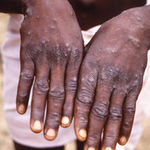
The Mpox outbreak that began in July 2024 highlighted a different dimension of vulnerability. Of the 48 confirmed cases recorded between July 2024 and February 2025, more than half were linked to the Mombasa–Malaba highway corridor.

Kenya has increased funding for disease preparedness to strengthen surveillance, labs and border systems for faster outbreak detection and response.

Photo credit: Shutterstock

Truck drivers and workers at roadside stopovers accounted for most of the infections, and one patient died.

As East Africa’s principal logistics hub, Kenya occupies a strategic position that naturally exposes it to the movement of diseases across the region.

This exposure is further compounded by the fact that Kenya shares borders with Uganda, South Sudan, Ethiopia and the Democratic Republic of Congo – countries that have experienced repeated Ebola outbreaks.

Each regional flare-up exerts immediate pressure on Kenya’s border screening mechanisms, surveillance networks, and rapid-response systems – precisely the capacities that this programme is designed to strengthen.

Where Kenya’s preparedness currently stands

Kenya’s preparedness landscape reflects meaningful gains in some areas and persistent limitations in others.

The country is one of only three in Africa, alongside Nigeria and South Africa, to operate fixed Biosafety Level 3 laboratories.

The facility at the Kenya Medical Research Institute’s (Kemri) Centre for Microbiology Research, which is run in partnership with Nagasaki University, renewed its cooperation agreement in July 2024 to strengthen disease research and bolster readiness for future health emergencies.

Biosafety levels classify laboratories according to the containment measures required to handle infectious agents safely.

These levels range from BSL-1, which is used for low-risk organisms, to BSL-4, which is used for pathogens for which no known vaccine or treatment exists. BSL-3 facilities handle pathogens that can cause severe illness and be transmitted through the air.

These facilities require sealed negative-pressure rooms, filtered air systems, and advanced respiratory protection.

BSL-4 laboratories have fully isolated air supplies and pressurised protective suits and are reserved for the world’s most dangerous pathogens, including Ebola, Marburg and Lassa fever. Fewer than 60 such facilities exist globally. Kenya has none.

Of the extensive network of laboratories across Kenya’s health system, only three meet the biosafety requirements for conducting confirmatory Ebola testing. They include the National Public Health Virology Reference Laboratory and the Kemri centres in Kisumu and Nairobi.

In a country of roughly 55 million people, where a single confirmed case could trigger the testing of dozens of contacts spread across multiple counties, having this capacity concentrated in just two cities highlights the operational vulnerabilities that the programme is trying to address.

In addition to laboratory systems, Kenya has established over 20 sub-national Emergency Operations Centres, which responded to more than 100 disease outbreaks by 2024.

Graduates of the Field Epidemiology and Laboratory Training Programme who have participated in responses to over 80 percent of the country’s detected outbreaks form the operational backbone of the Ministry of Health’s emergency response machinery.

In September 2024, Kenya completed its second WHO-led independent health security assessment, covering 19 technical areas. While evaluators acknowledged substantial progress in several areas, they also identified critical gaps requiring urgent attention.

These findings directly informed Kenya’s National Action Plan for Health Security for the period 2026–2030.

The treaty commitment behind the numbers

The budget increase reflects Kenya’s obligations under the WHO Pandemic Agreement, which was adopted during the 78th World Health Assembly in Geneva in May 2025.

This agreement is the second legally binding treaty in WHO history and the first to be dedicated specifically to pandemic preparedness.

However, it cannot formally enter into force until a supplementary annex on pathogen access and benefit-sharing is finalised, and at least 60 countries have completed the ratification process.

At the 78th World Health Assembly in May 2026, member states agreed that a final negotiated outcome would be presented to the assembly for adoption in May 2027. This pushed the earliest possible ratification window back by a full year.

Addressing the World Health Assembly, Health Cabinet Secretary Aden Duale said that the agreement would help to ensure that Kenya’s children would be better prepared for future public health emergencies.

Those responsible for translating policy commitments into operational readiness have also been candid about the remaining barriers.

“While capacity is being built in emergency preparedness, things are holding us back, such as our inability to access funds immediately,” said Victoria Kanana Kimonye of the Kenya National Public Health Institute.

“The resources exist, but as a health fraternity, we have not learned how to access them through existing processes and guidelines,” said Dr Kimonye.

Allocations are projected to rise to Sh978 million in 2027/28, before moderating to Sh332 million in 2028/29.

Follow ourWhatsApp channel for the latest business and markets updates.

PAYE Tax Calculator

Note: The results are not exact but very close to the actual.