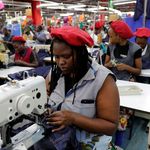
Two decades ago, the African Growth and Opportunity Act (Agoa) symbolised a breakthrough for Africa’s trade with the United States. It gave countries like Kenya preferential access to US markets, boosting textile exports and creating jobs.
Yet today, that promise is being undermined. With new tariffs, delays in Agoa’s renewal, and the scrapping of flagship programmes such as Power Africa, Washington’s commitment to African trade and development looks increasingly uncertain.
Even more pressing, Agoa itself is set to expire in just two weeks. Unless Washington acts, thousands of African businesses will lose duty-free access to the US market overnight.
For Kenya, which has built entire export industries around Agoa, the uncertainty is destabilising and sends a worrying signal about America’s long-term reliability as a trade partner.
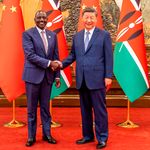
At the same time, a new horizon is emerging from the East. China has granted duty-free market access to almost all African economies, including Kenya. This is not a token gesture. It opens the door for African goods—tea, coffee, avocados, textiles, and manufactured products—to reach a vast consumer base of 1.4 billion people, free from prohibitive tariffs.
For Kenya and Africa at large, this represents a turning point.
The US decision to retreat from aid-driven partnerships and impose tariffs has created anxiety across the continent. For Kenya, this uncertainty is particularly sharp.
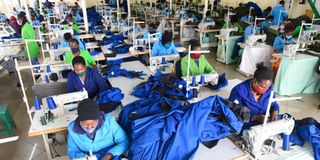
Tens of thousands of workers in the textile sector depend on US orders. A slowdown in demand due to tariffs or the expiration of Agoa threatens not only jobs but also livelihoods.
For African governments that have long sought predictable partnerships, the volatility in Washington is more than a setback—it is a reminder that dependency on one market can be risky.
China’s approach could not be more different. For years, Beijing has invested heavily in African infrastructure—railways, highways, ports, power projects—that form the backbone of regional trade.
Now, by opening its markets, China is offering Africa not just the means to produce, but also the guarantee of demand.
It is a complete ecosystem: finance, infrastructure, and now direct market access.
For Kenya, this is a chance to diversify exports, expand industries, and climb up the value chain. Instead of selling raw coffee beans, why not sell roasted, packaged Kenyan coffee to the Chinese middle class? Instead of exporting hides, why not export finished leather goods to Guangzhou boutiques?
What makes this moment so powerful is the alignment with Africa’s own ambitions under the African Continental Free Trade Area.
Duty-free access to China can complement regional integration by encouraging production chains across the continent. Kenyan farmers could supply raw inputs, Ethiopian or Ugandan factories could process them, and together African firms could sell value-added goods to China.
This shift is more than trade—it is industrialization. It gives African businesses the incentive to innovate, to add value, and to compete on a global scale.
Kenya is uniquely positioned to lead this new phase of engagement. With its strong agricultural base, growing manufacturing sector, and strategic role as a regional hub, Nairobi can serve as Africa’s gateway to the Chinese market.
By encouraging value addition, supporting industrial parks, and building export-ready industries, Kenya can ensure that this opportunity translates into jobs and growth at home.
China’s gesture is not about charity—it is about partnership. It is about recognizing Africa as an equal player in the global economy, capable of producing not just raw materials but finished products that meet international standards.
Africa has often been on the receiving end of global shifts in trade policy. This time, however, the continent stands to benefit if it acts decisively. With the US retreating and China extending a hand, Africa is no longer pleading for access—it is being invited into one of the world’s largest markets.
The choice is clear. Kenya and Africa must embrace this moment with ambition and vision. By tapping into Chinese demand, building regional supply chains, and prioritising value addition, Africa can take a bold step toward economic transformation.
In a changing global order, opportunities of this scale do not come often. China has opened the door. It is up to Kenya and Africa to walk through it.
The writer is a journalist and communications consultant.
Unlock a world of exclusive content today!Unlock a world of exclusive content today!