Juja Farm's unchecked land subdivision raises fears of chaos

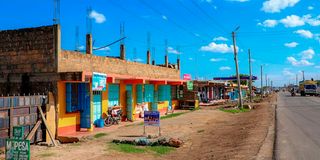
 A general view of Juja Farm town centre in Kiambu County on March 12, 2026. Lucy Wanjiru | Nation

Photo credit: Lucy Wanjiru | Nation Media Group

Juja Farm, once a quiet settlement on the outskirts of Nairobi, is undergoing a dramatic transformation as infrastructure expansion and rising housing demand turn it into one of Kiambu County’s fastest-growing real estate frontiers.

Land that early settlers bought for a few hundred thousand shillings in the 1990s is now being subdivided into residential plots selling for more than Sh2 million.
Yet behind the property boom, some residents are raising a warning. If land continues to be subdivided into ever-smaller plots without proper planning, they say the area risks evolving into an overcrowded settlement.

“Juja Farm has the potential to become the biggest slum in Africa within the next 10 to 15 years,” warns Wilson Gitau, a long-time resident and businessman.

In the last few year, early settlers like Mr Gitau have watched with concern as the standard three and a quarter acre parcels of land are divided into, first a quarter acre plots, and now into pieces as small as 40 by 80 metres.

The early settlers

For many of Juja Farm’s early residents, the area was originally a quiet rural settlement where land ownership represented long-term security rather than a commercial investment.

Joseph Mwangi and his wife Lydia are among those whose plans for retirement took shape in Juja Farm.

“I bought land in Juja Farm in 2001 because I was about to retire and needed a place to call home. I bought a plot measuring three and a quarter acres. In fact, we sold our old car to raise extra money for this purchase,” he says.

At the time, the land cost him Sh400,000.

“We started building a temporary house in 2005 and slowly built the permanent house over time. This is now my home. Even when we die, we will be buried here,” he says.

Today, their lives revolve around modest farming activities.

“I have goats and my wife keeps chicken. We are old, so we don’t want to do too much that will stress us. At our age, it’s about staying together and understanding each other.”

For years, many families treated their land in a similar way; large plots used for homes, small-scale farming or simply held for the future.

Joseph Mwangi Njagi and his wife Lydia Mwangi residents of Juja farm gesture during the interview at their home in Kiambu County on March 12, 2026. 

Photo credit: Lucy Wanjiru | Nation Media Group

Historical settlement origins

Much of Juja Farm’s land structure can be traced back to a settlement model established in the 1970s.

According to Mr Gitau, the area was part of a land redistribution programme that encouraged communities to form land-buying companies.

“In 1976, the government told people to form land-buying companies to settle freedom fighters and their families. Juja Farm was one of the projects under that model,” he says.

Through these companies, about 26,000 acres of land were purchased and subdivided.

“These companies purchased the entire 26,000-acre Juja Farm at approximately Sh5,350,000. These were then divided into 5,000 plots of three and a quarter acres each. However, some riverfront areas were divided into larger five-acre plots.”

Members of the land-buying companies purchased shares to acquire land. “One share equalled an acre and cost Sh1,100,” Mr Gitau recalls.

For decades, many of these large parcels remained intact as families held onto their land rather than subdividing or selling it.

Infrastructure and development

Over time, infrastructure improvements began reshaping the area.

Mr Mwangi says the gradual expansion of roads, water supply and electricity has transformed both daily life and land values.

“This place has really changed. Land has also become expensive, especially now that we have a tarmacked road, water and electricity supply,” he says.

Road connectivity has played a particularly important role. According to Jane Njogu, a director at Fourjeis Real Estate Agency, Juja Farm’s accessibility has improved significantly.

“There are proper roads such as Juja Farm Road, which can be accessed from Thika Superhighway. Juja Farm Road is now tarmacked all the way to the end of the farm,” she says.

Wilson Gitau a Business man at Juja farm and retired civil servant gesture during the interview in Kiambu County on March 12, 2026. Lucy Wanjiru | Nation

Photo credit: Lucy Wanjiru | Nation Media Group

Additional connections have also expanded access. “There are roads connecting the Eastern Bypass through Kamakis and Ngikumari to Juja Farm.”

A proposed infrastructure project may further accelerate development.

“The Greater Eastern Bypass is expected to run from Mombasa Road via Kang’undo Road and Juja Farm Road to Thika-Garissa Road.

Once completed, people travelling to the airport will not have to come all the way to the superhighway,” Ms Njogu explains.

Utilities have also expanded. Juja Farm is now fully serviced by the Ruiru Juja Water and Sewerage Company with water supply throughout. “There is no rationing,” says Ms Njogu.

Market dynamics

As infrastructure improved, the real estate market in Juja Farm has been changing rapidly.

Large plots that once remained under single ownership are increasingly being subdivided into smaller residential parcels. Ms Njogu says this process has dramatically altered land values.

“When I moved here in 2015, a plot measuring 40 by 80 feet cost around Sh150,000 in a prime location near the Juja Farm Shopping Centre. A 50 by 100 plot went for around Sh190,000, while quarter-acre plots were about Sh250,000,” she says.

At the time, the original three-and-a-quarter-acre parcels sold for between Sh4.5 million and Sh5 million.

However, demand quickly pushed prices higher. Ms Njogu recalls one project where buyers initially resisted new price levels.

“That piece of land measured three and a quarter acres, so we subdivided it into 24 plots measuring 50 by 100 metres. We started selling those plots for as little as Sh700,000, but nobody was buying. People said it was too expensive for Juja Farm because they were used to prices between Sh200,000 and Sh500,000.”

Eventually, she says, the market adjusted. “We lowered the price to around Sh650,000 in 2018, but we are currently selling the same plot for Sh1.6 million. Now, a quarter of an acre cannot be sold for less than Sh2.5 million, and can go up to around Sh4 million depending on the location.”

The rapid appreciation has encouraged more landowners to subdivide their properties.

Changing landscape

The transformation is also visible in the landscape. When Mungai Njehu and his wife Nancy bought land in Juja Farm in 1997, the area looked very different.

“We bought it for Sh265,000. At that time this place was all sisal, so we did a lot of work clearing it,” he says.

Wildlife, he says, was also common.

“We ate zebra meat, and hyenas passed by people’s homes,” Mrs Njehu recalls. “They have gradually disappeared because of the growing human population.”

Today, land prices reflect the area’s growing popularity. “An eighth of an acre around here now costs about Sh1.5 million,” says Mr Njehu.

Future planning concerns

While development has brought economic opportunities, some residents worry about the long-term consequences of rapid subdivision.

Mr Gitau believes the trend toward ever-smaller plots could strain infrastructure and sanitation systems if it continues unchecked.

Fourjeis Real Estate Agency Director Jane Njogu during the interview at her office in Juja, Kiambu County on March 12, 2026. Lucy Wanjiru | Nation

Photo credit: Lucy Wanjiru | Nation Media Group

“If parcels are divided into 40 by 80, then three and a quarter acres can probably accommodate about 52 households,” he says. “Those 52 households will also require 52 toilets. What crisis will we be creating in the process?”

He argues that better planning controls could help maintain sustainable density.

“If there was controlled development, plots measuring 40 by 80 should be prohibited, and instead we should probably have parcels subdivided into 100 by 100.”

For now, Juja Farm remains one of the fastest-growing real estate markets around Nairobi. But as land prices continue to rise and new homes spread across the former sisal fields, residents say the choices made today about planning and subdivision will determine whether the area becomes a well-organised suburb—or something far more difficult to manage in the future.

PAYE Tax Calculator

Note: The results are not exact but very close to the actual.