“Ain’t no mountain high enough.” That is the refrain of Paloma Lengema’s life. How else could she have survived what she survived? First, in 1997, she went into exile after the strongman Mobutu Sese Seko was overthrown in the Democratic Republic of Congo (née Zaire). She was just nine years old and, worse, she says, “I had to leave my dogs behind.”
She left the DRC and, over a decade, lived and worked across the world. But perhaps you never truly escape your home. That may explain why she got a dachshund, because “Since we left Congo, I've always wanted a dog back in my life.” And the way she talks about pondu, a Congolese cassava leaf soup that divorces you from any miseries, is what chocolate is to Switzerland.
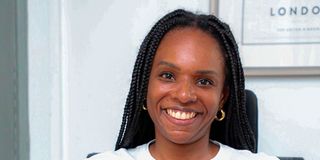
Now the General Manager for BIC East Africa, she wants to be more than a title. And why not? She is a wife, a best friend, a sister. She is not dreaming of being just one thing. Because a dream can be a distraction just as easily as it can be a goal. What’s to stop her? Ain’t no mountain high enough.
When people say, ‘Tell me about yourself,’ what do you say?
I’m someone who has always been ambitious and a perfectionist. I think I’m harder on myself than on others. I’m my worst critic, but I manage. A friend once described me as a calm force, and that is perfect. Meeting my partner, now my husband, really helped me find balance. He would call me pessimistic, but I would say I’m realistic. I call him the golden retriever in our relationship. He’s super optimistic and has helped me focus on what really matters in life.
Where did you meet?
In Kenya. I came here in 2019 for work, for BIC. I didn’t plan on staying. It was supposed to be a three-year assignment, but then Covid happened. I met him during that time, and now we’ve been married for one and a half years.
Congratulations. What’s your most Kenyan habit?
Thank you. I love meat, so probably nyama choma and koroga. I love food in general [chuckles]. We are big protein eaters in the family.
What has been the most fun part of your life?
Travelling. I’ve lived in many countries over 10 to 15 years, had many experiences and met a lot of people. You see a bit on the walls, those are some of the cities I’ve lived in. Abidjan in Cote d’Ivoire, Paris where I grew up, the US, Amsterdam, Sweden and London. I’m happy that part of my life is behind me, and I now get to settle in Kenya, a place I can call home.
What did travel change in you?
My parents were born in Zaire, like me. In 1997, when I was about nine, President Mobutu Sese Seko was overthrown and we had to leave unexpectedly, thinking we would return, but we never did.
What I learned from it is resilience. My parents fled and did what they had to do for us to survive as a family. But I also learned that what mattered yesterday – who you were, your achievements – doesn’t always matter today. You have to seize every opportunity.
What is the one place you’ve gone to that still has your heart?
Kenya. I left in 2023 for Cote d’Ivoire and came back in 2024. I needed that distance to understand how much Kenya meant to me, both personally and professionally.
What’s your top travel tip?
Don’t go with expectations. Don’t overplan your itinerary. Spend time with locals as much as possible. And try the food. Be open, because not everyone is willing to try new things.
What’s the strangest thing you’ve eaten?
Snails. They are a delicacy in France, so it’s normal for us, but in other cultures, it might feel strange.
You seem to enjoy it.
It’s okay. They prepare it with a lot of garlic, so you taste the garlic more than anything else. But I don’t know how to prepare it [chuckles].
What’s a travel ritual you swear by?
I spend time on social media beforehand. Pinterest and Instagram are my go-to platforms for inspiration on what to do and where to go.
What have you learned about yourself on these trips?
When you travel alone, that’s when you learn the most. You have to be open and put yourself out there. There’s a saying I live by professionally, but it applies personally too: growth and life happen outside your comfort zone. Opportunities are everywhere, but you need to be open enough to see and seize them.
What’s a boring part of your life?
I’m very structured. Every day looked the same until six weeks ago when we got a puppy. I wake up at 6am, meditate and manifest. Between nine and five, I focus on work. Early dinner, then the gym, and I’m back home by around nine. By ten, I’m in bed. Mondays to Fridays are quite structured. I would say boring [chuckles], but I like it that way.
And your weekends?
It depends. Sometimes I’m travelling, although it’s harder now with the puppy. Otherwise, I spend time with friends. It’s mostly impromptu. Sundays are for my husband and me – we go to Karura for a long walk. That’s when we catch up.
What led you to adopt a puppy?
His name is Modro. He’s a sweet little dachshund, the sausage dog. This goes back to 1997. In Congo, June is when schools close and students return in September, but the coup happened around May. I grew up with dogs, and we left them with my extended family, thinking we would return for them, but we never did. My parents were living in Europe in apartments, so there was no way to bring the dogs. Since then, I’ve always wanted a dog in my life. I love the companionship, and they are truly a human’s best friend. Now that I am settled, it just makes sense.
Is there a Congolese tradition that keeps you connected to your roots?
Food. Especially my grandmother’s cooking, though I only get it when I go back to Congo.
Which one is this?
Haha! In Kenya, not many people eat plantain, but it’s a big thing in Congo. I love plantain. And there’s a dish called pondu, which I love with rice. It’s a vegetable dish boiled with dried fish, giving it a very distinct taste.
What’s the best piece of advice you’ve received?
When I got this role, because I am quite a perfectionist, a manager told me that 80 percent is good enough. Don’t aim for 100 percent all the time, because it’s often unattainable. Work within the 70 to 80 percent range.
What is your least favourite truth and why?
We are all here for a short time, and we have to make the most of it. Most of the time, we get stuck in our routines and don’t see time passing because we are focused on things that are not that important.
If today were your last day, what would you regret not doing?
I think I would regret not being close to my family – my parents and my brother. We’ve lived apart for years, since I left high school and started university. And as time goes by, especially as you get older, you realise your parents are also getting older. Every moment counts.
Are they in Congo?
No, Dubai. It’s not the best place to be right now [chuckles]. Actually, I’m trying to convince them to retire in Kenya. That’s one of my big projects currently. I have a younger brother.
How was that, being the only girl and the eldest?
It was quite easy, in the sense that – without bragging – I was calm, had good grades and didn’t go against my parents. It was more difficult for my brother, to be honest. I think as a boy you are more daring, you want to challenge authority. When you are the firstborn, you have more privileges, but you also have to protect your younger sibling.
Paloma Lengema, General Manager at BIC East Africa, believes growth happens outside your comfort zone.
Photo credit: Lucy Wanjiru | Nation Media Group
Growing up, were you more of a daddy’s girl, or have you grown into your mother’s daughter?
I’m a mum’s girl, 100 percent. But actually, it depends. Growing up, I was closer to my mum, but now I feel close to both. I really believe my parents are my life coaches. There isn’t a single decision I don’t share with them – not to get their approval, but to get their perspective. What I love about my mum is her emotional intelligence; she is very good with people. My dad is more pragmatic and has strong strategic thinking.
What’s a family habit or tradition that you hold on to?
My mum’s birthday is close to Christmas, December 21. Around that time, we always spend that week together. I’m the planner in the family – we choose the destination, and I organise everything else, from the itinerary to the bookings.
What are you secretly good at?
Haha! I love baking and salsa dancing. I bake often, but I’ve recently changed my diet, so I spend a lot of time looking at recipes that fit the new diet I am on.
What habit are you trying to kick?
I’m on a wellness journey. Exercise has always been part of my daily routine, but now I’m focusing more on nutrition. It’s about not just eating what I crave, but what is actually good for my body. I’ve realised I’m intolerant to many things – especially the good things, like what goes into cakes [chuckles]. It’s a journey and a lifestyle change.
How long has this journey been so far?
It has its ups and downs. Especially on weekends when you want to socialise with friends – that’s the hardest part, because I’m easily influenced. The challenge is staying consistent. During the week, it’s easier. I carry my food with me and stay disciplined.
What’s one thing you wish people understood about you more?
My accent [chuckles]. When you take on a role as a general manager, it can feel quite lonely, especially at the beginning. People tend to see the function before the person. But at the end of the day, I’m just a person, and I’m as approachable as anyone else.
What’s something you believe that most people may find uncomfortable?
I’m not religious, but I believe in energy. I know it’s very controversial in Kenya.
What do you mean by energy?
I believe in the energy the universe gives you. If you manifest things and bring positivity into the world, those things come back to you.
You grew up like that?
My grandparents were very religious. I would say my parents, not so much. But I believe in energy and what it brings.
What’s something your success hasn’t fixed?
Whenever you achieve something and move on, you still have to prove yourself all over again. It never stops. At the beginning, there is that imposter syndrome – wondering whether you are truly fit for the role. And that feeling hasn’t completely gone away.
What’s the best thing a friend has ever done for you?
Not giving up on our friendship. My best friend was my neighbour in Congo, and we grew up going to each other’s homes every day, like sisters. When I left Congo, it was a big change for me, and I didn’t reach out. But she did – through her mother and our families – and organised a first get-together. We’ve remained best friends.
What’s the best thing you’ve ever done for a friend?
Opening up my home for that same best friend.
What matters less than you thought it would?
My professional success. I’ve always been focused on the next career move or the next country. But now, since I met my partner, it’s more about balance – our family and growing my personal life. Having a life outside work.
I found it amazing that most Kenyans have a corporate job and a side hustle. It made me realise you can have more than one identity [chuckles].
What does the woman in the mirror say?
As a woman of my generation, we’ve been told you can have it all. And when we are told that, it feels like everything will be easy – the job, the marriage, the children – that you can manage all of it.
But is it really true that you can have it all? Or do you have to focus on what matters most to you, because otherwise you compromise on too many things. That woman tells me it’s actually okay not to have it all. You can still be successful.
What have you learned that you can teach us?
All the good things and opportunities in my life have happened outside of my comfort zone. Don’t be scared of the unknown – usually, it will surprise you.
I had initially refused to come to Kenya when I was offered this job, but my mentor reassured me professionally. I’m grateful I listened, because through that leap, I found a home.
What’s the best decision you’ve ever made?
Haha! Marrying my husband. We are a good pair. We balance each other out, bring out the best in each other, and we are both quite ambitious.
Paloma, what do you secretly envy in others?
That confidence to be charismatic. I admire how some people can tell a story that takes you from A to Z and still leaves you wanting more. I find that amazing.
What are you looking forward to doing this weekend?
My dad is coming [chuckles]. He is making a quick stop before heading to Congo. I’m looking forward to seeing him, spending quality time together, and introducing him to Modro.