James Opiyo Wandayi had his ‘Damascus moment’ when President William Ruto and the late Raila Odinga struck a camaraderie following the violent Gen Z protests that shook the Kenya Kwanza administration.
The truce between Odinga of the Orange Democratic Movement (ODM) party, and President Ruto of the United Democratic Alliance culminated in the formation of a broad-based government.
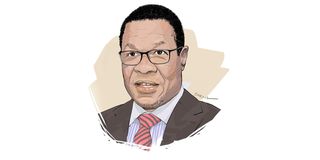
On August 8, 2024, Mr Wandayi—then a fiery critic of the Kenya Kwanza government—officially joined President Ruto’s Cabinet to head the Energy docket.
Mr Wandayi, an ODM member, was until then the MP for Ugunja Constituency and the National Assembly Minority Leader.
Since his appointment to the Cabinet, his zeal for singing praises of the Head of State and his broad-based government has been intense and outstanding.
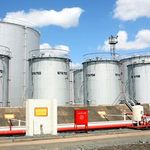
His job at the Energy and Petroleum ministry has, however, come under immense pressure amid global fuel supply disruptions linked to the US-Israel war against Iran, and an unravelling petroleum import scandal which has already claimed the jobs of several officials under his direct watch.
Since the US-Israel conflict started about a month ago, Mr Wandayi struck a confident tone, repeatedly assuring Kenyans that the country had sufficient supplies of petroleum products, including diesel, petrol, kerosene, liquefied petroleum gas, and jet fuel.
Weeks into the war, on March 13, Mr Wandayi said the government had put in place measures to ensure a steady and adequate supply of fuel in the country.
“A major conflict has erupted in the Middle East between the US, Israel and Iran. This war has caused widespread fear among citizens not just in Kenya, but across the world,” said Mr Wandayi.
“I want to assure you that regarding fuel, Kenyans should not worry. The national government, led by His Excellency President Ruto, has put in place comprehensive strategies to ensure that there is enough fuel today, tomorrow and in the future. Therefore, citizens should not be anxious,” he added.
He maintained the same optimism even as the war raged on and countries around the world were forced to take contingency measures, including rationing, subsidising or cutting taxes on fuel products such as petrol, diesel, jet fuel, kerosene and liquefied petroleum gas.
Two weeks later, Mr Wandayi again sought to calm public anxiety, insisting there was no fuel shortage and that the government had contingency plans in place in case of disruptions to the Government-to-Government fuel deal with Saudi Aramco, Abu Dhabi National Oil Company and Emirates National Oil Company.
“There is no crisis at the moment. We have enough stock of all petroleum products. We wish to discourage Kenyans from engaging in panic buying. We have developed appropriate contingency plans to mitigate against the effects of the raging war in the Middle East,” said Mr Wandayi.
Suddenly, as the energy crisis—aggravated by the closure of the Strait of Hormuz, through which a fifth of global oil supplies pass—deepened, the burden of reassuring Kenyans shifted from Mr Wandayi to his Treasury counterpart, John Mbadi.
The crisis is increasingly fuelling inflationary pressures that require fiscal intervention, including potential tax cuts on fuel, elevating Mr Mbadi’s role in explaining how Kenya is managing the economic fallout.
But Mr Wandayi’s earlier optimism, coupled with recent developments in which senior energy officials were arrested in a sting operation over alleged malpractice, may have cast the minister in a bad light. Mr Mbadi’s diagnosis has been more measured.
Appearing in Parliament, Mr Mbadi revealed that Kenya has 16 days’ worth of petrol stocks, 19 days of diesel and 49 days of jet fuel and kerosene.
Meanwhile, as Mr Wandayi recoiled into silence, the crisis within his docket deepened.
Petroleum Principal Secretary Mohamed Liban, Kenya Pipeline Company Managing Director Joe Sang, Energy and Petroleum Regulatory Authority Director-General Daniel Kiptoo and Petroleum Director Joseph Wafula were arrested in a late-night operation linked to a widening probe into fuel imports, supply disruptions, and quality concerns.
The four were picked up by Directorate of Criminal Investigations (DCI) officers and detained at different police stations before being transferred to DCI headquarters along Kiambu Road on Friday afternoon.
Liban, Sang and Kiptoo have since resigned from their positions.
At the centre of the probe is a controversial fuel consignment imported outside the government-to-government arrangement that was flagged over quality concerns. Authorities are investigating claims that the shipment contained elevated sulphur levels that do not meet Kenya’s standards.
The anomaly was reportedly detected by a Kenya Pipeline Company quality assurance manager, who halted distribution after tests and escalated the matter to senior officials. The decision triggered internal disagreements over whether the product should be released into the market.
The arrests have also been linked to the importation of petrol outside the G-to-G framework by two local oil firms—One Petroleum and Oryx—which each shipped in 60 tonnes of petrol last month.
The resignations have triggered calls for Mr Wandayi to take responsibility for the mess within his docket—a call that could test President Ruto’s resolve to clean up the country’s fuel import scheme, given the delicate political ties with Mr Wandayi's ODM party.
Ever since the former Ugunja MP joined President Ruto’s Cabinet, he has largely struck a reassuring tone in defence of the government. A career politician, Mr Wandayi is among ministers who have openly campaigned for President Ruto’s re-election, blurring the line between policy and politics—a stance he has defended.
“You cannot draw a boundary on how far a government officer, such as a Cabinet Secretary, should go in explaining government policy and appealing to the people they serve,” he said in a recent interview.
A graduate of agricultural economics from Jomo Kenyatta University of Agriculture and Technology, Mr Wandayi has at times appeared to struggle with mastery of the Energy docket, notably when he was at pains to explain during a TV interview the type of oil Kenya is expected to produce from Lokichar in Turkana.