What remains: Kris Senanu, grief and the second half of life

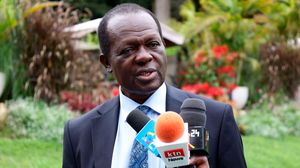
Kris Mawuena Senanu, Chair of the USIU-Africa University Council and venture capitalist, poses for a photo after an interview at Capital Club on January 23, 2025.

Photo credit: Francis Nderitu | Nation Media Group

Many things happened after this interview. First, Kris Senanu transitioned into a new phase of his life, took up new roles. During our interview, he was on break from active work, the shadows having caught up, having put in hard yards for most of his life. Second, even more consequential, he lost his wife.

“I used to struggle,” he says. “I need to do this, then I’ll do that, but now I am at a stage where I know I can do a little bit of all of it, in the spaces I want, in a comfortable way, without being rushed.”

He was a man in a hurry; what the hurry was, he can’t say. His principle was ‘Get it done’. This, you can glean from his resume: He is the former Managing Director, Enterprise Division of Telkom Kenya, former Chief Enterprises Business Officer at Safaricom PLC, and immediate former Chairman of USIU Africa.

He was one of the principal figures in Access Kenya Group’s listing on the Nairobi Securities Exchange, making it the first publicly listed ICT firm in Kenya in 2007. He’s also chaired the boards of the Kenya Institute of Management, Kenya Network Information Centre , and the Telecommunications Service Providers of Kenya.

Kris holds an undergraduate degree in International Business Administration from USIU-Africa, where, later as chair of the university council, he was the tip of the spear that heralded online teaching and learning using the Learning Management System.

He is currently pursuing a doctorate in Business and Administration from UBIS (University of Business, Innovation, and Sustainability) to buttress his MBA from Warwick Business School.

Himself the son of a Ghanaian academic, Prof Kwadzo Senanu (or an anti-capitalist, as Kris puts it), he decided to become an entrepreneur, wielding enough star dust for Sony Productions to want some of it as one of the judges in KCB Lions’ Den. “I already had a portfolio of 27 companies before going to Lions’ Den,” he says, “And that’s why I was chosen.”

Now the Chairman of Blackrock Capital Investments, his investment arm, and Executive Chairman of Smith & Berkeley Advisory LLC, a corporate advisory and consulting firm, Kris makes no excuses for his lot, because no one gets through life unscathed. He loves Kenya, he loves being in Kenya, a pact he made with his late wife, and what’s a man worth other than his word? What he is leaving behind is no different than what he is leaving for, he seems to say. “I am staying in the country of my choice,” he says.

“Where you are born is a country of chance. And I made a choice. I like Kenya. This is it.”

Do you miss home?

[Chuckles] A couple of my seniors when I was in high school are now in major positions. And they’re like, Kris, this is your time to come and add value and make an impact in your country. But what is home? Home is where you are comfortable. Since I left Safaricom, I’ve been on a break to reset.

The corporate life had taken a toll on my health. I left in May 2024, gave myself nine months, and then after the period, I was still tired. I had no desire to go back to corporate. Truth is, I feel better now. But then I got used to it [chuckles].

Wake up and decide, actually, you know what, I’m working from home today. I guess Covid also changed the world and how we work. I built an office at home; you have to give me a good reason to get me out of my home.

Where are you now in your life?

When I was six, I was playing chess with my father and was winning. Then he was called for an emergency meeting. He was the pro-vice-chancellor (VC) of the University of Ghana. I couldn’t understand why he had to leave; I wanted to finish that game.

He explained that the chairman of the council wanted him at the office. I thought, once you’re the VC, you’re the boss. So, I told him I wanted to be chairman of the council.

When I became chairman of USIU, my elder brother called and said, “By the way, you know what you speak to, the universe listens. That chess game incident was the universe granting you what you asked for.”

I was born and raised on a university campus for 17 years. I came to Kenya at 19. My dad was a lecturer, and everyone around me was Professor A, Professor B, Dr This, Dr That. I didn’t realise how much impact that had on me.

From the time I joined USIU in January 1993, I’ve always been affiliated. I completed my undergraduate studies in an accelerated programme because I had a 4.0 GPA.

I benefited from a Director’s Scholarship, covering 75 percent of my tuition. I was very active in student affairs and became Vice Chair of the Student Council. After graduation, I joined the alumni, eventually becoming chairman. I served three terms.

At 35, in 2008, I became the youngest board member of USIU. Education boards are unique—you impact students for years, helping them step into life. Many assume it’s a paid role; it’s not. You help raise funds for the institution.

How do you define yourself?

I don’t consider myself a foreigner in Kenya, though technically I am. My passions are education, technology, and entrepreneurship. I’ve always mentored people, though I didn’t want to be a lecturer like my father. I focus on creating internships and scholarships.

As I move into the second half of my life, I’ve shifted from a profit focus to an impact focus. Much of my time now goes into initiatives with long-term impact rather than immediate returns.

As we age, we’re often said to harden into ourselves. In this later chapter of your life, do you find that you’ve settled into a fixed sense of self?

Okay, first, many people think I'm a techie. I'm not. I'm a salesman, a commercial person. It is true - your network is your net worth. I remember bumping into an old schoolmate who recalled that I was selling everything, including diskettes, for some extra money.

She asked me to join them then, which is how I started my tech career working for Swift Global, an internet provider that is now what you have as Liquid Telecom, where I cut my teeth as a very aggressive salesperson. Never missed my targets. I did a lot of networking, made a lot of friends, and I just love the whole art of negotiation.

I left Swift to join two brothers, Jonathan and David Solomon, to set up Access Kenya. For six years, we built it, took it public, ran it for five years, and sold it. Along the way, I invested in SMEs, creating a holding company for multiple small businesses. Many failed, but failure teaches you what truly matters—idea, execution, or person.

Kris Mawuena Senanu, Chair of the USIU-Africa University Council and venture capitalist, poses for a photo after an interview at Capital Club on January 23, 2025.

Photo credit: Francis Nderitu | Nation Media Group

In 2016, Sony Productions brought Lion’s Den to Kenya. My name came up. Lions’ Den gave me a platform to invest in people. My theory is that execution and grit matter more than the idea. Many have great ideas but lack the will to see them through.

You are 52, going 53. What’s it like?

It’s fun. For most of the first half of my life, I was in a hurry. I can't say in a hurry for what. One of the key differences about the switch is that I am no longer in a rush, perhaps because of the burnout in corporate. Being under pressure, running up and down, chasing the bucks, there are long-term ramifications. I feel settled, and I don't have to give anything to anybody [chuckles].

Do you think you’d be where you are without pushing yourself to the brink?

 No. Maybe two or three things could have happened. The problem with the internet is that it stores everything. If you check somewhere on the internet, you will see I made a statement years ago that I want to retire at 45. When I was saying that, I didn't know what I was talking about; I was probably smoking something cheap [chuckles].

I love working in small businesses because I have seen their growth potential and how they can create employment. Large businesses typically  end up doing redundancies. A small business can move from five to 50 in three years. So, yes, I'm where I am because of burnout. But I'm also where I am because of age. It was bound to happen. For me, it happened at 48.

You’ve preempted my next question. Success at your level is a moving object. At what age did you know you were at the peak of your ambitions?

At 48. Covid happened in 2020, and my dad passed on. When I joined Telkom in 2016 on a four-year contract, the plan was that when I was done with the Telkom contract, I would go to Ghana and just hang out with my dad. Then the global pandemic came, and I was locked in Kenya, and he passed on.

What was that like, was there an element of guilt in your grief?

A lot changed in me at that point. I had changed the original plan by taking another contract instead of going to Ghana to be with my dad, so I couldn’t blame anybody. I felt like the child who spent the least time with his parents.

Assumptions permitting, you seem like the child who most resembles your dad.

Yes.

Was the plan to fill his shoes or get your own pair?

It depends on what you're judging. For many years, the books used for literature in West Africa were written by my dad. That's his impact. I haven't written any paragraphs that would be valuable. Back in the day, during the revolution, my dad was also influential in politics. He was among those who resisted the army when it came into power. He was the Gen Z of those days [chuckles].

Hearing you speak, I can hear many similarities with your dad. But how are you different from him?

My dad did not believe in profit. He was not a communist. He was anti-capital. We argued about that for many years. He would always ask me, "What's your target for this year?” I said, "I want to make $10 million. He would ask, “For what?” I’d be like, “What do you mean by for what?” He would explain, " Yeah, put it into this. Then you make a profit. Then what? If you're making that much money, that means you're charging people too much or you're not paying your people well.” I would say, “No, you can do it all together. Pay people well. Charge your customers well. And still make a profit. And put that profit back in the business.” Then one day I told him that the company shareholders make the decisions. 

My dad was also the founder of a church, Legon Interdenominational Church, in 1974, a year after I was born. I really struggled with tithing, and my dad was quite strict with it. My argument was simple: I want to see my money go into something impactful. I was not sure how the church would use my money.

I eventually confessed to him that I do not tithe, and explained to him, and he said, "Well, God did not say you have to give the money to the church. Just take 10 percent and give back.” I sometimes go up to 30 percent because I got my dad’s blessing.

My impact is helping other people grow their enterprises, because I believe in capitalism as opposed to poverty alleviation. Let's make more money, empower people and grow businesses to create more jobs.

What’s a memory you have with him you want to replicate with your children?

[Chuckles] Writing an essay in high school and giving it to my dad. The teacher had graded me at 87 percent, an A-. I gave it to my dad and went upstairs to change. When I came back, he had marked it. He had given me 32 percent [chuckles]. That tells you my dad was a disciplinarian. His standards were very high. I miss sitting at the dining table with him and having discussions, and him asking deep questions like why do I want to pursue a certain career. He’d always ask, “What did you learn today?”

What's your fatherhood philosophy?

Throw them in the deep end. Expose them to as much as you can. Don't micromanage.

What's one piece of advice you wish you never listened to?

University choices are a matter of life and death. You should actually choose the subjects that you're passionate about. Get good grades and go do whatever. Most of the time, people do not end up in the careers they studied.

What have been the best parts about getting older?

I don't feel the need to prove myself. But more from a business perspective, when I get an opportunity, I take my time, I analyse. And I say ‘no’ in a better way. I used to be very rough. [chuckles].

Yeah, I heard. I was warned.

Haha! And I'll be in a hurry to tell you why I'm saying no. But people are sometimes not ready; you need to break it down to them. I’m calmer, more discerning and analytical. And when I do let someone down, I'm less rough.

Was there a personal experience—or perhaps witnessing someone you know being completely devastated—that shaped your approach?

Well, actually, it was the other way. There were some people in the Lions’ Den that I said no to. And one of them came back and said, “Kris, you did the best thing. While people were buttering us, you said no, this thing won’t go far. And you were right.” I got feedback that my words are heavy. So, you need to know that you can build or break, because people listen to you because what you say makes sense.

Grandfather?

No, my children are 17 and 18. It just hit me the other day, because my son was on holiday. There were some big artists in Kenya, and normally, I’m the one looking for tickets but my son is now looking for tickets. But then you realise the artist is coming for a different crowd, not you [chuckles].

Was it a conscious decision to start your family late?

Good question. I got married at 27. But I didn't get married to have children [chuckles]. My relatives hear that, and they're like, “what?” Actually, people thought my late wife was pregnant and got married. She wasn't. I got married because I wanted to get married; I was tired of dating. After I was dumped by my first girlfriend, I said, " The next person I date, straight to the altar.” And that's what I did. I planned to have children at age 32. But God had his plan. We tried, weren’t successful, and had two miscarriages, then took a break. We had our children in 2007 and 2008. The truth is, if the children had come early, the marriage would not have lasted. I was extremely busy, putting in 17 to 18 hours of work a day.

What's giving your life meaning now?

My children. I'm now in the space of family. To be frank, I wasn't present for almost 10 years. I think it was around 2017-18 when I checked into the family. I didn't believe in balance. I was focused on career, building businesses, and building myself. That was it. The family was there, but it was not my focus. Now, family is my focus.

Has this impacted them differently?

My daughter will call me three times a day. Before, she wouldn't even call me. They have my ear, specifically my daughter, because I've worked with many girls who didn't have that bond with their fathers. They either look for father figures, or they are missing something if they are not balanced by their uncles and the rest.

Kris Mawuena Senanu, Chair of the USIU-Africa University Council and venture capitalist, poses for a photo after an interview at Capital Club on January 23, 2025.

Photo credit: Francis Nderitu | Nation Media Group

For my son, he's talking to me about girlfriends. I never talked to my father about girlfriends, but that's because I've opened up that channel to them. I'm teaching both of them how to drive myself; I'm not sending them to driving school. I drive badly, and I drive fast. They love it [chuckles].

What is the one question you are asking yourself now?

What should I spend my time on? What is the best use of the second half of my life? I am still searching.

What does that boy who came to Kenya in ‘92 June say to this man now?

It’s a combination of: You did it. Making it in a foreign land is not easy. And two, you can help others do it. I believe in Pan-Africanism. The boy is telling the man ‘Go ye forth and preach Pan-Africanism. I have taken more than 100 businesspeople from Kenya to Ghana and Nigeria. I am a small dot, but I can see the impact.

If you were to do it again, how would you do it differently?

I’d do it slower. Getting married young was good, but I would have had my children younger. You know, my dad warned me, but I didn’t listen, I wanted a two-door sports car, haha!

If I had my children at 27, they would now be 20-something. I would have stayed in school, I would have spent more time with family when they were younger, and grown with them. Now I know better; my father told me not to have my children late, but he didn’t tell me why. I will tell my son why.

Follow ourWhatsApp channel for the latest business and markets updates.

PAYE Tax Calculator

Note: The results are not exact but very close to the actual.