Paul Muthaura, the new chief executive officer of the American Chamber of Commerce (AmCham) Kenya, has long cultivated an aura of mystery.
After a stint away from the public glare, having stepped down as CEO of ICEA Lion General Insurance in 2021 on medical grounds before quietly taking up the helm of the Africa Carbon Markets Initiative (ACMI), Mr Muthaura has once again been thrust into the limelight.
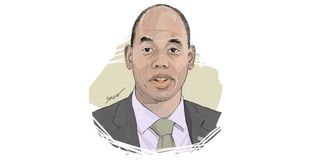
"Paul brings a compelling combination of regulatory expertise, private sector leadership and strategic vision, with a nuanced understanding of Kenya's policy and investment landscape," said AmCham Kenya Board President Angela Ng'ang'a.
AmCham is a business lobby group representing US companies in Kenya.
Mr Muthaura, a former CEO of the Capital Markets Authority (CMA), returns at a time when Kenya is seeking to deepen trade and investment ties with the United States amid shifting global economic alliances.
He is expected to help rekindle commercial relations between the world's largest economy and East Africa's biggest, at a time when America's soft power has come under strain following President Donald Trump's tariff wars.
For a man who has spent much of his career shunning publicity while quietly shaping some of Kenya's most important financial institutions, the appointment marks yet another chapter in a career defined more by influence than visibility.
Ask anyone what they know about the former CMA chief, and the most personal detail they are likely to mention is that he is widely reported to be the son of Francis Muthaura, the influential Head of Public Service during President Mwai Kibaki's administration.
Yet Mr Muthaura himself has rarely, if ever, spoken publicly about his private life, preferring to let the weight of his résumé, rather than the prominence of his surname, define him.
While little is heard about his privileged background and the trappings that come with it, Mr Muthaura is not one to walk into a room full of opportunities and let one pass him by.
"You shouldn't necessarily wait for your turn because it just might not come," Mr Muthaura said during a public talk six years ago.
"If you wait too long, the conversation will move on, you will lose your chance, or worse still, you'll be that person who is chiming in on point one when a meeting is at point five... Let your voice be heard."
In the talk, he recalled returning to Kenya as a 22-year-old postgraduate, armed with fresh ideas and eager to make his mark after joining a leading law firm.
It did not take long before the firm's managing partner, whom he said was about the same age as his father, was assembling a team for a multibillion-shilling transaction.
Confident that his master's degree had prepared him for the task, the young lawyer walked into the senior partner's office and offered his services.
The boldness paid off. Although his first assignment came back covered in red ink and question marks—a consequence, he admitted, of youthful haste—it was enough to convince the managing partner that the young recruit had both the ambition and potential to handle bigger responsibilities.
"I learnt two key lessons: One, speed is nothing without content, and Two, answering the question asked is often just the beginning and not the end of many assignments."
That experience appears to have shaped his approach to work: quietly building substance while remaining ready to seize opportunities when they arise.
When he left the CMA in 2019 after a 14-year stint, he said his phone did not ring for six months.
That did not trouble him. He quietly bided his time before resurfacing in April 2020 as chief operating officer of ICEA Lion General Insurance.
Six months later, he was promoted to chief executive officer following the retirement of Steven Oluoch after eight years at the helm. Less than a year later, in September 2021, he stepped down on medical grounds after an accident.
"This appointment arises from the need for Paul Muthaura to step down from office in line with medical advice to allow for his complete recovery following an accident in early 2021," ICEA chairman James Ndegwa said at the time.
He later headed ACMI before re-emerging last month as chief executive of AmCham.
Clearly, Mr Muthaura's greatest indulgence appears to be neither the spotlight nor the trappings of corporate life, but the pursuit of knowledge.
One could easily imagine that while other conference delegates in Mombasa unwound over drinks, he found comfort thumbing through a book, poring over a report or refining the speech he would deliver the following day.
His academic journey mirrors the same quiet, methodical approach that has defined his career.
Mr Muthaura studied law at the University of Warwick before specialising in Banking and Finance Law at the London School of Economics and Political Science, one of the world's leading centres for financial regulation.
Never one to stop learning, he later earned a Master of Philosophy in Business Administration from the Maastricht School of Management in the Netherlands, complementing it with an Executive Diploma in Financial Management from KCA University.
He is also an Honorary Fellow of the Institute of Certified Secretaries and a Certified Executive and Systemic Team Coach.
His qualifications—spanning law, finance, business strategy and leadership—perhaps explain why, despite his aversion to publicity, he has repeatedly landed some of the country's most coveted corporate roles.
There are those who would argue that intellectual prowess did not always translate into regulatory success. He headed the CMA at a time when the regulator was often criticised as a watchdog that could not bite.
He left office with concerns over market oversight still lingering, particularly following allegations of insider trading and market manipulation surrounding transactions such as Rubis Energie's acquisition of KenolKobil.
He later acknowledged the challenges of enforcing the Capital Markets Authority Act.
"We have tried to be a very proactive entity but we faced undue challenges from delays in court system. That has translated to the level of confidence we have seen in the market," he said.
At a strategic level, critics would probably point to the prolonged listing drought during his tenure as his most visible blemish.
He left office in 2019 after the Nairobi Securities Exchange had gone five years without a single initial public offering, while activity in the corporate bond market had also waned.
Between 2014 and 2019, the Exchange recorded only listings by introduction, mostly from smaller firms.
Yet his tenure was not defined solely by controversy.
He helped strengthen Kenya's regulatory framework and position the CMA within regional and global capital markets.
During his tenure, the CMA was named Africa's most innovative capital markets regulator for four consecutive years, from 2015 to 2018.
Products such as the Growth Enterprise Market Segment (GEMS), Gold Exchange Traded Funds, the Ibuka programme and the derivatives market were all introduced during his watch, although their uptake has remained below expectations.
After nearly two decades in public service and the privileges that come with high office, Muthaura says it is easy for leaders to lose perspective.
Some, he observed, become so consumed by their own importance that they "feel an overwhelming urge to pinch a nose because they need to know people."
He says he has consciously tried not to let the trappings of power get to his head.