In Kenya's property market, where land prices are rising sharply and buyers have more options than ever before, the difference between a property that sells quickly and one that remains unsold often comes down to the landscaping.
Immaculate Salaon's home in Memusi, a few kilometres outside Ngong Town in Kajiado County, is over 20 years old and has been significantly transformed over the years. It sits on half an acre of land — part of the approximately 70 acres owned by her father-in-law.
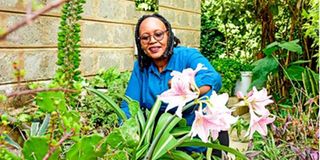
“What makes it remarkable today is not its age or its history, but what I have done with the land around the house,” says Immaculate.
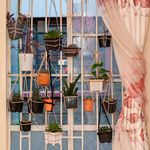
A variety of potted plants at Immaculate Salaon’s home in Matasia, Kajiado County in this photo taken on June 28, 2026.
Photo credit: Billy Ogada | Nation Media Group
The compound is a testament to years of intentional cultivation. It contains ornamental plants, fruit trees, indigenous shade trees, and a productive kitchen garden. All of these are sustained by water storage facilities that keep everything alive through the dry seasons.
If she were to sell the property today, Immaculate would not accept anything less than Sh15 million.
"Because of what we have put into it. You can't just come and buy this and replace everything overnight. Some of these trees have been growing for over twenty years. You can't put a low price on that," she says.
A quarter acre in Memusi currently fetches between Sh7.5 and Sh10 million, which is 15 times what it used to cost about a decade ago.
Immaculate has invested over Sh300,000 in the garden, including the cost of sourcing plants, acquiring pots and building the water storage facility that keeps everything alive.
Then there are the large, old indigenous trees that have been growing on this land for over 20 years.
“You can buy a seedling, but you can't buy 20 years of growth,” she says.
However, her landscaping journey didn't start as a property investment strategy. It started with a woman who needed a place to heal. It was March 2019.
A variety of potted plants at Immaculate Salaon’s home in Matasia, Kajiado County in this photo taken on June 28, 2026.
Photo credit: Billy Ogada | Nation Media Group
Immaculate had just emerged from a difficult period of stress at work and personal pressures, a time in her life that felt as though it was closing in on her.
After her father-in-law's death, the family compound had been subdivided. Initially, the land was full of cattle, but they had sold them all as there was no one to look after them. The land felt smaller and quieter than before.
"I needed to do something that would bring me joy. Something that would take my mind back to nurturing."
She started by watering the existing plants and planting new ones. In those early days, she would spend hours outside, moving plants from one spot to another, learning which liked sun and which preferred shade.
At first, her family thought she had gone a little crazy. But she was, without fully realising it, beginning to transform her most valuable asset.
“I wanted to beautify my space so that, when someone steps into the garden, it makes an impression and announces itself,” she says.
The first thing that strikes you when walking through Immaculate's garden is the abundance of greenery.
Rather than the flat, uniform green of a manicured lawn, there is a layered, textured greenery of many shades and heights.
Concrete, ceramic and terracotta pots, as well as homemade ones, are arranged throughout the garden, each one chosen intentionally. Ornamental plants and flowers sit alongside fruit trees bearing oranges, avocados, mangoes, lemons and plantain. Tree tomatoes and passion fruit spread and climb wherever there is space.
A variety of potted plants at Immaculate Salaon’s home in Matasia, Kajiado County in this photo taken on June 28, 2026.
Photo credit: Billy Ogada | Nation Media Group
The kitchen garden is filled with vegetables and herbs, including sage and bitter leaf, which Immaculate dries and grinds for medicinal use.
Neat rows of aloe vera clusters define the pathways. In one corner, a bird of paradise stands tall, while snake plants and peace lilies bring quiet elegance to the shadier corners. Mature indigenous trees, including muhuhu and croton, stretch overhead. Their wide canopies earned them their place long before the garden took its current shape.
Immaculate's former garage has been converted into a nursery, complete with germinating seeds and cuttings waiting to be potted. Water storage facilities ensure that everything stays green, even during the dry season.
She buys her plants from nurseries across Nairobi, a hotel garden in Mombasa and a gardening shop in the United States, where she volunteered for a summer to expand her knowledge.
"My vision is to finally find complementary pots: browns in different shades and whites with different plants."
Ask Immaculate why she keeps going, and she doesn't hesitate.
“When you wake up and find that a plant has produced a new flower, it gives you joy and hope. When I come out and look at a plant, all my worries have disappeared by the time I leave.”
She aspires to create spaces where children can learn to water plants and grow food during the school holidays.
“If you instil the value of beauty and landscaping in children from a young age, it stays with them,” she says.
Most homeowners tend to spend majority of their renovation budget on the interior, leaving the exterior for later. Immaculate argues that this is the wrong approach.
"If you are selling a home, show potential buyers the outside first. People now go inside because they start to imagine living there. You want to be able to read a book out there. You have guests. You can have barbecues and children can play,” she says.
"For me, it's not just about the plants. I consider the landscaping as a whole, such as how you shape different areas, where you put water features, and where you put marble. All of that can give the place a completely different look."
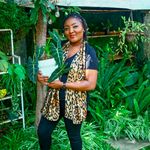
Immaculate Salaon at her home in Matasia, Kajiado County in this photo taken on June 28, 2026.
Photo credit: Billy Ogada | Nation Media Group
According to Immaculate, the most common mistake made by homeowners is to treat landscaping as something to deal with after the house is built. By then, it is too late to plan properly.
"...As you design your home, you also need to consider the kind of landscaping you want,” she says.
One of the biggest challenges Immaculate has encountered is choosing the right pot.
"A good plant deserves a beautiful pot. There is no negotiation,” she says.
She recently bought a pot for Sh3,500, which now retails at Sh5,500. Unique pieces sell for Sh7,000 or more.
To reduce costs, she is considering making her own concrete moulds at home and buying materials in bulk from factories. “You have to think outside the box.”
Unlock a world of exclusive content today!Unlock a world of exclusive content today!