Creams, lasers and limits: inside the stretch mark treatment boom

Stretch marks are common and harmless, but demand for treatments to reduce their appearance is rising.

Photo credit: Fotosearch

For some, stretch marks are proud signs of change and worthy reminders of the body’s resilience. For others, they are flaws to be concealed or erased. What if you want to get rid of them? Can you really, or are the many treatments a waste of money and time?

Dr Immaculate Clare, a dermatology pharmacist and cosmetic scientist at Humane Pharmaceuticals, says that three in five women have stretch marks, meaning they are quite common.
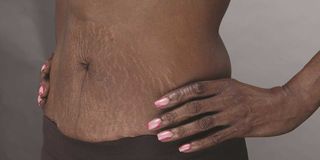
“Especially among women, which is caused by rapid expansion of the skin,” she says. “When you lose or gain weight rapidly, there is a disruption in the middle layer of the skin, the dermis, which results in the breakdown of the structural components, that is, the collagen and elastin fibres. Some medical conditions can also make you more susceptible to getting them.”

While they pose no health risk, Dr Clare says stretch marks often carry psychological weight, particularly in the age of social media.

“It is not a medical condition,” she says, noting that stretch marks mostly affect people’s self-esteem from an aesthetic perspective, prompting many to seek ways to clear their skin.

Topical fixes


Dr Immaculate Clare, a dermatology pharmacist and cosmetic scientist at Humane Pharmaceuticals, says stretch marks cannot be completely removed, only faded.

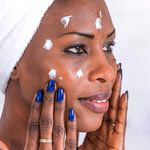
According to her, most people opt for topical solutions because of their affordability and accessibility.

“Clinical treatments are far more expensive and not easily accessible to the common person,” she says. “But creams and oils typically range between Sh2,500 and Sh3,200 and can be found almost anywhere, both in pharmacies and online platforms. They are also easy to incorporate into daily routines as they can be used as part of the normal skincare routine.”

Despite their popularity, however, topical treatments are not effective for all kinds of stretch marks.

“They can help fade the marks, but only when they are in the initial stage, which is known as the active stage, where they appear red or purplish in colour,” she says. “Once they reach the mature stage, topical solutions are largely ineffective.”

But not everything marketed as a remedy works. For results, Dr Clare recommends treatments with the following ingredients: tretinoin (a prescription retinoid), centella asiatica (commonly known as cica) and hyaluronic acid.

“These are widely thought of as the topical gold standards,” she says. “They have shown clinical effectiveness through scientific data.”

The studies show that a tretinoin concentration of 0.1 percent can help reduce the width and length of stretch marks by boosting collagen production and increasing cell turnover, allowing healthier cells to rise to the surface.

“It is important to note that tretinoin, or retinoids in general, are strictly off-limits during pregnancy,” she cautions.

The second ingredient, centella asiatica, works similarly by stimulating collagen while preventing the formation of new marks. Hyaluronic acid, on the other hand, improves skin hydration and elasticity, supporting the skin as it stretches.

However, even with the right ingredients, results take time. There is no miracle cure, the skin expert says. Optimal use typically involves consistent application—two to three times a day—for at least eight to 12 weeks before any significant change can be observed.

In contrast, widely marketed moisturisers do not remove stretch marks.

“Butters like shea and cocoa, and humectants like glycerin and aloe vera, are among the most marketed formulations, but they only work to improve the suppleness of the skin,” she says. “There is no clinical evidence to support their ability to remove stretch marks.”

Clinical route

While no method guarantees complete removal, the limitations of topical treatments lead many to seek clinical alternatives.

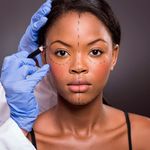
“The effectiveness of creams and oils is limited by how deeply they can penetrate, with most only reaching the epidermis,” Dr Clare explains. “Laser and microneedling, on the other hand, are more targeted and intensive, reaching the deeper dermis layer, which makes them more effective.”

Emily Otieno, an aesthetic nurse at Revive Aesthetics Kenya, says interest in stretch mark removal has grown, driven largely by increased awareness.

“We would see one or two clients in a month, but now we are seeing five or more, and the numbers keep increasing as people learn that there are options,” she says. “Many people are looking for solutions, but some don’t want surgery because of the scars, and the topical creams either take too long or some don’t work at all.”

The treatment works by targeting deeper layers of the skin to stimulate regeneration.

“It typically requires multiple sessions spaced four to six weeks apart to allow the skin time to heal and regenerate,” she says. “The number of sessions varies depending on the size, location and number of stretch marks, but at minimum it takes about three to four sessions.”

The procedure involves numbing the treatment area before applying the laser to minimise discomfort. While generally considered non-invasive, Sylvia Kimani, also an aesthetic nurse at the clinic, says it is not without risk.

Some clients may experience redness, swelling and blistering, which subside over time.

“For those with sensitive skin, the procedure could also lead to hypersensitivity around the area of treatment, and if proper aftercare guidelines are not followed, some clients may also experience hyperpigmentation,” she says. “If the practitioner is not careful to focus only on the stretch marks, there could also be minor burns and scarring in surrounding areas.”

Emily Otieno (left) and Sylvia Kimani (right), aesthetic nurses at Revive Aesthetics Kenya, during an interview on March 18, 2026.

Photo credit: Pool

Not for all

Not everyone is eligible for the treatment.

“We avoid offering the treatment to pregnant and breastfeeding mothers, people with overly sensitive skin and immunocompromised patients,” Sylvia says. “Safety comes first.”

Stretch mark removal accounts for 10 to 15 percent of Revive Aesthetics’ total revenue, with each session priced at Sh3,500. Clients can opt for discounted packages by committing to multiple sessions.

Margaret Musyoka, an esthetician at Skinsol Aesthetics clinic, says demand has grown by as much as 70 percent over the past six years, driven by changing lifestyles.

“Pregnancy is a major cause of stretch marks, but it’s not the only one,” she says. “We are seeing more clients coming in because of weight changes, hormonal fluctuations and even muscle growth. Sometimes, genetics can also predispose you to getting stretch marks.”

While women aged 25 to 45 form the bulk of clients, men are also increasingly seeking treatment. Common treatment areas include the arms, thighs and abdomen.

“Everyone just wants their bodies to look nice,” she says. “And whether male or female, these marks on the skin can affect a person’s self-esteem.”

Describing microneedling, Margaret says the procedure uses needles to create controlled trauma and stimulate repair.

Margaret Musyoka of Skinsol Aesthetics says stretch mark treatments are highly individual, with results varying from person to person.

Photo credit: Francis Nderitu | Nation Media Group

Like laser treatment, it is not a quick fix and does not fully remove stretch marks.

“There’s no way to remove stretch marks 100 percent. We can minimise their appearance, but they don’t fade completely.”

Still, results vary depending on skin type, severity and collagen production.

“For some people, the marks are thick, dense and highly visible, while for others they are faint and less noticeable,” she says. “That’s why treatment plans differ and results are never exactly the same.”

Prices at the clinic start from Sh6,500 per session, depending on severity.

Aftercare matters

Aftercare is critical, with clients advised to avoid direct sun exposure, use sunscreen, keep the skin moisturised and avoid harsh products or scrubbing. Prevention also plays a role through proper diet and hydration.

“Generally speaking, antioxidants are scientifically proven to promote the production of collagen in the body,” Dr Clare says. “Keeping the skin moisturised and hydrated supports its elasticity, preventing the breakage of skin fibres.”

Follow our WhatsApp channelfor the latest business and markets updates.

PAYE Tax Calculator

Note: The results are not exact but very close to the actual.