Time flies with great content! Renew in to keep enjoying all our premium content.
Prime
Pakistani artist’s dialogue between stone and nature
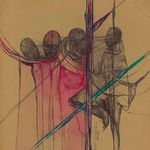
Kenya-based, Pakistani-born sculptor Rashid Amin: Harmony 5 (Granite, top right) and Harmony(Soft Pastel & Charcoal on Paper, bottom right), exhibited at One Off Contemporary Art Gallery, Nairobi, December 2025
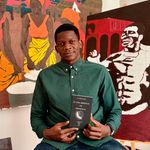
Pakistani-born Rashid Amin is a student of nature, whether he is on the northern side of his hometown in Pakistan, with its renown mountains and steep leeward and windward sides, or in Nairobi, with its verdant greenery and rolling plains. Nature will always be his first medium and inspiration.
His latest solo exhibition, Harmony, currently being held at the One-Off Contemporary Art Gallery, pays homage to the very elements that are the foundation blocks of his craftsmanship.
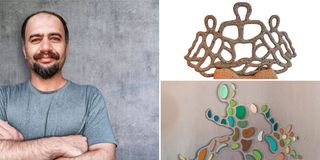
He describes his childhood as growing up being surrounded by the essence of nature in the northern side of Pakistan, towering mountains and steep landscapes were his boyhood backdrop.
“I was unconscious about my inner self being an artist. I would draw as a little boy but I was oblivious to what exactly I was drawing or sketching. Before 10th grade, I was merely scribbling myself into sanity and consciousness.”
Rashid would later move to, Karachi, the metropolitan city of Pakistan for higher studies in an art programme that was meant to take four years, but he left mid-way.
“I thought I had learned to stand on my own. It was rebellious to be honest, but I accepted it as my path. My parents were livid, but I managed to convince them that I was on the right path. They are now proud of my achievements, they remind me that I chose my passion and therefore, I have to push myself,” he says.
Rashid, however, understood his parents’ initial reluctance for him to be a part of the art community in his home country.
“In Pakistan, we don’t have vibrant art policies and communities like the ones that you find in Nairobi. There is little appreciation and promotion of the arts by government institutions; these were the challenges that my parents foresaw and warned me about, but I accepted and embraced them and chose to do my work despite the challenges,” he says.
It was in 2022 that he decided to relocate to Kenya with one of his friends in what he called an explorative journey. The scenery and culture were awe-inspiring to the extent that he decided to make it his second home. The decision to move countries was fuelled by the desire to experience something different.
As a sculptor, Rashid classifies himself as self-taught in his craft, which he began in 2012. For him, sculptures are extensions of his sketches and drawings that end up as refined cuttings and chippings.
Ideas, however, are the fundamental concept of every figure he shapes; this comes before the first dot or line on paper. It was for this reason that he chose to display his drawings in his current exhibition with his stone figures, to show the transition between concept and the final product.
Growing up, Rashid’s fascination with nature was always the drive behind his artisanship.
“I was born and surrounded by nature, so I get my inspiration from nature. I chose stone as a medium because it is a naturally authentic medium. I try to convey messages for nature, from nature and about nature,” he says.
The Harmony exhibition is a story between humanity and nature. The organic elements and forms in his sculptures are representative of the organic techniques borrowed from nature and the human figure itself.
Harmony, in his eyes, oscillates from a singular person to a large community, forming institutions and masses. He aims to convey a message to humanity to embrace the natural way of life, that we should not try to overtake nature but rather work in sync with its elements. It is a story of sustainability and balance between humanity and nature, and the way we live our lives.
In Kenya, sculpting is a less practised form of visual art. Rashid’s fascination with shaping stone into structure makes him one of the few visual artists in Kenya who have opted for something different.
“In sculpting, you can experience the actual depth of the precise objects you are working on, you can feel them and even taste them. I chose sculpting because of the natural element of the medium. I know I can work with synthetic mediums like fibreglass, but these pose health hazards and are hence dangerous to work with. ”
In his craft, sandstone is the easiest to work with because it is also the softest and the most malleable. Granite is the most challenging because he considers it the hardest.
Rocks and stones come with different textures posing different challenges, but it is the unpredictable nature of these elements that makes them so interesting to work with.
In Kenya, he was surprised to find the Yellowstone being rampantly used in construction; for him, it is a revered object of his sculpting.
“In Harmony, I have largely explored granite. It requires different pneumatics and is more manual-oriented to work with in terms of shaping, unlike other mediums, which simply require a chisel and hammer; this one requires some power tools,” he says.
Sculpturing is an expensive venture, he notes. There are certain tools that are readily available in the market, like the angle grinder and the diamond disk but others, especially the pneumatic ones, are not easily available and hence one has to import.
“The life of a sculptor is a bit challenging, because they deal with the uncommon. For me, however, it is not just a profession; it is a way of life. It is a sustainable life for me. I don’t make enough to live in luxury, but I have enough for myself and my family. I can make a good living out of my career. I do what I like to do, and that is what matters to me most.”
He adds, “A sculptor has to be in the moment, practise mindfulness, otherwise you stand to lose everything.”
How is Nairobi different from Karachi?
“Nairobi is a happening place comparatively. It has policies and structures that encourage art competitively, unlike in Karachi. The government in Pakistan doesn’t want to promote the arts. It is a highly religious country that pays little heed to the creative sector. However, some private entrepreneurs try to promote art on their own accord, but it isn’t enough.”