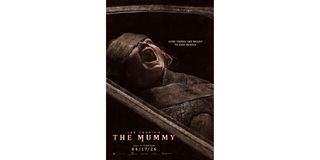
Let's say you haven't seen the trailers of this movie. I should probably warn you, Lee Cronin’s The Mummy is not what you think. Before you get that ticket, you need to curate your expectations.
If you walk in thinking of Brendan Fraser’s adventures from 1999 and 2001, you’ll be blindsided. Those were family-friendly action fantasies that blended comedy and spectacle with charm. Cronin’s version is something else, a straight-up horror film, closer to Evil Dead Rise or an exorcism story than any treasure-hunting epic.
It is not a film to take your children to, nor one to watch casually while having something to eat or drink. It is a film designed to unsettle, disgust, and terrify.
The story begins with a journalist whose young daughter vanishes in Egypt. Eight years later, she reappears, but her return is far from joyous. She carries with her something ancient and dark that begins to unravel the family’s life. What should have been a reunion becomes a descent into horror.
The film leans heavily into possession-style and body horror, using the mummy myth as a framework but stripping away adventure tropes. Basically, this is a possession movie in disguise.
What works
Jack Reynor, Laia Costa, May Calamawy, Natalie Grace, and Veronica Falcón bring weight to their roles. The actress playing the cursed daughter delivers a demanding performance, contorting her body in ways that make her possession believable.
Both the younger and older versions of the character are portrayed with conviction, grounding the supernatural horror in human emotion. Even when the script pushes characters into decisions that don’t always make sense, the actors sell what the story demands.
Cronin’s direction is uncompromising. He brings the same sensibility he showed in Evil Dead Rise, which is a willingness to linger on grotesque detail and to push audiences into discomfort. The film is drenched in shadows, with a moody, oppressive atmosphere that never lets up.
The horror is always lingering, often disgusting, and Cronin uses silence and sudden bursts of violence to keep viewers unsettled. The look of the film is consistently moody, even when the picture is bright.
Even though the theme is family, the visual language always leans on dread. There are funny moments, yes, but the film commits fully to horror, refusing to compromise or soften its tone.
One of the standout elements is the sound design. Every moment of body horror is amplified by sound, whether it’s a nail being pulled out or a character creeping through the dark.
The audio work elevates the film’s most disturbing scenes, making them harder to watch but also more immersive. While it was easy for me to look away during some scenes, the sound design made those moments even more unbearable.
Visually, darkness and shadows are utilised to build tension, and there are moments that look stunning on the big screen.
Certain shots, especially those involving transformation, are captured very well. The cinematography maintains a consistent language from start to finish, reinforcing the film’s oppressive mood with depth of field and close-ups. Some sequences feel designed to be seen in a theatre, where the scale of the image and sound are combined to overwhelm.
Gripes
At over two hours, the film feels long. The pacing suffers, especially when the narrative pauses in the third act to revisit the backstory of what happened to the daughter.
This slows down momentum just as the climax is building. The major part of the first and second acts leans heavily into family drama, which can feel tedious. While thematically relevant, these quieter moments drag compared to the intensity of the horror.
The family’s acceptance of the daughter’s return for me killed the credibility and logic of the scenario.
The daughter’s return after eight years should have raised alarms, yet her family accepts her without question. Her appearance alone should have sent her straight to a hospital, but instead, she is brought home. The film insists she is medically fine, but the visual reality contradicts that.
This gap between what the audience sees and what the characters believe creates frustration. It is one of the film’s biggest flaws.
I also think that I have seen this before, strip all the horror away, and you can see a formulaic approach to the way the film is cast, structured and directed.
While it's trying too hard to be different, nothing is new here, especially if you are familiar with possession and exorcism movies.
If Evil Dead Rise made you vomit, this movie is not for you.
Conclusion
Despite these flaws, Cronin’s The Mummy is a strange reimagining. It strips away adventure and replaces it with dread. It is not a film for families or casual viewers looking for nostalgia.
Don’t bring children, don’t bring snacks, and be ready to look away. It’s a possession story wearing the clothes of a mummy film, and while that may frustrate some, it also makes for one of the most extreme takes on the classic monster myth in recent memory.
Cronin has taken a familiar title and turned it into something darker, more disturbing, and more uncompromising. Whether you love it or hate it, there are scenes that you won’t forget.