One thing I’ve learned overtime about stand-up comedy is its sheer unpredictability.
In film or theatre, there’s a certain level of control. If you’re Denis Villeneuve and you nail a big action set piece or a breathtaking wide shot, you can be fairly certain people will be talking about it when they leave the theatre. There is always a tangible hook for the audience to grab onto if the creator has a decent understanding of the craft.
Stand-up on the other hand, is far more unforgiving. You can be 100 percent prepared, walk onto that stage with a polished set, and come face to face with an audience that just doesn’t align with your frequency.
Conversely, you might show up totally unprepared, expecting to bomb, and suddenly every joke lands. It’s that volatility, the need for a comedian to mould themselves in real-time and study the room, that makes stand-up a fascinating craft.
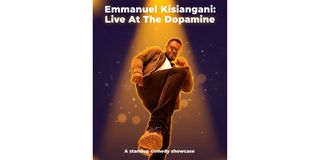
This past weekend, I attended Emmanuel Kisiangani’s showcase at the Dopamine Bar & Restaurant. It was a perfect case study in adaptability.
The crowd that evening, myself included, was "cold", a tough room. It was an intimate, complex space, tougher than your average comedy night, I thought. Perhaps they expected a podcast-style presentation, but whatever the reason, the comedians had an uphill task.
Moderator
The evening was hosted by Bashir Halaiki, who was to be addressed as a moderator rather than a traditional host. He did a great job setting the ground rules and opening with material on fasting, the Russian in our headlines, Valentine’s Day, and Manchester United. His energy was vital because this room responded far better to immediate crowd work than to pre-written material.
Before we continue, if your show is scheduled to begin at 7:30pm, your show should begin at 7:30 pm. If there were unavoidable circumstances that would warrant a delay, communicate clearly ahead of time. Never mention it during your performance like it was an after thought.
Openning acts
Anyway, the first perfomance was Amadeus Gathandi. Soft-spoken and laid back, he doesn’t try to blow the doors off the place with high energy. His strength lies in his timing.
His jokes were smart, covering everything, from his height and impotence tropes to sharper commentary on the Church, slavery, and Pinocchio.
You could see him growing into his set as the crowd slowly warmed to his rhythm. While this low-key approach is his persona, I found myself wishing he would inject more energy into his performance, especially after the first minute.
Next was Amandeep. I haven't seen him perform in a while, and his material centred on the concepts of winning and dating. He touched on football, personal beliefs, midlife crises, and a funny bit on the gym.
What struck me was his delivery, he was less abrasive, appearing much more composed and confident. He mentioned at the beginign that he had a new girlfriend and maybe that may have been it.
Adan Abdi followed, leaning into his identity as a Somali Muslim.
Naturally, Ramadan and recent events involving Somalis in the US formed a major part of his set. His performance felt anchored by his recent tour in England, and it was clear he was well-prepared; he even had notes on hand. While his material was objectively funny, the crowd just wasn't walking with him.
The audience didn't quite seem to know how to handle his specific style of delivery, despite the quality of the jokes. I felt his set could have benefited from some random moments of improv geared toward real-time events rather than strictly sticking to his prepared script.
Main Act
When Emmanuel Kisiangani took the stage, he immediately recognised what he was up against, or perhaps he simply tapped into what he’d observed during the first three acts.
He began weaving in and out of crowd work, improv and prepared material. Because it was a small crowd, that banter ultimately saved the night.
Emmanuel brought a high-energy, physical performance that actively engaged the room. His material, like a bit on supermarkets and another on road bumps, were excellent, but the audience from a stand-up point of view was moving a beat behind him.
He pivoted beautifully, identifying German guests, software engineers, and HR professionals in the crowd and moulding them into the show. He kept the energy moving with riffs on everything from "Poseidon’s Kiss" to South African experiences and divorce.
There were moments where he tried to get personal with his family history, but the pull of the crowd work would inevitably draw him back.
This worked because of his ability to think on his feet, though it was occasionally polarising; at times, I wanted him to stay on track and found it frustrating whenever he got distracted and had to "paddle back" to find his footing.
Never miss a chance to laugh
The stand-up scene in Kenya is producing some impressive talent, and this isn't just about "supporting Kenyan talent", the quality is genuinely there.
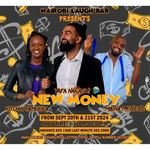
For instance, Ty Ngachira (who is yet to release his special that he recorded three years ago) had a two-day event this same weekend. It always leaves me asking: why don't you attend stand-up events? Yes, you reading this at this particular moment. Whatever your reason, you have plenty of opportunities coming up soon.
Ezra Keros, Max Pain, Racquel Anyango, Innocent Wambugu, and Nelly Wangechi have an event, "No Safe Words," on Friday, February 27th at Nairobi Laugh Bar (Chemi Chemi Restaurant).
Arnold Saviour’s solo show, "The Westerner," is also at Nairobi Laugh Bar on Saturday, February 28th. "Rich Friends, Poor Family" with Okello Okello featuring Maina Munene will be happening at Suave Kitchen on Sunday, February 28th.
Additionally, Maina Munene, George Waweru, Imogen Hooper, and Bashir Halaiki will be performing at "The Picnic Affair," a sundowner experience March 1st at Tigoni. There are so many events happening every weekend and basically, to summarise it all , you should never miss an opportunity to laugh.