Kenya has introduced new vehicle inspection rules that will require millions of privately owned vehicles to undergo routine roadworthiness tests for the first time.
The reforms are aimed at removing mechanically defective vehicles from the roads by ensuring they remain mechanically fit.
While the regulations were initially gazetted to take effect this month, the National Transport and Safety Authority (NTSA) has indicated that mandatory inspections for private vehicles will be rolled out at a later date.
Why is NTSA changing Kenya's vehicle inspection rules?
The government says the new rules are intended to reduce road crashes caused by mechanical failures, which continue to contribute to accidents alongside speeding, dangerous driving and human error.
For years, privately owned vehicles have operated without any requirement for periodic safety inspections after registration, meaning some remain on the roads despite developing faults that could endanger motorists and pedestrians.
The reforms are, thus designed to identify safety defects early, encourage regular vehicle maintenance, and ensure only roadworthy vehicles continue using public roads.
Will every private vehicle now be inspected every year?
Eventually, yes, but not immediately.
Under the new regulations, every privately owned vehicle becomes eligible for annual inspection once it is more than four years old from its recorded date of manufacture, replacing the previous system where most private cars were never subjected to routine inspections.
"Each motor vehicle, whether privately owned or owned by a government entity, once in each year, that is older than four years from the recorded date of manufacture, shall be subjected to an inspection test," the new rules state.
The NTSA has, however, communicated that enforcement against private motorists has been deferred, meaning owners will only be required to begin annual inspections once the authority officially announces the start date.
What exactly will inspectors check on your vehicle?
The inspection is intended to answer the one question on whether the vehicle remains safe to continue sharing the road with other motorists, passengers and pedestrians.
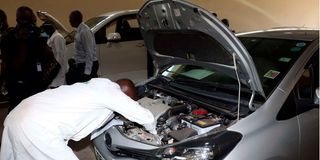
Inspectors examine components that directly affect safety, including braking systems, steering, suspension, tyres, and lighting.
Others are mirrors, seat belts, windscreens, chassis condition, exhaust emissions and other critical mechanical systems. Vehicles that have been extensively damaged in accidents or significantly modified through engine changes, alterations to their dimensions or other structural adjustments must also undergo inspection before returning to the road.
How much will the inspection cost, and who is supposed to pay?
The cost will be met by the vehicle owner as part of the responsibility of keeping a vehicle roadworthy.
For most private vehicles, motorists will pay a total of Sh2,000, comprising a Sh1,000 booking fee payable through NTSA and Sh1,000 inspection charge at the checking centre,
Motorcycles and three-wheelers, on the other hand, will attract lower charges at Sh200 for the booking fee and Sh300 inspection fee.
Motorists whose vehicles fail inspection but complete repairs within 14 days will be allowed one free re-inspection at the same centre, after which fresh charges become applicable.
What happens if your vehicle fails the inspection?
A failed vehicle on inspection does not automatically lose its registration, but it cannot continue operating normally until the identified defects are repaired.
Inspectors will issue a defect report highlighting the specific faults requiring correction before another check is conducted to confirm that the vehicle is roadworthy.
The regulations only permit such a vehicle to be driven to a repair garage, while commercial vehicles that fail inspection cannot continue carrying passengers or transporting goods until they pass another check.
The rules also introduce new measures for severely damaged vehicles, allowing those considered beyond repair after serious accidents, floods or fires to be permanently removed from Kenya's vehicle register.
Can private garages inspect vehicles, or must you go to NTSA?
Regulations allow private investors to set up licensed inspection centres as part of efforts to expand capacity and reduce congestion at government facilities.
The private centres will operate under NTSA supervision and will be required to meet the same technical standards as government inspection stations before receiving approval.
“A person who wishes to be appointed as an inspector for the purposes of these rules shall apply to the Authority in writing,” the rules read.
“An inspector’s licence shall be valid for a period of one year from the date of issuance and shall be renewed in accordance with the applicable sub rules.”
What penalties do motorists risk for ignoring the inspection rules?
Once enforcement begins, motorists who fail to comply risk both administrative and criminal consequences.
Anyone who operates a vehicle requiring inspection without a valid inspection certificate, uses an inspection sticker belonging to another vehicle or interferes with inspection records commits an offence.
Those found guilty risk a fine of up to Sh20,000, imprisonment for up to six months, or both, while every vehicle that successfully passes inspection must display a valid inspection sticker to make compliance easy for enforcement officers to verify during roadside checks.