US tariffs hit 60pc of Kenyan firms, shows CBK survey

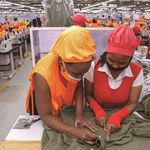
Workers at the Export Processing Zone in Athi River where companies operate under the tariff-free zone. 

Photo credit: File | Nation Media Group

At least 60 percent of companies have been affected by US President Donald Trump’s trade tariffs and other policy changes, a Central Bank of Kenya (CBK) survey has revealed.

The survey of chief executive officers (CEOs) of companies across different sectors shows that companies engaged in professional services have been affected most, followed by those in technology, and hotels.
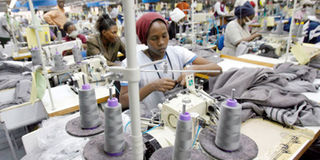
Mr Trump introduced trade tariffs on all countries in April last year amid a new shift to prioritise American interests first, slapping countries with taxes ranging from 10 percent to 50 percent.

Last week, the US Supreme Court nullified the tariffs ruling that President Trump overstepped his powers, though he has since reinstated them under different laws, setting the global tariff rate to 10 percent and then raising it to 15 percent in two days.

Mr Trump faulted Supreme Court judges while turning to other laws to press ahead with the tariffs, which he argues encourage investment and manufacturing in the US.

The trade tariffs mean that goods and services exported to the US get taxed when they enter the American market, making them costlier than those produced there and thus less preferable to consumers.

Other than the trade tariffs, the US has also had a number of policy changes under Mr Trump, including the shutdown of USAid and other funding that was flowing outside America, which have affected local firms in different ways.

“The survey assessed the extent to which recent US trade tariffs and policy changes have affected domestic firms. Most respondents reported that they continue to be impacted by these developments,” the CBK said.

Companies affected by the shifts include those that supplied goods or offered different services in the lines where the aid was flowing, with the effects including loss of market and jobs.

At least 17.5 percent of executives in professional services indicated in the January CEOs survey that their companies have been affected by the trade tariffs and policy changes in the US, emerging as the sector most affected.

In the information and communication technology (ICT) and telecommunications sector and the tourism, hotels and restaurants sector, some 15.8 percent of CEOs said their companies have been affected.

IMPACT

The CBK conducted the survey targeted more than 1,000 private sector firms, cutting across tourism, real estate, ICT, financial services, professional services, manufacturing, agriculture and trade.

“In particular, the professional services, ICT, hospitality, financial services and wholesale and retail trade sectors were reported to be the most affected,” said the survey.

In the financial services sector, 12.3 percent of the executives indicated that their companies have been affected by the tariffs and policy changes, while 10.5 percent of the CEOs in the agriculture sector had been affected.

The manufacturing and trade sectors had seven percent of companies affected by the trade tariffs and policy changes, while in the healthcare and real estate sectors 5.3 percent of companies have, the survey reveals.

Companies indicated that effects of the trade tariffs and policy changes have mostly been in triggering supply chain disruptions and raising cost of their goods.

Kenya has had a heavy reliance on the US Market where it exported goods valued Sh94.3 billion in 2024, largely through the African Growth and Opportunity Act initiative that facilitated Sh60.6 billion exports.

“While some firms identified positive opportunities arising from the extension of AGOA trade preferences, others, particularly in the hospitality and health sectors, continue to face operational pressures linked to reduced donor funding,” the central bank said.

Follow our WhatsApp channel for the latest business and markets updates.

PAYE Tax Calculator

Note: The results are not exact but very close to the actual.