President Donald Trump’s administration is planning a new version of the African Growth and Opportunity Act (Agoa) initiative, which could strip Kenyan exporters of guaranteed duty-free access to the US market, threatening a key lifeline for the country’s textile and agricultural sectors.
The Office of the United States Trade Representative (USTR) said that it targets to modernise Agoa, making it clear that the current model, which provides for unilateral trade preferences in favour of Africa, will be reviewed.

The USTR said it is seeking reforms to “ensure the programme meets the needs of American workers and businesses” and to “provide a path for reciprocal trade agreements with the more advanced countries as they develop and graduate from the programme”.
The move raises fresh concerns for Kenya’s export sectors, particularly apparel and agriculture, which have for two and a half decades depended on preferential access to the US market.
A shift toward reciprocity could require Nairobi to open its own market more fully to American goods in exchange for continued access.
“A modern Agoa must build on its 25-year foundation to further deepen the economic ties between the US and sub-Saharan Africa by benefitting American workers, eliminating barriers to trade, and creating new opportunities for US businesses,” US Trade Representative Jamieson Greer said.
He added: “We welcome comments from interested partners to help improve the programme, ensuring more reciprocal trade with our sub-Saharan African partners to strengthen America’s global competitiveness.”
Washington’s policy shift comes against a backdrop of recent trade disruptions that have exposed Kenyan exporters to risk.
The Trump administration in August 2025 imposed a 10 percent reciprocal tariff on Kenyan exports, before allowing the duty- and quota-free Agoa to lapse on September 30, 2025.
Agoa, reinstated in February 2026, runs only until December 2026, heightening uncertainty for businesses reliant on the US market.
During the four months between October and January this year, manufacturers said shipments to the US were hit with duties ranging from 15 to 42 percent, squeezing margins and disrupting orders.
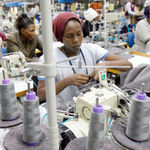
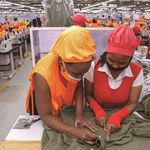
Kenya has since 2000 exported goods, mainly apparel and macadamia nuts, to the US tax- and quota-free under Agoa, supporting tens of thousands of jobs in export processing zones in Athi River and Thika.
The Kenya Association of Manufacturers (KAM) says Agoa-backed investments employ about 68,000 people directly, supporting nearly 700,000 dependents.
KAM adds that since 2000, Kenya has exported goods worth $13.3 billion (about Sh1.7 trillion) to the US, while importing $11.6 billion (nearly Sh1.5 trillion). This left Washington with a cumulative trade surplus of $1.7 billion (about Sh220 billion).
Washington has, however, grown increasingly critical of the programme’s performance. According to the USTR review, sub-Saharan Africa’s share of total US imports has remained between one and four percent, while imports under Agoa have declined over the past decade.
At the same time, the US has lost ground in Africa to competitors such as China, the European Union, and India, prompting a reassessment of Agoa as both an economic and strategic tool.
For Kenya, the proposed shift toward trade reciprocity could revive negotiations for a bilateral trade agreement with the US.
Such a deal is expected to come with far-reaching demands. The Trump administration is expected to push for lower Kenyan tariffs on US agricultural products, expanded access for American service providers, and fewer regulatory hurdles for US investors in sectors such as healthcare, financial services, energy, and digital services.
Washington has repeatedly raised concerns over Kenya’s sanitary and phytosanitary standards, arguing that they restrict access for American agricultural exports. US trade officials have, for instance, taken issue with barriers affecting the export of bovine embryos, despite a 2020 agreement between Kenya’s veterinary authorities and the U.S. Department of Agriculture.
American exporters also say selling meat, dairy, and poultry products into Kenya remains difficult due to what US officials describe as “complex, non-transparent and costly requirements.” Corn exports have similarly been flagged as uncompetitive because of Kenya’s stricter aflatoxin limits and moisture content standards, which Washington argues exceed those applied in the US.
These concerns are central to the US push for a more reciprocal framework, where continued market access would be tied to the removal of such barriers.
The USTR is also considering tightening eligibility criteria for Agoa and enforcement mechanisms in the proposed framework, raising the possibility of stricter compliance requirements and more frequent trade restrictions.
There is also renewed focus on ensuring countries “graduate” from the programme after a reasonable period—an issue that could affect relatively advanced economies like Kenya.