Kenya’s policy disruptions have intensified as President William Ruto’s government attempts to pacify citizens amid mounting economic pressure, partly fueled by global tensions stemming from the US-Israel war with Iran.
Rising pressures have triggered shifts in policy responses, including fuel tax cuts, suspension of power tariff adjustments and proposed reinstatement of universal higher education funding by the State.
Analysts said the policy disruptions signal attempts by the State to appease households squeezed by sustained inflation pressure ahead of the 2027 re-election campaigns.
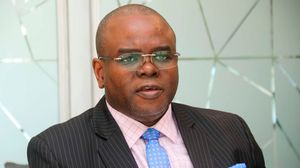
“It's expected, every five years, what we normally see is that the economic policy of Kenya is more or less hijacked, conveniently to favour the government in power, more or less engaging Kenyans so that they can be reconsidered for the election,” Karaya Mokaya, member of Public Finance and Tax Committee at the Institute of Certified Public Accountants of Kenya (ICPAK) told Business Daily.
“So it's a deliberate move by the government just to woo and to pursue Kenyans with what you could call very attractive economic policies that are not necessarily anchored within the structure of the economic policy to persuade Kenyans to reconsider the government in power for the election. So the risk we run is that of borrowing more because of increased expenditure,” he said.
In the latest shift, President Ruto revealed plans for full government funding for all students who qualify for university education—a move that would mark an about-turn from a controversial model he introduced in 2023 as concerns, especially from poor households mounted.
“Now we have in Parliament the final version of how we’re going to make higher education universal. It will not matter the background of any child in Kenya; it will matter how good they are. Going into the future, we’ve been trying to grapple with how we fund our higher education,” he said on Tuesday at State House, Nairobi, during presentation of a proposal on developing a new vision for Kenya from a team of experts.
Students and guardians have complained about the funding model introduced in 2023, saying it has made them unable to pursue courses of their choice.
“We tried the Differentiated Unit Cost [model], it didn’t work because it made most of our universities almost close down; because while we promised 80 percent funding, we went down to 40 percent and most universities suffered,” President Ruto said.
“We’ve worked on what we thought was equity where we said parents will contribute a small portion and then [government] will give a small portion of loan, a small portion of scholarship; that creates equity, but it’s not good enough. Now we’re moving to universal under the amendments we’ve taken to Parliament,” said the President.
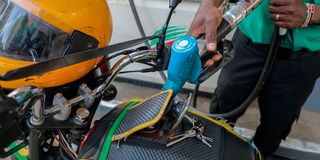
This comes a fortnight after the government extended a reduction in Value Added Tax (VAT) on petroleum products for another three months to mid-October 2026 to cushion households and businesses from price volatility.
The State in April cut VAT on petroleum products from 16 percent to eight percent for three months, after crude oil prices surged because of the Middle East war. Energy and Petroleum Cabinet Secretary Opiyo Wandayi said the government would deploy a subsidy to the tune of Sh945 million to sustain current price levels in the July-August fuel pricing cycle.
In another disruption, the Energy ministry on June 3, 2026, also suspended the proposed review of retail electricity tariffs from July 1, 2026, maintaining the current rates to protect consumers from higher costs. The suspended application by Kenya Power sought to raise base tariffs by up to 31.8 percent to generate extra revenues for network upgrades and other state utility projects.
"Following consultations within government and key stakeholders in the sector, the retail electricity tariff review application submitted in March this year by KPLC has been withdrawn," Mr Wandayi said.
Mr Mokaya, however, noted that the concessions are not financially sustainable in the long term. “So, more borrowing then could mean that we could expect a supplementary budget soon to try and close any gaps in the current budget,” he said.
Kenya's annual inflation remained sticky at 6.4 percent in June 2026, a marginal drop from 6.7percent in May. The slight slowdown was primarily driven by a drop in the cost of transport and food items , though year-on-year price changes remained heavily impacted by earlier global energy cost increases.