Time flies with great content! Renew in to keep enjoying all our premium content.
Prime
MPs seek powers to approve funding to regional bank
A new Bill sponsored by Majority Leader Kimani Ichung'wah proposes amending the East African Development Bank Act to require the National Assembly’s approval before Kenya subscribes additional capital or guarantees.
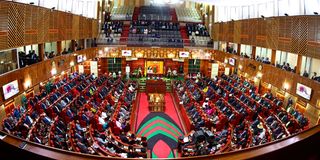
The National Assembly is seeking to strip the Treasury of unilateral authority to commit public funds to the East African Development Bank (EADB), handing Parliament greater oversight over Kenya's financial obligations to the regional lender.
A new Bill sponsored by Majority Leader Kimani Ichung'wah proposes amending the East African Development Bank Act to require the National Assembly’s approval before Kenya subscribes additional capital or guarantees fresh financial commitments.
The proposal is set to significantly tighten parliamentary control over taxpayer-funded contributions to the regional development bank following years of questions over undisclosed payments and oversight of Kenya's obligations.
"The principal object of this Bill is to amend the East African Development Bank Act... to require the approval of the National Assembly prior to the Cabinet Secretary authorizing a charge or issuance of public funds from the Consolidated Fund to the EADB,” the Bill reads in part.
“The Act currently authorises the Cabinet Secretary for the National Treasury to commit and disburse funds from the Consolidated Fund to the EADB without the approval of the National Assembly.”
If enacted, the change will place EADB funding decisions under the same parliamentary scrutiny increasingly being applied to other major public borrowing, sovereign guarantees and international financial commitments.
Article 95 of the Constitution assigns the National Assembly responsibility for overseeing national revenue and expenditure, while approving taxation, public debt measures and other key financial decisions.
The Bill comes against the backdrop of growing legal scrutiny surrounding Kenya's financial relationship with the regional lender over the past years.
Last year, the High Court ordered Treasury Cabinet Secretary John Mbadi to disclose all payments Kenya has made to EADB since 2014 following a petition challenging limited public disclosure.
The court also directed the Treasury to facilitate an independent audit examining Kenya's financial contributions and obligations to the regional bank over the same period.
Treasury has consistently maintained that Kenya's participation in regional financial institutions supports economic integration and development financing across the East African region.
The EADB finances projects spanning infrastructure, manufacturing, agriculture, education, healthcare, transport and energy-related investments across member states.
The lender has also increasingly positioned itself around climate finance, green infrastructure and regional value chains as East African governments pursue industrialisation and cross-border economic integration.
Kenya remains one of the institution's founding shareholders alongside Uganda, Tanzania and Rwanda, with the bank continuing to expand lending activities across the region.
Established in 1967 under the Treaty for East African Cooperation, the lender was created to finance industrial development before its mandate expanded into broader economic sectors.
The institution mobilises funding from international development finance institutions and capital markets before extending long-term loans to both public and private sector projects.
Kenya has periodically participated in capital increases aimed at strengthening the bank's lending capacity as demand for regional development financing continues to grow.
Such capital subscriptions require member governments to inject additional resources to maintain ownership interests while enabling the institution to expand its balance sheet.