Legal gap allows workers, firms to evade housing levy

Nancy Gathungu

Auditor-General Nancy Gathungu.

Photo credit: Dennis Onsongo | Nation Media Group

Workers and their employers are evading the monthly 1.5 percent housing levy deductions, helped by a loophole in the law that failed to give the Kenya Revenue Authority (KRA) powers to crack down on defaulters.

An audit of the Affordable Housing Fund, which manages the billions of shillings the government gets from the levy, revealed that thousands of taxpayers are paying tax and not the housing levy.
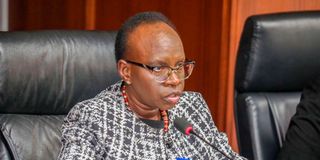
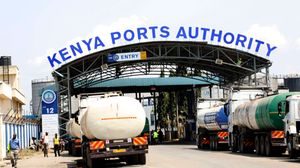
Auditor-General Nancy Gathungu's report shows that the KRA, which collects the levy from employers on behalf of the fund, lacks the power under the Affordable Housing Act, 2024 to enforce compliance.

The Affordable Housing Board, a creation of the Act, has powers to crack down on defaulters, but has no access to data on non-compliant firms.

This loophole has motivated some firms to cheat the system and fail to remit the levy of 1.5 percent of workers' gross pay to the KRA.

The audit revealed that 6,390 companies remit pay-as-you-earn tax, for which the KRA has powers to enforce compliance, and not the housing levy.

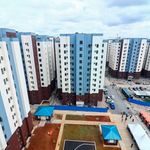
The levy, which was introduced in 2024, is intended to pay for the construction of affordable housing for low-income Kenyans.

But it sparked an outcry from the opposition and a large section of the population who feel burdened by a raft of new taxes.

“The [Affordable Housing] Board relies on KRA records, while KRA relies on the institutional remittances. The board does not therefore have a mechanism to know what it expects based on accurate data.

Similarly, KRA does not have power through the Affordable Housing Act, 2024 to enforce compliance by employers,” says Ms Gathungu in the audit.

The KRA acknowledged the limitation, stating that although the authority is mandated to collect the levy, enforcement falls outside its legal mandate.

“Management explained that although the Authority is mandated to collect the Affordable Housing Levy, enforcement of the levy is not within its purview,” says the audit.

The KRA collected Sh73.19 billion in the year to June last year from workers and their employers who have to match the monthly contributions.

“In the circumstances, the Fund may have unrealised revenue from institutions that fail to deduct or conceal deducted amounts thus undermining the implementation of the Affordable Housing Policy,” says the audit.

The Affordable Housing Act, 2024 does not grant the KRA enforcement powers to compel employers to deduct and remit the levy, making compliance largely voluntary and therefore opening the door for avoidance or under-reporting.

According to the Act, compliance extends to the informal sector. People not in employment but in business are required to pay the housing levy at the rate of 1.5 percent of their gross income.

The levy is required to be paid every month. The Act provides for a penalty of three percent of the amount due for each month that the levy remains unpaid.

“Where an amount of the levy remains unpaid after the date when it becomes due and payable by a person liable to remit the amount, a penalty equal to three percent of the unpaid amount shall be due and payable for each month or part thereof that the amount remains unpaid and shall be summarily recovered as a civil debt for the person liable to remit the amount,” says the Act.

However, without data on who should be remitting and how much is expected, it is difficult for the KRA and the Affordable Housing Board to follow up and enforce the penalties.

This has allowed thousands of workers to evade the levy.

The Auditor-General's report has questioned the ability of the Fund to deliver 200,000 houses annually as provided for under the Fourth Medium Term Plan 2023-2027 Bottom-Up Economic Transformation Agenda for inclusive Growth.

Ms Gathungu says a review of records showed the Fund had only delivered 3,611 complete units against the annual target of 200,000.
The difference between the actual and targeted houses marked a major underperformance even as the board said it expects 210,446 houses to be completed by end of June this year.

“ln the circumstances, effectiveness of the ability of the Fund to deliver to the public the target housing units could not be confirmed,” says Ms Gathungu.

Despite the robust inflows into the Affordable Housing Fund, absorption of the cash has lagged due to the phased nature of construction projects, which take time to plan and implement.

As a result, nearly half of the proceeds have been temporarily invested in short-term government securities that mature in between three and 12 months.

The latest financial statements show that Sh45.48 billion was invested in Treasury bills at the end of June 2025.

The Affordable Housing Board, a State agency that oversees the development of houses and their off-take, has previously defended the move, saying it ensures the funds are safeguarded and productive while awaiting deployment.

Follow our WhatsApp channel for the latest business and markets updates.

PAYE Tax Calculator

Note: The results are not exact but very close to the actual.