The government is set to contribute Sh47.55 billion towards the total estimated cost of extending the standard gauge railway (SGR) from Naivasha to Malaba on the Ugandan border, with a big chunk of the amount expected to be spent on land acquisition.
A fresh report published by the Treasury estimates that construction of the SGR line will cost Sh502.9 billion.
President William Ruto’s government expects to secure most of the financing, about Sh455.35 billion, from undisclosed foreign investors.
Roads and Transport Cabinet Secretary (CS) Davis Chirchir did not respond to queries on what the Sh47.55 billion allocation would finance.
The government’s contribution in similar financing arrangements has traditionally mainly gone to land compensation.
Senior government officials, including Mr Chirchir, have previously indicated that feasibility studies and route mapping for SGR line extension to Malaba have been completed, with engagements for land compensation currently underway.
The Treasury report shows that the government has already spent Sh454 million of the Sh709 million approved for the project in the budget cycle that ended in June last year.
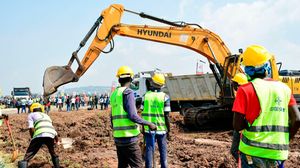
The government has begun the process of identifying people and businesses to be affected by the extension of the SGR line to Malaba, prioritising public land to cut the cost of the project.
“We were looking at the public land where President William Ruto can do groundbreaking for the work to begin and at the same time identify people affected by the project along the line,” Kabale Tache, the chief executive of the National Land Commission, said last week.
Taxpayers are estimated to have paid Sh30.2 billion for the acquisition of 4,600 hectares along the Mombasa-Nairobi line, translating into a purchase price of Sh6,565,217 per acre by the government through the National Lands Commission (NLC).
The commission delegated payment of billions of shillings in land compensation to the Kenya Railways amid claims of flawed reparations. The money came from the Rail Development Levy (RDL).
A leaked Kenya Railways internal audit report revealed massive irregularities in compensation of both individuals and companies whose land the government acquired to pave the way for the new railway.
It is not yet clear how much acreage of land along the new rail line to Malaba will be acquired.
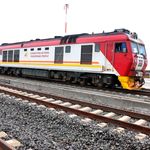
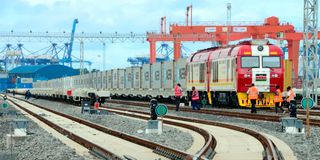
The SGR line connecting the port of Mombasa with landlocked neighbours, as part of China’s Belt and Road Initiative, terminates in Naivasha, 468 kilometres short of the border with Uganda, after a funding hitch.
President Uhuru Kenyatta’s administration, which built the SGR from Mombasa to Nairobi and extended it to Naivasha, went mute on the extension plans for the modern railway after what looked like a financing snub by China.
However, Mr Kenyatta’s successor William Ruto —who is yet to complete a mega infrastructure project on the scale of the SGR or the Nairobi Expressway —is keen to extend the line to improve the movement of goods along the Northern Corridor.
Groundbreaking for the project has, however, been delayed by a funding hitch, with the country yet to get a financier.
In the financial year ending June last year, Kenya had planned to achieve about 10 percent of the SGR line from Naivasha to Kisumu (Phase 2B) and Kisumu to Malaba (Phase 2C), but fell short of the target “due to delays in financing,” according to a document published by the Treasury.
Kenya, which has limited headroom for additional borrowing, has been exploring various financing options for the SGR extension, including floating a 15-year mega bond worth Sh390 billion.
Mr Chirchir said that under such a securitised bond, investors would be repaid using the Sh39 billion collected annually from the RDL —a two percent tax on most imported goods.
Besides securitisation —a model the government also used to finance the Sh44.7 billion Talanta Stadium in Nairobi— Kenya is considering public-private partnerships (PPPs) as an alternative funding route for the SGR.
The Roads and Transport CS said the government could hand over the operation of the new SGR line to a private investor in a strategic shift aimed at easing the financial burden of the mega infrastructure project on taxpayers.
In this model, the government will finance the construction of the railway infrastructure, while a private investor will supply the rolling stock, including locomotives, passenger coaches, and freight wagons.
“We have a framework where we are seeking to commercialise aspects [of the project] which are profitable,” Mr Chirchir said.
“So with that investment of $5 billion, we will be looking to reduce the portion that would otherwise go to freight: buying the engines, buying the bogies and the rolling stock.”
The investors will recover their cash from passenger and freight charges while paying the State a fee for use of the modern railway and stations.
Rolling stock is capital-intensive, and by offloading this to private investors, the government hopes to avoid heavy upfront spending and cut loan requirements. Kenya has been in discussions with the United Arab Emirates and China to secure financing to extend the railway.
The private sector component in the extended SGR will ease the accumulation of Chinese debt amid earlier demands from Beijing that the railway yields adequate revenues to refinance loans tapped for the project.
The Kenyan government would focus on delivering the core infrastructure, including tracks, stations, control centres, signalling systems, tunnels, and level crossings.
The first phase of the SGR, linking Mombasa and Nairobi, was completed in 2017 at $3.8 billion (Sh490.92 billion).
This included civil works, stations, and rolling stock, largely financed through 90 percent funding from debt (about $3.23 billion from the China Exim Bank) and the remaining 10 percent contributed by the Kenyan government.
Exim Bank also financed Phase 2A of the SGR, a 120-kilometre line from Nairobi to Naivasha, which was completed in October 2019 at $1.5 billion (Sh193.78 billion). An earlier blueprint by Kenya Railways shows that Phase 2B of the SGR project will include the construction of the 255km line from Narok to Kisumu with modifications of the Kisumu port, including an 8km branch line.
“The key components of the proposed railway project include rail, sleepers, tunnels, bridges, stations, and locomotives. On the other hand, the proposed port will entail the construction of two multi-purpose berths (and associated facilities) and a workboat berth to accommodate the safe lying of ships,” Kenya Railways said.
There are also plans for Phase 3 of the SGR project, which would involve the construction of the Malaba to Kampala, Uganda, to Kigali, Rwanda line.