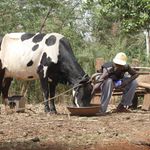
In a country where insurance has long been associated with cars, homes and health, Kenyans are rewriting the playbook by taking out cover for goats, rabbits, dogs and even trees, putting them in line for payouts worth billions of shillings.
The growing market for crop and livestock covers points to the evolving insurance landscape in line with the increasing frequency and severity of climate change shocks such as droughts and floods and the demand by banks to offer financial backing to farmers only when they have insurance.
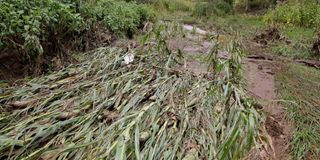
Latest data from Insurance Regulatory Authority (IRA) shows Kenyans had at the end of last year paid insurance companies over Sh1.2 billion as premiums, qualifying for payouts of Sh36.73 billion if the covered loss occurs.
The growing market for crop and livestock covers points to the evolving insurance landscape in line with the increasing frequency and severity of climate change shocks such as droughts and floods.
Demand from banks to offer loans to farmers only when they have insurance has also increased demand for crop insurance. IRA data shows 610,905 Kenyans had insured 2.96 million livestock, paying out premiums of Sh1.06 billion in the year ended December 2024.
This places them in line for a payout of Sh15.75 billion in case the risk crystallises. In addition, other 67,917 Kenyans have insured crops on 121,898 acres, qualifying them for a Sh20.98 billion payout.
Cover for cows is the largest at Sh9.4 billion, followed maize plantations (Sh2.26 billion), poultry (Sh403 million) and camels (Sh353 million).
For instance, one customer paid CIC General Sh213,000 to insure 14 dogs, getting a cover worth Sh10.23 million, even as some two others paid Sh14,560 premiums to qualify for a Sh400,000 compensation in case their 80 rabbits die. Another home is paying for a horse cover of Sh1.7 million.
The unconventional cover is appealing to the affluent who have built sentimental attachment to their animals, such as cats, dogs and horses as well as to the farming households who depend on crops and livestock for a living and want to navigate the now more frequent cycles of floods and droughts.
Insurers such as APA, Britam, CIC, First Assurance, GA, Geminia, ICEA Lion, Mayfair, Old Mutual, Heritage, Fidelity Shield, Intra Africa Assurance, Kenya Orient, Takaful and Star Discovery have developed products for crop and livestock insurance, allowing customers to transfer risks such as floods and droughts.
GA Insurance, which received Sh88 million as premiums last year to take over Sh433.6 million livestock risks, says the rising uptake of agricultural covers is being fuelled by escalating climate-related risks, rising awareness among farmers and lenders who demand insurance before issuing loans.
The insurer recently expanded into aquaculture, where it offers fish insurance through its Samaki Bima product that protects farmers against losses arising from upwelling, oxygen deficiency, strong current, predation and theft, among other perils.
“Farmers are experiencing increasingly frequent and severe losses due to droughts, floods, pests, and diseases. In aquaculture, risks such as water pollution, fish kills and predation are becoming more prominent. As a result, insurance is no longer viewed as a discretionary expense—it is becoming a vital tool for resilience and continuity,” said GA in an emailed response to our queries.
“Additionally, access to credit and financing is reinforcing this shift. Financial institutions are increasingly requiring insurance as a prerequisite to safeguard their exposure, further embedding risk transfer mechanisms into the agricultural value chain.”
At the heart of these policies is the concept of sum assured— the maximum value an insurer agrees to pay in the event of a loss.
In crop insurance, this sum is usually pegged on the expected yield per acre multiplied by the prevailing market price. For instance, a maize farmer expecting 20 bags from an acre at Sh3,000 a bag would have a sum assured of Sh60,000. If drought or floods slash the harvest in half, the insurer compensates for 50 percent of that amount.
For livestock, the sum assured is linked to the market value of each animal, often certified by a veterinary officer. A high-yielding dairy cow valued at say Sh150,000 would be insured for that amount, ensuring the farmer can recover the animal’s full economic worth in the event of death from disease, accident, or drought.
The sum assured principle now extends to animals such as poultry, rabbits, dogs, sheep, goats and horses, reflecting how Kenyans are insuring every facet of their livelihoods.
For instance, some 87 farmers paid Fidelity Shield premiums of Sh43.19 million to enjoy Sh146.9 million cover for their camels, beef cattle and goats.
One farmer last year paid ICEA-Lion Sh1.36 million as premiums to insure their 671 acres of blue gum trees. This qualified the farmer for a payout of Sh60.5 million, even as other farmers took insurance for crops such as maize, green grams, beans, coffee, cow peas, potatoes, rice, wheat and barley.
Beef cattle tops in the livestock cover where different insurers received Sh613.47 million premiums last year to cover over one million animals with sum assured at Sh6.7 billion. The dairy cattle farmers paid Sh156.17 million, giving them a cover worth Sh2.73 billion.
Besides beef and dairy cattle, top payouts should the risk insured against materialise are poultry (Sh403.54 million), camel (Sh353.3 million), goats (Sh329.95 million), sheep (Sh210.7 million), pigs (Sh75.74 million), dogs (Sh16.63 million) and horses (Sh1.7 million).
Britam General, which has insured beef cattle, says the livestock and crop covers are cushioning customers, particularly farmers, against mounting climate risks that have in the recent past hit them with mega losses in the absence of any form of insurance.
“The uptake of this is being driven by the volatile climatic conditions, which are leading to production losses. Financiers are equally derisking credit given to customers by embedding crop insurance in the loans,” said Liza Maru, head of innovation at Britam Connect, a micro-insurance subsidiary of Britam.
Some 18 insurers have partnered with reinsurance companies such as Zep-Re, which is implementing the first phase of the World Bank-backed De-Risking, Inclusion and Value Enhancement of Pastoral Economies (Drive) project that offers bundled cover for cows, sheep goats and camels.
The Drive project had by the end of June last year collected premiums valued at $17.67 million (Sh2.28 billion) in Kenya and paid out $5.11 million (Sh660.18 million) as claims to pastoralists spread out in 21 arid and semi-arid counties.
Insurance is emerging as a buffer, especially with the cycles of floods and droughts increasing in frequency and intensity in the country.
Technology has enabled innovative products such as parametric insurance and index-based products that trigger payouts automatically when drought or floods indicators reach certain pre-defined levels.
Companies are using satellite data to assess rainfall and pasture conditions, cutting the need for costly farm-by-farm assessment models.