Time flies with great content! Renew in to keep enjoying all our premium content.
Prime
Kenya’s pay divide deepens as NGO salaries increase
In the public sector, the top paying jobs were in the accommodation and food services at Sh253,474, transportation and storage at Sh221,025 and financial services sectors at Sh196,425.
Employees of foreign multilateral and non-governmental agencies widened their position as the highest paid private sector workers in Kenya in 2025 ahead of their counterparts in the energy and financial services.
The well-funded foreign organisations paid their staff an average of Sh372,399 per month last year, representing a wage increase of 5.5 percent from their average pay of Sh353,048 in 2024, new data published by the Kenya National Bureau of Statistics (KNBS) in the Economic Survey 2026 report shows.
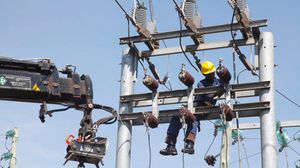
Their average wage was Sh154,140 higher than the Sh218,259 taken home by workers in the electricity, gas, steam and air conditioning supply sector. Wages in this sector rose by 6.3 percent last year, from Sh205,270 in 2024.
Financial and insurance sector workers enjoyed a bigger pay rise in a year of record profits for banks, with their average monthly salary rising by 10.1 percent to Sh218,182 in 2025, from Sh198,083 in 2024.
These three sectors have held the top three positions in private sector pay since 2014, with the energy segment overtaking financial services in average pay for the first time in 2022.
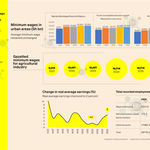
On the other end of the pay scale, workers in the water, sewerage and waste management services, and Kenyans producing goods and services from their households remained the lowest earners in the private sector, with average monthly pay of Sh30,053 and Sh30,092, respectively.
The pay gap between them and the foreign agencies staff stood at 12 times, highlighting the big divide between Kenya’s top earners and those at the end of the pay table.
The multilateral organisations’ fat perks allow them to attract top talent from around the world, some of whom are hired on wages and other benefits based on pay standards in their wealthier home countries.
In the public sector, the top paying jobs were in the accommodation and food services at Sh253,474, transportation and storage at Sh221,025 and financial services sectors at Sh196,425.
Public health sector workers, who include doctors and nurses, took home an average of Sh156,646 per month, out earning their colleagues in the private health sector who took home an average of Sh116,203 per month.
The lowest paying jobs for the public sector were found in agriculture, forestry and fishing at Sh48,307 per month, followed by mining and quarrying at Sh49,831, and public administration, defence and compulsory social security at Sh57,946 per month.
Despite recording lower average wages, agriculture remained Kenya’s second biggest source of private sector jobs with 354,600 wage employees in 2025, behind the manufacturing sector’s 366,600 workers.
In the public sector, the education segment accounts for the largest number of formal jobs at 480,200, followed by public administration, defence and compulsory social security at 375,100 jobs.
Kenya’s economy significantly relies on farming activities, which contribute 22.5 percent of its total economic output per year.
Overall, Kenya’s gross domestic product (GDP) grew by 4.6 percent last year, marginally down from 4.7 percent in 2024.
The economy created a total of 824,100 new jobs last year, up from 782,300 in 2024. The informal sector accounted for 86.9 percent or 716,800 of the new jobs created last year, exposing the continued reliance on the segment for job creation in the economy.