Why workers are waiting for Labour Day eagerly

Photo credit: Compiled by John Waweru | Designed by Stanslaus Manthi

Workers are betting on President William Ruto increasing the minimum wage on Friday in line with the trend that has seen the State raise salaries every two years.

Kenya last increased minimum wages in 2023 after a two-year lull and unions expect the raise to happen this year to cover rising inflation.
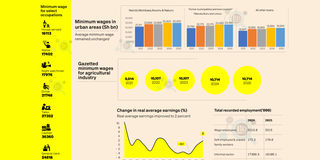
In 2024, the average minimum wage rose six percent after a 12 percent rise in 2021, in line with the two-year cycle.

Central Organisation of Trade Unions (Cotu) Secretary General Francis Atwoli reckons that workers want a 23 percent increase in minimum wages, citing high living costs.

This comes in a year when workers on average saw their salary increases overtake inflation for the first time in six years on account of a drop in the cost of living measure.

Inflation-adjusted real wages in Kenya rose to two percent compared to a negative 0.3 percent in 2024. This improved because average inflation dropped to 3.8 percent last year compared to 4.6 percent in 2024. Salary rises increases slowed to 0 4.3 percent compared to 7.8 percent in the year under review.

“Right now, we are negotiating for a salary increase and we are hopeful that the President will increase salaries during this year’s Labour Day,” Mr Atwoli said.

In Nairobi, the minimum wage for househelps is Sh16,113, night watchmen (Sh17,976), drivers (21,748), clerks (Sh24,818) and Sh36,330 for a cashier.

Enforcing the minimum wage has, however, been problematic to the government despite the law having a jail term of up to two years for those in breach or a fine of Sh100,000 for each case.

Employers have previously opposed the minimum wage increases.

The Federation of Kenya Employers (FKE) said workers’ compensation to cover inflation will resume when productivity starts growing faster than the cost-of-living measure.

The employers’ lobby said productivity in Kenya was “not just low, but is actually decreasing.”

Cotu says changes in Kenya’s labour market are suppressing wage growth.

The rise of casual and informal employment, he noted, is undermining job security and making it harder for workers to achieve stable and predictable incomes.

Over 83 percent of the 824,100 new jobs added in the economy last year were in the informal sector.

Follow our WhatsApp channel for the latest business and markets updates.

PAYE Tax Calculator

Note: The results are not exact but very close to the actual.