BOC’s share price doubles after Carbacid withdraws buyout offer

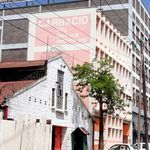
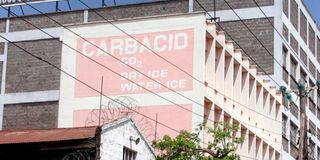
The Carbacid factory based in Industrial Area, Nairobi. Carbacid Investments lifts half-year profit to Sh465 million despite rising competition and softer income from bonds.

Photo credit: File | Nation Media Group

The share price of industrial and medical gases manufacturer BOC Kenya has more than doubled since it terminated talks to be acquired by carbon dioxide manufacturer Carbacid Investments, marking a win for the shareholders of the Nairobi Securities Exchange (NSE)-listed firm.

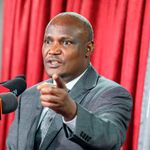
Carbacid and its controlling shareholder Aksaya Investments LLP on November 25, 2020 offered to buy 100 percent of BOC at a price of Sh63.5 per share, drawing opposition from the target’s minority shareholders including billionaire businessman Ngugi Kiuna who said the offer undervalued the firm.
The deal, which was supported by BOC’s majority shareholder BOC Holdings, was delayed until August 29, 2024 when Mr Kiuna lost his appeal at the Capital Markets Tribunal.

The parties called off the deal on March 28, 2025, citing the offerors’ breached target of closing the transaction by July 31, 2021.
BOC’s stock traded at Sh80.5 on the day the deal was terminated.

The share price rallied further to close at an average of Sh174.5 yesterday having hit a high of Sh175 on the day, meaning that the firm’s shareholders have benefitted immensely from the collapse of the Carbacid offer which had valued the company at Sh1.23 billion.

The company’s market capitalisation has now grown to Sh3.4 billion, driven by higher earnings and dividend payouts in a general bull market.

Dyer and Blair Investment Bank, the independent adviser hired by the board of BOC Kenya, said the offer undervalued the company which had a per share value of Sh91.76 as of early 2021.

The company’s board told shareholders to make up their mind with regard to the fairness of the offer. Mr Kiuna was meanwhile buying more shares of BOC even as he sought to block the transaction at the tribunal.

Mr Kiuna, a former chairman of BOC, more than doubled his stake to 17.91 percent from the 7.60 percent he held prior to the announcement of the ill-fated Carbacid offer.

This level of ownership has strengthened his position by, for example, giving him influence to block a potential proposed delisting of BOC from the NSE. The collapse of the Carbacid offer marked a new twist in the history and relationship of the two firms.

BOC had sought to acquire Carbacid but terminated its offer in October 2009 after the Capital Markets Authority (CMA) ruled against the buyout. Shares of both firms had been suspended from trading since 2005 as the controversial offer made its way through the legal corridors and regulatory review.

In making a bid for BOC, Carbacid sought to create the largest industrial gases firm in the region that would benefit from economies of scale.

“The enlarged group will be in a stronger position to capitalise on significant growth opportunities by leveraging its expanded non-competing portfolio of products and wider customer base, in addition to securing optimal pricing and terms from key suppliers,” Carbacid and Aksaya said of the objectives of the collapsed deal.

BOC has meanwhile performed better as a stand-alone business, with its shareholders pocketing larger dividends and recording bigger capital gains. It said it will pursue growth on its own, with the company continuing to focus on production and sale of industrial and medical gases such as oxygen besides welding products.

“The company’s strategic direction is centred on strengthening its presence within the East Africa region through deliberate market development, deeper local partnerships and unwavering commitment to compliance and safety,” BOC said in its latest annual report.

“Our priorities include driving sales growth, improving profitability through cost discipline, and enhancing supply chain resilience to better serve our customers.”

BOC has been raising its dividend payouts in recent years, declaring a payout of Sh12.85 per share or a total of Sh250.9 million for the year ended December 2025.

This was nearly triple the dividend of Sh4.15 per share amounting to an aggregate of Sh81 million for the year to December 2020.

Carbacid also nearly tripled its dividend payout to Sh2 per share in the year to July 2025 from Sh0.70 per share in the year ended July 2020.

BOC made a net profit of Sh314 million in the year to December 2025, marking a 48.8 percent increase from a net income of Sh211.6 million a year earlier. The earnings growth was supported by sales rising by Sh223 million to Sh1.42 billion.

The company also made cuts in several costs such as distribution, sales and distribution.

Carbacid remains a bigger business than BOC, with the former having expanded aggressively in the regional markets where it is now facing more local competition.

“The markets that Carbacid serves have seen new entrants coming in and management is addressing the resulting challenges by enhanced customer experience and delivery commitment,” Carbacid said in February.

“The board continues to look at options to grow the business in new areas and to increase shareholders’ value.”

Follow our WhatsApp channel for the latest business and markets updates.

PAYE Tax Calculator

Note: The results are not exact but very close to the actual.