The government has captured transactions worth Sh800 million through reverse invoicing, which it introduced on December 27, 2024, as part of new strategies of reaching businesses that predominantly operated in the hard-to-tax segment of the economy.
Reverse invoicing is a tax compliance process where the buyer, instead of the supplier, generates the tax invoice for a transaction.
Reverse invoicing means micro and small businesses that supply medium and large businesses that wish to claim the expenses incurred as deductible will have the option of having the medium and large businesses raise invoices on their behalf, with a mechanism to have them verify the invoices raised.
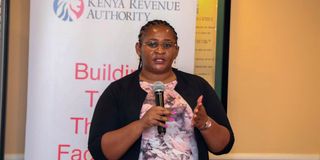
Hakamba Wangwe, Chief Manager in charge of the Electronic Tax Invoice Management System (eTIMS) at the Kenya Revenue Authority (KRA), revealed that 4,500 transactions have been captured since the rollout of the reverse-invoicing concept.
“So far, 800 buyers or procuring entities have used reverse invoicing to raise eTIMS on behalf of small taxpayers they have dealt with, and they have pushed 4,500 transactions through the system,” she told the Business Daily in an interview.
The Finance Act 2023 amended Section 23 of the Tax Procedures Act, making it mandatory for all businesses to issue eTIMS-generated invoices as part of the government’s efforts to net the perennially hard-to-tax sectors into KRA’s radar.
The Act also amended Section 16 of the Income Tax Act to provide that, effective January 1, 2024, only eTIMS-generated invoices would be deemed eligible for making claims when computing one’s tax liability.
The law provides that one can raise a reverse eTIMS invoice for any business whose annual turnover is below Sh5million.
In 2024/25, KRA reported having collected Sh2.9 billion through tax base expansion, which refers to the amount collected through taxpayers who were previously not captured in the tax register.
According to the taxman, system-to-system integration with players such as tax-hailing apps and supermarkets is enabling rapid expansion of the tax base, especially in high-volume business environments.
“The other solution in reverse invoicing is the one that caters to the relatively advanced taxpayers who already have automated systems that already capture all transactions that are taking place. If you look at taxi-hailing apps, for example, at the end of every trip you immediately get a receipt showing your bill. We are fiscalising that and immediately recognising it as an eTIMS receipt. This is system-to-system integration,” Ms Wangwe said.
KRA has gone big on electronic invoicing and now uses it for income and expenses validation, effective January 1, 2026. This means that for the year of income between January 1, 2025, and Dec 31, 2025, the taxman will be relying exclusively on eTIMS invoices to verify one’s self-declared revenue and in determining which expenses can be allowed in the computation of one’s income tax dues.