Kenya’s current account deficit is expected to widen to three percent of gross domestic product (GDP) this year from 2.1 percent in 2025 on higher fuel import costs and flat inflows from goods exports and diaspora remittances.
The current account represents the balance of trade on goods and services —exports and imports, remittances and tourism earnings. When in deficit, it shows that forex outflows from the country exceeded inflows, which in Kenya’s case reflects the fact that the country is a net importer of goods.
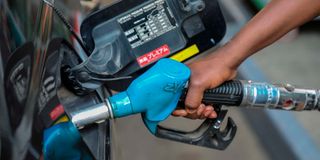
The Central Bank of Kenya (CBK) said last week that the higher crude prices due to the conflict in the Middle East pose the biggest risk to the current account. The landed cost of Kenya’s diesel and petrol imports went up by 102 percent and 55 percent respectively between February and May to $1,291 and $906 per cubic metre.
CBK is projecting that goods imports will grow by 8.1 percent to $25.62 billion (Sh3.32 trillion) this year, while exports will expand by just 2.3 percent to $13.34 billion (Sh1.73 trillion).
Diaspora remittances are projected to grow by 1.5 percent to $5.11 billion (Sh662.6 billion), with inflows from the Gulf region being hit by the Iran war and tougher labour rules and taxation of services in Saudi Arabia and Qatar.
“We also expect lower receipts from the services sector due to increased freight payments, and slower growth in remittance inflows both from the Gulf and third party countries. There will also be an indirect impact from the reduced global demand among Kenya's trading partners,” said CBK governor Kamau Thugge.
Saudi Arabia started enforcing value added tax on services last year, requiring money transfer platforms to share and remit tax on transaction costs at 15 percent, effectively raising the cost of sending money to countries such as Kenya.
The country also put in place sweeping labour market reforms which disrupted wages, contract renewals and onboarding schedules for thousands of Kenyan workers, affecting their remittance behaviour and volumes.
The current account is the biggest component in the overall balance of payments, which is a measure of the total economic or monetary transactions of the economy with the rest of the world.
The other segments of the balance of payments are the capital account, which measures major capital movements including foreign direct investment and foreign loans, and the financial account, which measures portfolio inflows into the stock and bonds markets.
The relatively low current account deficit, coupled with capital inflows, is expected to yield an overall balance of payments surplus of $865 million (Sh112.2 billion), which will help the CBK add to its forex reserves which currently stand at $13.2 billion (Sh1.71 trillion).
The surplus in 2025 stood at $2.28 billion (Sh295.6 billion), primarily due to a narrower current account deficit.
Before the start of the war on Iran in February, the CBK was projecting a current account deficit of 2.2 percent for 2026, with an expectation of export earnings growing at 8.6 percent and four percent for diaspora remittances.
The conflict has however forced a revision of many of the global fiscal and monetary projections this year, primarily due to higher inflation and disrupted trade and supply chains.
The CBK has for instance downgraded Kenya’s GDP growth forecast for 2026 from 5.3 percent to 4.9 percent, while the International Monetary Fund (IMF) cut its forecast from 4.9 percent to 4.5 percent.