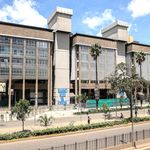
The Central Bank of Kenya (CBK) is set to remove limits on emergency loans issued to banks in distress, including extending the duration of medium-term facilities offered under the liquidity support framework.
The proposed amendments to the CBK Act are set to enhance the apex bank’s role in supporting commercial banks in distress for reasons outside of mismanagement.
The CBK (Amendment) Bill 2026 seeks to have the regulator extend the tenor of loans offered from six to 12 months and beyond as per its discretion.
The CBK provides liquidity to commercial and microfinance banks as a lender of last resort to ensure the sector’s stability.
The apex bank made Sh56.5 billion in securities and advances to banks in 12 months to June 2025, including Sh44.9 billion from the Liquidity Support Framework (LSF).
“The emergency liquidity assistance granted shall be discretionary in nature, temporary, and subject to such terms and conditions as may be determined by the bank (CBK) … any loan or advance granted shall be for a period up to 12 months,” reads part of the draft CBK (Amendment) Bill, 2026, tabled in the National Assembly.
“The bank may extend the period specified … such period or periods and under such terms and conditions as the bank may specify.”
CBK has three main liquidity support mechanisms, including the discount window, which offers overnight secured loans at a penal rate above the Central Bank Rate (CBR) to restrict banks' reliance on the facility.
The current discount rate is 9.25 percent, which represents the CBR rate of 8.25 percent plus a 50 basis points or 0.5 percent premium --the penal rate.
“The penal rate restricts banks to seek funding in the market, only resorting to Central Bank funds as a last solution,” CBK states.
“The CBK does not have automatic standing facilities with respect to overnight lending. Access to the window is governed by rules and guidelines which are reviewed from time to time by the CBK. Banks making use of this facility more than twice in a week are scrutinised closely, and supervisory action taken.”
The LSF, on its part, provides medium-term targeted loans backed by bank assets to institutions facing temporary pressure caused by reasons not deemed to be mismanagement.
CBK rolled out the liquidity support facility on April 10, 2016 after Chase Bank was placed under receivership days earlier on April 7, 2016 due to its inability to meet its financial obligations.
The regulator was keen to avoid a confidence crisis in the market following the collapse of two other banks --Dubai and Imperial, which went under amid mismanagement concerns.
The establishment of the facility was seen as a remedy to gaps that saw the CBK fail to stop a run on Chase Bank.
CBK denied liquidity support to Chase Bank days before its collapse on April 7, 2016, under the weight of massive withdrawals by fretful customers, after ‘news’ of restated financial results and the exit of two top officials.
The lender had sought Sh10 billion from the apex bank and offered to sell the regulator its portfolio of government bonds with a similar face value and had the intention to buy back the papers after resolving its liquidity problems within a two-month window.
The CBK liquidity support facility covers commercial and microfinance banks that come under liquidity pressures not borne out of mismanagement.
CBK’s final liquidity tool is open market operations (OMOs), which injects or absorbs market liquidity via repurchase agreements (Repos) and reverse Repos where banks borrow from the regulator using their Treasury bills and bonds as collateral.
All CBK lending is anchored on government securities as the collateral.
Securities and advances to banks, net of an impairment allowance of Sh26.3 billion, fell to Sh56.5 billion in the fiscal year ended June 2025 from Sh239.8 billion previously, signalling improved stability for the sector from a liquidity/funding standpoint.
The advances included Sh5.3 billion in Treasury bonds discounted, Sh181 million in discounted Treasury bills, Sh163 million in discounted accrued interest on bonds and Sh32 billion in injections from Treasury bills repurchase agreements.
A further Sh191 million was advanced as accrued interest on repos and Sh44.9 billion was marked from CBK’s liquidity support framework.
The drop in CBK’s support for banks came as the industry attained a 56 percent liquidity ratio at the end of December 2024 from 51 percent previously on higher growth in total liquid assets, underpinning banking stability and resilience.
CBK emergency support to banks had reached Sh239.8 billion in the 12 months to June 2024, a peak of at least eight years.
The reduced advances to banks coincided with the modernisation of the CBK monetary policy framework, including the slashing of the penal rate to access the apex bank’s discount window from a high of four percentage points above the benchmark rate.
CBK also innovated the DhowCSD, a digital platform and modern central securities depository system (CSD) which eased interbank lending where Treasury bills and bonds are utilised as collateral.
The improvements allowed banks to borrow from each other at more efficient rates, negating the overreliance on CBK for emergency liquidity support.
Smaller commercial banks with a less robust capital base have, over the years, struggled to access funding from their larger peers over the horizontal repo market or interbank lending.
CBK’s introduction of an interest rate corridor around its benchmark lending rate, the CBR, in 2023 was not only aimed at ensuring improved monetary policy transmission but also at lowering interest rates on interbank lending.
Interest rates from the largely overnight lending facility between commercial banks have fallen within the guidance corridor by CBK after the modernisation of the CSD system.
Previously, high interest rates were applied to interbank lending, producing instances where the charge for interbank lending was higher than the penalty/premium applied to the CBK discount window.
Lending from the CBK discount window also dominated the volumes and values of transactions under interbank lending, signaling that banks in need of liquidity support are forced to tap funds from the lender of last resort, having no other alternatives.
The large, well-capitalised commercial banks were previously accused of discriminating against their smaller peers by holding back on liquidity support through the interbank lending market despite being awash with cash and near-cash instruments.