MPs, the Presidency, and judicial officers have topped in splurging billions of shillings in public funds on avoidable expenses, putting to the test austerity measures announced by the State just two years ago.
The spend by the three offices, which represent the top echelons of the Executive, Parliament, and the Judiciary, shows that they continue to lead in use of public funds on activities such as hospitality, training, and travel, even as public development projects and programmes remained starved of cash.
This is despite tough pronouncements made by the government two years ago meant to rein in wastage, ostensibly by curbing such non-essential spending.
New disclosures show that during the three months to the end of September 2025, Parliament spent Sh1.64 billion on domestic and foreign trips alone, while the Presidency splashed Sh415 million.
The spending by Parliament was a third of the entire travel costs for the national government, while that of the Presidency was 8.4 percent.
During the three months, the national government splurged Sh4.9 billion on local and foreign trips, the Controller of Budget (CoB) reveals.
During the fiscal year ending June 2025, the CoB also revealed that the National Gender and Equality Commission splashed Sh1.1 billion on a trip to Addis Ababa, Ethiopia, revealing intriguing details that have not been explained.
The travel was reported as a four-day trip for the “African Union member State negotiations for the draft AU Convention on ending Violence against Women and Girls meeting.”
Interestingly, though, only two officers traveled, leaving questions on how they could spend over Sh1.1 billion from October 13 to 17, 2024.
Economists observe that the government has been unable to rein in wastage since top-level officials lead in bursting budgets on unnecessary activities, noting that austerity measures have been misdirected to activities with less impact.
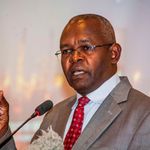
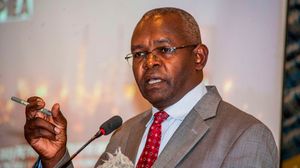
“There’s lack of follow-through and enforcement to ensure that pronouncements made by the government on austerity measures are actually implemented,” notes Mr John Mutua, the Programmes Coordinator at the Institute of Economic Affairs (IEA).
Mr Mutua observes that while the government has been loud in introducing measures to curb wastage, efforts to follow through on the pronouncements have been weak since even the enforcers are culprits.
He says many government agencies comply with pronouncements for a few weeks after they are made, but go back to their modus operandi shortly after, which derails any efforts to cut wastage.
During the 2024/25 fiscal year, the Judiciary also spent Sh143.3 million on travels, while the State Department for Labour and Skills Development splurged Sh176 million, the CoB revealed.
Between the start of the current fiscal year in July 2025 and the end of September, Members of the National Assembly accounted for the highest spending on travel, with a Sh1.07 billion spent, CoB Margaret Nyakang’o says in her latest report.
This means that MPs spent 21.7 percent of the entire travel costs across the national government during the quarter.
Other offices with huge spending on travel during the quarter ending September 2025 included internal security, which spent Sh908 million collectively on foreign and local trips, the Office of the Auditor General (OAG), which spent Sh382.4 million, and the State Department for Foreign Affairs, which spent Sh273.7 million.
The heavy spending on travel continues in utter disregard of earlier pronouncements aimed to address the problem, underlining the challenge in curbing wastage in the public service.
In June 2023, Head of Public Service announced measures to curb travel costs by limiting delegations that could participate in foreign travels and requiring Cabinet Secretaries (CSs) and Principal Secretaries (PSs) to seek travel clearance from the President.
“Delegations headed by CSs shall not exceed four persons, including the CS as head of delegation. Delegations should include the most relevant technical persons to assist the principal in the meetings, deliberations, or presentations related to the foreign travel,” Mr Felix Koskey, the Head of Public Service, said as he noted that officials such as personal assistants and security personnel would not be approved for travel.
Despite the pronouncement, travel costs for the national government have gone up from Sh20.37 billion in the fiscal year to June 2023, when the State decided to act, to Sh25.46 billion in the fiscal year to June 2025.
This implies that the national government’s travel costs have risen by 25 percent since the State decided to act, showing there has been no compliance with the pronouncement.
The State House has also been at the centre of a splurge of public funds on non-essential activities, splashing Sh296 million on travels over three months to September 2025, up from just Sh48 million during a similar period last year.
State House also splashed Sh199.2 million on hospitality during the period alone, underlining the burden of delegations that frequent the House on the Hill on taxpayers.
During the year ending June 2025, the State House spent Sh1.15 billion on hospitality, which mainly capture expenses such as meals served to guests who visit the House on the Hill, and other items that have no direct benefit to citizens.
Judiciary also splashed Sh1.17 billion on travels during the year ending June 2025 and Sh514 million on hospitality activities, following closely on heavy spenders on non-essential items.
Mr Mutua, the IEA Economist, reckons that for meaningful savings to be realized in the public service, the government needs to address wastage across different areas, rather than limiting its austerity measures to only travel.
“There needs to be cost-cutting across the government if meaningful change is to be achieved. We need audits to eliminate ghost workers in the public service, a raid on procurement processes to address issues such as price inflation, and eliminate cases of unwarranted allowances that ballooned the public wage bill,” he says.