Anonymous tip-offs drive Sh6.8bn KRA tax haul, expose graft

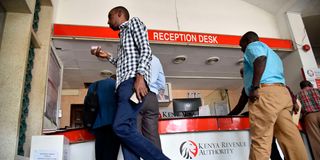
The Kenya Revenue Authority offices in Mombasa.

Photo credit: File | Nation Media Group

Anonymous whistleblowers helped the Kenya Revenue Authority (KRA) recover Sh6.8 billion in lost revenue last financial year, underlining the growing role of tip-offs as a potent tool in the fight against tax evasion and corruption.

The recoveries, made through the taxman’s web-based iWhistle platform, represent a 61.13 percent jump from Sh4.22 billion collected in the prior year ended June 2024.
Collections in the year ended June were drawn from 821 cases reported anonymously, down from 883 cases in the previous financial year.

The latest disclosures signal a shift in enforcement, with KRA increasingly relying on citizen-led intelligence to seal revenue leakages that often escape routine audits, while also exposing misconduct within its own ranks.

Data shows that 45 staff integrity cases were reported through iWhistle and action taken during the review period, adding to a broader internal crackdown that has seen hundreds of employees investigated.

In the year to June 2024, KRA investigated 255 staff, conducted 41 lifestyle audits and carried out more than 2,100 background checks arising from citizen and insider intelligence, reflecting heightened scrutiny of its workforce.

The figures highlight the growing use of iWhistle – the anonymous web portal for reporting tax crime – in targeting non-compliant taxpayers while tightening internal oversight.

Inside iWhistle

Acting Commissioner-General Dr Lilian Nyawanda said the reporting platform, launched in 2020, has become a steady pipeline of actionable intelligence, feeding both enforcement actions and internal disciplinary processes.

“This is an initiative that may look simple from the surface but in a month we get so many cases reported through iWhistle and then we have a team that is able to follow through and see what’s happening,” she said.

“And we have staff who have gone through disciplinary processes just because of that [whistleblowing] and we also have opportunities where we’ve been able to also use the same information to address issues across different taxpayers who are non-compliant.”

The iWhistle system allows members of the public and KRA staff to report tax malpractices such as bribery, fraud, conflict of interest, abuse of office and cargo diversion without revealing their identity. Each report is assigned a unique tracking code, shielding informants from exposure while enabling follow-up on cases.

Before its rollout, KRA relied on walk-ins, emails and telephone calls through its Complaints and Information Centre – channels that required disclosure of personal details and yielded limited results.

The promise of anonymity, coupled with financial incentives, appears to have lowered the barrier to reporting.

KRA offers whistleblowers a reward of five percent of recovered taxes, capped at Sh5 million per case. For information identifying unassessed taxes, the reward is one percent, capped at Sh500,000, with full payment made only after successful recovery. Informants are required to disclose their identity, PIN and bank account details at the payout stage.

Internal controls

Beyond whistleblowing, KRA says it is tightening its tax compliance framework, including profiling tax evaders and reviewing refund and debt management processes to curb abuse.

Internally, Times Tower has embedded integrity assurance officers across departments and stepped up awareness campaigns to reinforce ethical conduct, signalling an effort to institutionalise accountability rather than rely solely on detection.

Dr Nyawanda said the authority is moving to strengthen controls to ensure taxes are collected without interference and leakages are sealed.

“Staff are aware, and we are tightening controls to ensure that taxes paid by taxpayers are collected properly and without any interference. Our goal is to collect the correct amount of tax while strengthening compliance and building a culture of integrity,” she said.

The KRA chief added that the agency, which has over the years struggled to meet revenue targets set by the Treasury, continues to submit reports to oversight agencies, including the Ethics and Anti-Corruption Commission, to track progress on integrity reforms.

Crackdown trail

The growing reliance on whistleblower intelligence reflects a broader shift in tax administration, where enforcement is increasingly driven by information flows from those closest to malpractice – whether inside institutions or within the business community.

The rise of anonymous reporting tools signals that compliance is no longer shaped solely by audits, but also by scrutiny from peers and insiders willing to flag irregularities.

“Corruption has no place at KRA and we are committed to building a transparent, accountable and service-oriented institution that earns and sustains the confidence of every Kenyan,” Dr Nyawanda said.

The exposure of insider misconduct also underscores persistent governance challenges even as the authority posts gains in revenue recovery.

Earlier this year, KRA interdicted six employees, including senior officials, suspended permits of 21 cargo clearing agents and recovered more than Sh450 million after investigations uncovered a fresh tax evasion scheme at the Mombasa port.

The purge followed investigations into a syndicate in which consignments of imported cargo passed through the port without paying tax.

The scheme was uncovered after a batch of invoices logged into KRA’s iTax and Integrated Customs Management System (iCMS) failed to match the payments made against them.

A batch of mobile phone numbers was linked to the transactions, leading to the interdiction of KRA staff and the suspension of cargo agents implicated in the scheme.

“KRA investigations and intelligence launched targeted interventions that have already yielded significant recoveries while triggering far-reaching enforcement and disciplinary actions,” KRA said in a response to the Business Daily in March.

“KRA has recovered Sh452.5 million following the uncovering of a scheme involving irregular cargo clearance and revenue accounting, and has taken decisive action against clearing agents and staff implicated in the malpractice. We urge importers to strictly adhere to official payment channels when remitting taxes and levies. We are against the use of any other channels that may expose them to fraud and financial loss.”

Follow our WhatsApp channel for the latest business and markets updates.

PAYE Tax Calculator

Note: The results are not exact but very close to the actual.