“Every country needs whistle-blowers. They are crucial to a healthy society,” said Azerbaijani-Scottish journalist and political commentator Fuad Alakbarov.
Here, Fuad asserts that it is critical to report economic crimes such as mega corruption, tax evasion, and other economic crimes as they are a threat to socio-economic development and national security.

If financial crimes remain unchallenged or unidentified, they can undermine fiscal security leading to poor service delivery and economic retardation.
Tax evasion, which is a form of financial crime and a deliberate attempt to illegally obtain a tax benefit, have negative impact on the economy.
Tax frauds come in many forms, the common ones are use of fictitious invoices—where money is channelled as payments for purchase of goods while in actual sense no goods are supplied.
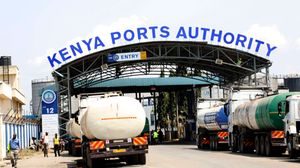
Another common scheme is goods smuggling where import or export goods pass through borders illegally, concealed or mis-declared in violation of the law, and purposely to avoid payment of taxes.
These actions constitute tax offences and are prosecutable and punishable by law. Prosecution deters tax evasion, enhance compliance, guarantee optimal realisation of revenue, increase stability and predictability in the tax system.
The fight against tax evasion requires a secure means of providing information on suspected tax evasion activities and also protection of witnesses who come forward to provide such information and also testify during court proceedings.
The Kenya Revenue Authority’s (KRA) iWhistle; an online web-based reporting solution, provides a framework for anyone to report these scheme as well as staff malpractices such as bribery, conflict of interest, aiding tax evasion, abuse of office among others upon seeing, hearing or suspecting the aforesaid.
In the financial year 2023-24 for example, 883 cases were reported through the KRA’s iWhistle programme and led to recovery of Sh4.22 billion. In 2024-25, the programme unearthed estimated tax liabilities amounting to Sh6.87 billion from 821 cases reported anonymously.
The KRA, under its Whistle-Blower Policy, ensures protection of the whistle-blowers who use iWhistle to report tax evasion cases.
The identities of whistle-blowers and information provided are strictly confidential. In iWhistle, the informant is also entitled to certain rights, such as: right to report and remain anonymous, right to be protected in case of court witnessing, getting updates on the proceedings of the investigation and case, as well as a right to receive a reward should they opt to upon settlement of a reported case.
Tax evasion whistle-blowers are, however, not necessarily witnesses in tax evasion cases.
Protection of whistle-blowers and witnesses in criminal cases from potential retaliation or intimidation is an important mechanism in criminal justice proceedings that aid in the successful prosecution of tax evasion and other criminal cases.
The KRA has a reward scheme for informants that successfully report a case of tax evasion. The reward includes, whichever is less of five percent of the taxes or duties so recovered or Sh5 million per case.
The iWhistle user accounts are designed to keep the whistle-blower anonymous from the time of account creation to chatting/communicating with the designated officer during investigations.
Any designated officer or KRA staff who wilfully discloses the identity of the whistle-blower or the content of the information provided to unauthorized persons shall be deemed to have violated the whistle-blower policy and shall be subject to the appropriate disciplinary procedures.
Similarly, any person not being an employee of KRA who does the same shall be subjected to the appropriate criminal proceedings.
KRA has also partnered with the relevant government agencies mandated to protect witnesses on behalf of the government.
First, the Anti-Corruption and Economic Crimes Act, 2003 provides that no action or proceeding, including a disciplinary action, may be instituted or maintained against a person in respect of his/her assistance to the Ethics and Anti-Corruption Commission or an investigator or his/her disclosure of information to the Commission or an investigator.
The Courts shall also ensure that identity of the witnesses, in prosecution for corruption or economic crime or a proceeding under this Act, are also protected.
Secondly, the government through the Office of the Attorney General (OAG) provides special protection programs on behalf of the government to witnesses and persons in possession of important information and who are facing potential risk or intimidation due to their co-operation with law enforcement agencies.
Thirdly, the Court can also on its own motion make appropriate orders for protection of witnesses or on application by the OAG or the prosecution if its satisfied that; a person named before court or in the application is a witness, a person was a witness to or has knowledge of the offence, the person was or is a witness in any other proceedings, and where the life and safety of the person may be endangered as a result of being a witness.
The writer is the Deputy Commissioner for Investigations in the Investigations & Enforcement Department at Kenya Revenue Authority
Unlock a world of exclusive content today!Unlock a world of exclusive content today!