Starlink, rivals face Sh15m licence under new telecoms rules

Starlink

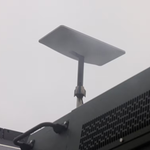
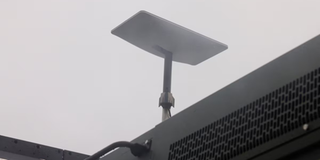
A Starlink satellite internet system is set up on a caravan truck.

Photo credit: Reuters

Satellite communication providers, including Starlink, will from this week be required to obtain a licence costing at least Sh15 million and pay up to 0.4 percent of their annual gross turnover to the Kenyan government under expanded telecommunications rules.

The Communications Authority of Kenya (CA)’s Revised Telecommunications Market Structure for 2026 introduces a new International Gateway Systems and Services (IGSS) licence for satellite firms.
The 15-year licence governs firms offering switching infrastructure and network control operations. An optional 25-year licence will cost Sh45 million. Licensees will also pay an annual operating fee of 0.4 percent of gross turnover or a minimum of Sh4 million, whichever is higher.

This will see satellite internet service providers (ISPs), broadcasters such as MultiChoice, and regional mobile network operators using satellite technology pay more to operate in Kenya.

The CA confirmed that Starlink will be required to obtain the licence to roll out its direct-to-cell service in Kenya this year under its Africa-wide deal with Airtel.

“Currently, Starlink has landing rights only, but for the direct-to-cell service, which it is rolling out in partnership with telcos, it will need to obtain an IGSS licence,” a CA spokesperson told the Business Daily.

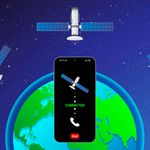
Airtel has partnered with SpaceX to introduce Starlink’s direct satellite-to-mobile service across its 14 African markets, providing supplemental coverage to extend wireless networks to remote areas.

The service will initially support internet-based texts and calls, such as WhatsApp, with plans to upgrade in 2028 to enable direct phone calls and SMS.

Cost impact

The new rules mark a shift from a flat-fee licensing regime to a structure combining fixed licence charges with a revenue-based annual levy, raising the cost of operating satellite-based services in Kenya.

They replace the earlier Satellite Landing Rights (SLR) licence, which attracted an initial fee of $12,500 (Sh1.6 million).

Since 2023, Starlink has operated in Kenya independently and is currently the country’s ninth-largest ISP, with 0.8 percent of the local internet market. Other satellite firms operating locally include Spacecoin, an American Internet of Things (IoT) monitoring service and broadband provider.

“The Authority has carried out public consultation on the review of the existing telecommunications unified licensing market structure for the telecommunications services to respond to growing technological and market trends in the sector,” the CA said in a Gazette notice.

“The effective date of the Revised Telecommunications Market Structure shall be thirty days from the date of this notice.”

Dual regime

The regulator has also introduced a Landing Rights Authorisation (LRA) licence, valid for 15 years, which permits the transmission of telecommunications signals into Kenya via satellite footprints or submarine cables.

The licence carries an application fee of $500 (Sh64,900) and a licence fee of $25,000 (Sh3.2 million).

The CA said physical cable systems, power feed equipment, and active satellite footprints fall under the LRA, while switching systems, network control centres, and submarine line terminal equipment are covered under the IGSS licence.

“The two licences are for specific services, and a single company might be required to pay both, depending on the services they offer,” the spokesperson said.

The overhaul was first proposed in December 2024 amid heightened scrutiny of the telecoms sector following Starlink’s entry into the Kenyan market, which intensified competition in broadband services.

Starlink, owned by the world’s richest person, Elon Musk, emerged as a potential threat to Safaricom, which in 2024 petitioned the CA to withdraw the licence granted to the American firm, citing risks of illegal connections and network disruption.

Safaricom has since softened its stance and plans to use Starlink’s network to expand coverage in remote areas by integrating satellite technology into its mobile network.

Follow our WhatsApp channelfor the latest business and markets updates.

PAYE Tax Calculator

Note: The results are not exact but very close to the actual.